How to Host a Potluck with Vancouver's Best Takeout
Plan the perfect Vancouver potluck using takeout from the city's best restaurants. Budget tips, cuisine pairing, dietary strategy, and ordering logistics for groups of 6 to 20+.
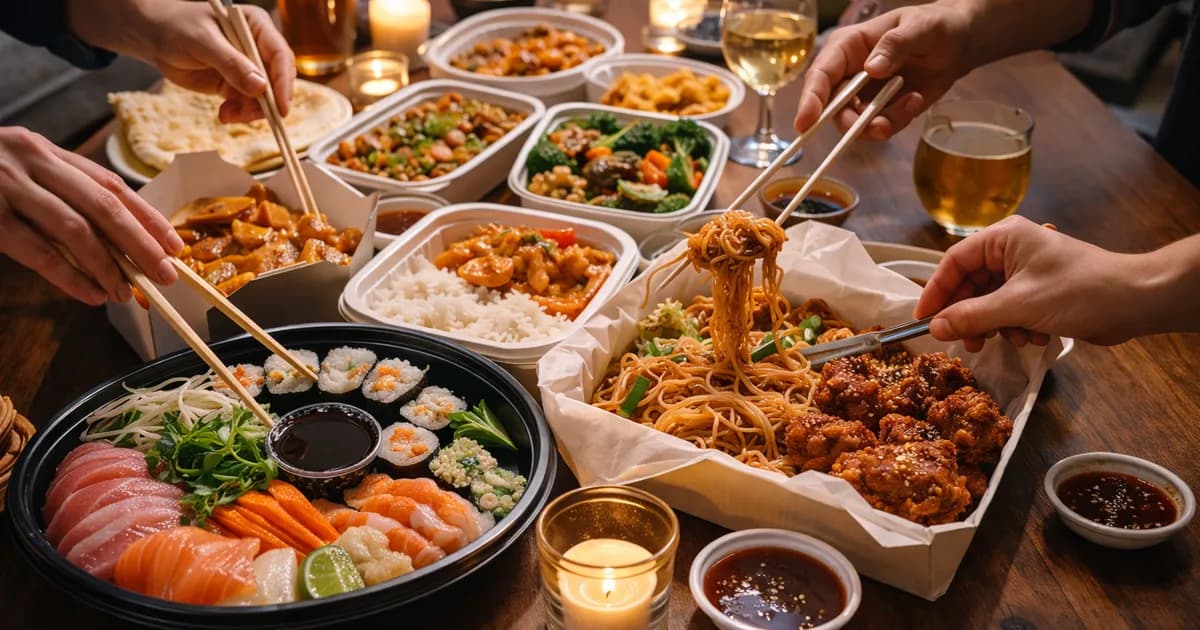
Hosting a potluck doesn't always mean spending hours in the kitchen—especially in a city like Vancouver with incredible takeout options at every corner. By strategically incorporating the best local restaurants into a potluck spread, hosts can create impressive, diverse meals that celebrate Vancouver's food scene while keeping the stress level minimal. This guide breaks down exactly how to orchestrate a potluck with Vancouver's best takeout, from menu planning and budget management to seamless ordering and serving logistics.
Last reviewed: March 2026. Data current as of this date.
The Takeout I Actually Order When I'm Feeding a Crowd
The fastest way to ruin a potluck contribution is to cook something fussy that arrives at the door cold, soggy, or short by two servings. What I bring instead is takeout — but only from the handful of spots whose food actually survives the drive, holds at room temperature or reheats without turning to rubber, and reads as a crowd-pleaser the second the lid comes off. The table below is my working shortlist, current as of June 2026; where a spot doesn't publish a fixed group-order price I've tagged it "approx — confirm" so you call ahead instead of trusting me blindly, and I've flagged a couple of closures at the bottom so you don't drive to a locked door.
| Takeout Spot | Area | Best Crowd-Pleaser Dish (feeds group) | Price | Notes |
|---|---|---|---|---|
| HK BBQ Master | Richmond (Superstore lot, 4651 No. 3 Rd) | Whole BBQ duck + char siu by the pound | approx — confirm | Legendary roast meats; cash only (CAD); go early, they sell out; ~20 seats but built for takeout |
| Chinatown BBQ | 130 E Pender St, Vancouver | BBQ duck + char siu + roast pork combo | approx — confirm | Classic Cantonese roast-meat counter; order whole/half birds to share |
| Sushi Aji | 3339 Kingsway, Vancouver | Party Tray B — 60 pcs assorted maki & rolls | approx — confirm | Trays A–F (49–60 pcs); travels well; order 24h ahead |
| Happy Sushi | 5137 Victoria Dr, Vancouver | Party trays (10 options) | approx — confirm | Victoria Dr neighbourhood spot; online ordering for trays |
| Fujiya | Vancouver (multiple) | Made-to-order sushi catering trays | approx — confirm | Japanese grocer + deli; reliable big-tray sushi for groups |
| Phnom Penh | 244 E Georgia St, Vancouver | Famous deep-fried chicken wings (large order) | approx — confirm | Michelin Guide listed; the salt-pepper-sugar wings are the move; order a mound |
| DownLow Chicken Shack | 905 Commercial Dr, Vancouver | Wings + Nashville-hot tenders, family quantities | approx — confirm | 2nd location 6065 University Blvd; sides: slaw, cornbread, mac salad |
| Juke Fried Chicken | 182 Keefer St (Chinatown), Vancouver | Fried chicken by the bird/box | approx — confirm | Gluten-free batter, less greasy; good for mixed-diet groups |
| Nat's New York Pizzeria | 2684 W Broadway, Vancouver | 18" whole NY-style pies | approx — confirm | Also 1080 Denman St; King Kong slices; huge pies cut for a crowd |
| Marcello Pizzeria | 1404 Commercial Dr, Vancouver | Wood-fired Neapolitan pizzas (multiple pies) | approx — confirm | Little Italy institution; thin-crust, best eaten fresh-ish |
| Tacofino | Vancouver (multiple + catering) | Taco/burrito party packs | approx — confirm | West-coast tacos; nut-free kitchen, GF/DF/veg/vegan options for groups |
| Stepho's Souvlaki | 1124 Davie St, Vancouver | Souvlaki platters (rice, potatoes, pita, tzatziki, salad) | approx — confirm | Downtown staple since 1988; platters split easily; call ahead for big orders |
| Cazba | North Vancouver & 1103 Davie St, Vancouver | Cazba Platter / Cazba Royal (shared) | approx — confirm | Halal Persian; shared platters built for the table |
| Yaas Grill House | North Vancouver | Shahi platter (lamb chops, beef & chicken kebabs, rice) | approx — confirm | Halal; North Shore family-run 30+ yrs; takeout & catering |
| Banh Mi Saigon | 5397 Victoria Dr, Vancouver | Banh mi in bulk (Buy 10 Get 1 Free) | approx — confirm | Cash only; 8am–5pm or until sold out; easiest cheap crowd-feeder |
| Sula Indian Restaurant | Commercial Dr / Main St / Davie St, Vancouver | Butter chicken + naan catering trays | approx — confirm | Named best Indian in Vancouver (Van Mag/Georgia Straight 2025); 48–72h for catering |
A few host notes from someone who actually does the drive
- Cheapest reliable crowd-feeder: a stack of banh mi from Banh Mi Saigon (Buy 10 Get 1 Free) — but bring cash and go before they sell out.
- Travels best / holds at room temp: Chinese roast meats, sushi trays, and fried chicken. Pizza and wood-fired Neapolitan are best if your venue is close.
- Order ahead: sushi party trays usually want 24 hours; Indian and full catering platters want 48–72 hours.
- Prices marked "approx — confirm" are because the spot doesn't publish a fixed group-format price online — call to lock the number and portion count.
Flagged closures (don't make the trip)
- Hon's Wun-Tun House — all Vancouver locations closed; the final Olympic Village shop shut January 9, 2026. Only the Coquitlam location survives. Their potstickers/wontons are still sold in supermarkets, but don't drive to a Vancouver address.
_References: restaurant sites and ordering pages (chinatownbbq.com, sushiajivancouver.com, natspizza.com, tacofino.com, banhmisaigon.ca, sulaindianrestaurant.com, yaas.ca), Michelin Guide, Destination Vancouver, Daily Hive, Vancouver Is Awesome, Noms Magazine, plus Yelp/Tripadvisor status & address checks — all accessed June 2026._
Craving something fresh?
The Storm Cafe delivers freshly prepared Asian meals across Vancouver — try a free tasting box.
Order Fresh Meals →How to Host a Potluck with Vancouver's Best Takeout
The Vancouver potluck has evolved. A decade ago, the unspoken rule was simple: you cook something, you bring it, you hope nobody else also made Caesar salad. Today, with one of the most restaurant-dense cities in North America at your fingertips, the smartest hosts blend homemade dishes with strategic takeout orders from Vancouver's extraordinary range of cuisines. The result is a spread that no single home cook could produce alone — Chinese family-style platters next to fresh sushi rolls, tandoori chicken beside fattoush salad, all anchored by someone's grandmother's potato gratin that nobody would dare replace with a restaurant version.
This guide walks through the practical mechanics of hosting a takeout-supplemented potluck in Vancouver: how to plan the menu across cuisines, budget realistically by group size, time your orders so everything arrives warm, accommodate dietary restrictions without losing your mind, and navigate Vancouver's single-use container bylaws so you don't end up with a recycling crisis at the end of the night.
Summary: Vancouver's diverse restaurant scene makes takeout-supplemented potlucks the modern standard for group entertaining. This guide covers cuisine pairing strategies across Chinese, Japanese, Indian, and Middle Eastern takeout, budget planning from $10 to $20 per person, ordering logistics for groups of 6 to 20+, dietary accommodation frameworks, and eco-friendly container compliance under Vancouver's single-use bylaws.
Why Takeout Belongs at a Vancouver Potluck
The argument for mixing takeout into your potluck isn't laziness — it's range. Vancouver sits in a rare position among North American cities: within a 20-minute drive of most Metro Vancouver neighborhoods, you can access authentic Cantonese dim sum, hand-pulled noodle shops, Japanese izakayas, Indian tandoori restaurants, Middle Eastern bakeries, Vietnamese pho houses, and Korean BBQ joints. No home kitchen replicates that breadth.
The modern Vancouver potluck treats takeout as one ingredient in a larger collaborative effort. Some guests bring homemade dishes they're proud of. Others contribute by picking up a family-style platter from a restaurant that does one thing exceptionally well. The host's job shifts from cooking everything to orchestrating a balanced, well-timed spread — and that orchestration is where most potlucks either succeed spectacularly or collapse into a table of seven pasta salads.
The Menu Planning Framework: Assign by Cuisine
The single most effective strategy for avoiding potluck chaos is the assign-by-cuisine approach. Instead of telling guests to "bring whatever," the host assigns cuisine categories and lets each person decide whether to cook or order takeout within that lane.
Here is how a typical 12-person potluck assignment might look:
- Chinese (2 guests): One orders a family-style platter of salt and pepper squid or Peking duck pancakes from a Richmond restaurant. The other brings homemade fried rice or stir-fried greens.
- Japanese (2 guests): One picks up a sushi party tray. The other brings edamame or miso soup from home.
- Indian (2 guests): One orders butter chicken and naan from a Fraser Street restaurant. The other makes raita, chutney, or a dal from scratch.
- Middle Eastern (2 guests): One picks up a mixed grill platter with hummus and tabbouleh. The other brings homemade fattoush or baba ganoush.
- Homestyle anchor (2 guests): These are the crowd-pleasing homemade staples — a big green salad, roasted vegetables, garlic bread, or a sheet-pan dessert.
- Drinks and extras (2 guests): Beverages, appetizer snacks, ice, plates, napkins.
This framework guarantees variety, prevents duplication, and creates natural pairings across cuisines. The host shares the assignments at least one week before the event so everyone has time to plan.
The Free-for-All Alternative
Some hosts prefer the open approach: let everyone bring what they want. This works for intimate groups of 6-8 where you know each person's cooking style and can course-correct through a group chat. For groups above 10, the free-for-all almost always produces overlap. Three people will default to bringing sushi. Two will grab pizza. Nobody thinks to bring a salad or dessert. The assign-by-cuisine model prevents this while still giving guests freedom within their category.
Budget Planning by Group Size
Cost per person varies significantly depending on whether guests are cooking from scratch, ordering basic takeout, or splurging on premium restaurant platters. Here are realistic Vancouver price points across three tiers.
Budget Tier ($10 per person)
At this level, the spread leans heavily on homemade dishes supplemented by affordable takeout. Think large-format rice and noodle boxes from Chinatown, naan and curry combos from a Fraser Street Indian restaurant, banh mi platters from a Victoria Drive sandwich shop, or a bulk hummus and pita order from a Commercial Drive Middle Eastern deli. Guests making homemade dishes can stretch their budgets further since ingredients for a big pot of chili, a sheet-pan of roasted vegetables, or a rice salad cost well under $10 per person when cooking at scale.
Standard Tier ($15 per person)
This is the sweet spot for most Vancouver potlucks. The ratio shifts to roughly half homemade, half takeout. Takeout contributions move into mid-range territory: a sushi party tray from a neighborhood Japanese restaurant, a family platter of butter chicken with rice and naan, a mixed grill plate from a Lebanese restaurant on Commercial Drive, or dim sum variety boxes from a Richmond favourite. At $15 per head, there is enough budget for genuine restaurant quality without anyone feeling the financial stretch.
Premium Tier ($20 per person)
For special occasions — holiday gatherings, milestone celebrations, or a group that simply loves eating well — the $20 tier opens the door to restaurant-quality platters that elevate the entire table. Peking duck from a dedicated Cantonese roast house, sashimi boats from a reputable sushi bar, whole tandoori chicken platters, or a lamb shoulder from a Middle Eastern grill. At this level, homemade contributions play a supporting role: fresh salads, artisan bread, and desserts that benefit from being made the same day.
Ordering Logistics: Timing, Temperature, and Coordination
The difference between a potluck where everything arrives warm and a table full of lukewarm containers comes down to coordination. Vancouver's geography adds complexity — ordering from Richmond while hosting in Kitsilano means factoring in bridge traffic and a 30-to-45-minute drive during peak hours.
Timing Your Orders
Hot dishes: Place orders for pickup 30 to 45 minutes before your potluck start time. If multiple guests are picking up from different restaurants, stagger arrival times so the host can organize the spread without everything landing simultaneously. Hot dishes from Chinese and Indian restaurants hold temperature reasonably well in their foil containers when wrapped in towels or placed in insulated bags.
Cold dishes: Sushi trays, salads, and cold mezze platters can be picked up 1 to 2 hours ahead without quality loss. Keep refrigerated until 15 minutes before serving.
Room temperature items: Bread, crackers, dips like hummus or baba ganoush, and most desserts are the least time-sensitive. These can be prepared or picked up well in advance.
Keeping Food Warm
For hot takeout that arrives before guests do, the host should have a plan:
- Oven warming: Set the oven to 200 degrees Fahrenheit (93 degrees Celsius) and transfer dishes to oven-safe containers. This holds temperature for up to an hour without drying food out.
- Insulated bags: Ask guests picking up hot food to bring insulated grocery bags or wrap containers in kitchen towels.
- Staggered serving: Rather than laying everything out at once, bring hot dishes to the table in waves — appetizers and cold items first, hot mains 15 to 20 minutes later.
Group Coordination Tools
A shared Google Sheet or a group chat thread with a simple table — guest name, assigned cuisine, dish description, pickup time, and dietary notes — eliminates confusion. The host updates this as confirmations come in. For groups over 16, this coordination document is not optional; it is the backbone of the event.
Dietary Accommodation Without the Headache
Vancouver is a city where any gathering of 12 people is likely to include at least two or three distinct dietary needs: vegetarian, gluten-free, halal, dairy-free, or nut-free. The potluck format is actually well-suited for dietary inclusion, as long as the host plans for it.
The Labeling Strategy
Every dish at the table — homemade or takeout — should have a small card or label listing the dish name and its key allergens or dietary flags. A stack of index cards and a marker takes two minutes to set up and prevents the awkward cycle of guests asking each other what is in every dish.
Building in Safe Options
The assign-by-cuisine model naturally produces dietary coverage if the host thinks about it during assignment:
- Vegetarian: Indian takeout almost always includes robust vegetarian options (dal, paneer, vegetable biryani). Middle Eastern mezze platters (hummus, falafel, tabbouleh) are naturally vegetarian or vegan.
- Gluten-free: Japanese sashimi and rice-based dishes, Indian curries served with rice instead of naan, and most Chinese stir-fries are naturally gluten-free or easily adapted.
- Halal: Several Vancouver restaurants along Fraser Street and Kingsway offer halal-certified takeout. Assign the meat-heavy cuisine categories (Middle Eastern grilled meats, Indian tandoori) to guests who can pick up from halal-certified sources.
- Nut-free: Communicate nut allergies to every guest in advance. Takeout orders should specify no nuts when placing the order. Homemade dishes should flag any nut ingredients on their label card.
The goal is not to make every dish accommodate every restriction. It is to ensure that every guest with a dietary need has at least three to four dishes they can safely eat from the full spread.
Seasonal Potluck Themes
Vancouver's climate and food calendar create natural potluck themes that guide both homemade and takeout choices through the year.
Summer (June through September)
Lean into grilled meats and cold dishes. Supplement homemade burgers and corn on the cob with takeout cold soba noodles from a Japanese restaurant, fresh Vietnamese summer rolls, or a mezze platter with grilled halloumi. Farmers market produce is at its peak — assign one or two guests to bring a seasonal salad using local tomatoes, stone fruit, or corn. Patio-friendly, minimal oven use, maximum fresh ingredients.
Fall and Winter (October through March)
Vancouver's rainy season calls for warming comfort food. This is the time for Chinese hot pot components picked up from a Richmond specialty shop, Japanese ramen takeout in large containers, Indian curries and biryanis, and Middle Eastern stewed lamb or baked kibbeh. Homemade contributions shine here too — slow-cooker chili, braised short ribs, or a hearty root vegetable gratin. Soups and stews transport well and hold temperature better than most dishes.
Holiday Season (November through January)
Holiday potlucks deserve special attention because they often serve the largest groups and carry the highest expectations. A holiday spread might pair a traditional roasted turkey contribution with Cantonese roast duck from a Chinatown BBQ shop, Japanese tempura party platters, an Indian biryani tray, and a Middle Eastern dessert assortment of baklava and knafeh. The cuisines of Vancouver's communities become the theme itself — a celebration of the city's diversity at the table.
Restaurants That Handle Large Takeout Orders Well
Not every restaurant is equipped or willing to handle potluck-scale takeout. The restaurants that work best for this purpose share a few traits: they offer family-style or platter options, they can handle advance orders, and their food travels well.
What to Look For
- Family-style platters: Restaurants that already serve dishes designed for sharing — Chinese family-style restaurants, Indian restaurants with thali or platter options, Middle Eastern restaurants with mixed grill combos — are naturally suited to potluck contributions.
- Advance ordering: Call at least 24 hours ahead for any order serving more than 8 people. Weekends are busier, so Friday and Saturday potluck orders should be placed by Wednesday.
- Travel resilience: Some dishes hold up better in transit than others. Stir-fries, curries, grilled meats, and rice dishes travel well. Dishes with crispy textures (tempura, fried chicken) lose quality in closed containers and should be picked up as close to serving time as possible.
- Portioning guidance: Good restaurants will help you estimate quantities. A general rule for a potluck where multiple dishes are being served: order 60 to 70 percent of what you would need if that dish were the entire meal. Guests will sample across the spread rather than fill up on a single item.
Avoiding the Duplicate Dish Problem
The scenario every host dreads: three guests show up with California rolls, two bring pizza, and the table has no vegetables, no dessert, and no variety. The assign-by-cuisine model solves this structurally, but even within that framework, the host should confirm specific dishes with each guest three to four days before the event.
A quick group chat confirmation message works well. Something like: "Confirming Saturday's lineup — [Name] is bringing sushi party tray, [Name] is making homemade fried rice, [Name] is picking up butter chicken and naan. Everyone still good?" This gives people a chance to adjust if they realize there is overlap, and it reminds procrastinators to finalize their plans.
For free-for-all potlucks where the host does not want to assign categories, an alternative is the sign-up sheet approach: create a shared document with categories (appetizer, main protein, main starch, vegetable side, salad, dessert, drinks) and let guests claim a slot. First come, first served. Once a category is full, latecomers pick from what remains.
Eco-Friendly Container Considerations
Vancouver's Single-Use Item Reduction Strategy, which has been phased in since 2022, restricts the distribution of single-use cups, plastic bags, foam containers, and plastic straws by food vendors[1]. While the bylaw targets businesses rather than residential gatherings, the spirit of the regulation reflects a city-wide expectation around waste reduction — and potluck hosts should plan accordingly.
Practical Steps
- Ask guests to bring reusable serving dishes for homemade contributions. This also makes the table look better than a row of plastic takeout containers.
- Transfer takeout to serving platters when possible. Decanting sushi from a plastic tray onto a wooden board, or spooning curry into a ceramic bowl, improves presentation and reduces table clutter.
- Provide clearly labeled recycling and compost bins. Vancouver's three-stream waste system (garbage, recycling, organics) is second nature to residents, but it helps to have bins visibly set up, especially for larger gatherings.
- Request minimal packaging when ordering takeout. Many Vancouver restaurants will accommodate requests to skip extra sauce packets, plastic cutlery, and double-bagging if you mention you are bringing the food to a home gathering, not eating on the go.
- Choose restaurants that use compostable containers. An increasing number of Vancouver restaurants have switched to compostable or paper-based takeout packaging in response to the city's regulations.
Scaling by Group Size
Intimate Potluck (6-8 Guests)
At this size, coordination is informal. A group chat handles the menu planning. Two to three takeout orders plus four to five homemade dishes create a full table. The host can manage timing without a spreadsheet. Budget pressure is low since the total food cost stays under $160 even at the premium tier.
Medium Potluck (12-16 Guests)
This is where the assign-by-cuisine model earns its value. With 12 to 16 contributors, you can cover five to six distinct cuisines plus homemade anchors and drinks. A shared planning document becomes useful. The host should designate a 15-minute window for arrivals so food setup is organized, and hot dishes go out in sequence rather than sitting on the counter cooling while the last guests trickle in.
Large Potluck (20+ Guests)
Large potlucks need infrastructure. The host should plan table layout in advance — separate stations for different cuisine zones work better than one long buffet line that creates bottlenecks. Consider a drinks station away from the food table to reduce crowding. At this scale, the host might order one or two anchor platters themselves (a large sushi boat or a whole Peking duck) and assign the remaining categories to guests. Budget tracking matters: a shared spreadsheet where guests log their expected contribution and cost keeps the event equitable.
Plate and utensil logistics also change at 20 guests. Unless the host owns 25 dinner plates, plan for a mix of real and compostable plates. Avoid single-use plastic — Vancouver residents notice, and compostable options are readily available at bulk stores across the city.
The Potluck Timeline: A Week-Out Checklist
Seven days before: Send cuisine assignments. Confirm dietary restrictions across the guest list. Share the planning document or group chat.
Three to four days before: Confirm specific dishes with each guest. Place advance orders at any restaurant requiring 48-hour notice. Purchase any hosting supplies (extra plates, serving utensils, napkins, labels).
Day before: Prepare any homemade dishes that benefit from overnight resting (marinated meats, bean salads, baked desserts). Confirm pickup times for all takeout orders.
Day of: Set up the table layout and label cards in the morning. Confirm the pickup schedule with guests collecting takeout. Preheat the oven to 200 degrees Fahrenheit for warming if needed. Have insulated bags or towels ready for guests arriving with hot food.
One hour before: Set out cold dishes, room-temperature items, and drinks. Reserve table space for hot dishes arriving with guests.
Start time: Welcome guests, stage hot dishes as they arrive, and let the meal unfold.
Looking for Vancouver's Asian-fusion meal partner?
The Storm Cafe delivers fresh bento boxes, rice bowls, and catering platters across Metro Vancouver — from Richmond to North Van. Retail orders, family meals, and corporate lunches all in one place.
References
[1] City of Vancouver, "Single-Use Item Reduction Strategy," 2022. Phased restrictions on single-use cups, plastic bags, foam containers, and plastic straws distributed by food vendors in Vancouver. https://vancouver.ca/green-vancouver/single-use-items.aspx
[2] Statistics Canada, "Food Services and Drinking Places, Summary Statistics," 2025. Revenue and establishment data for food services across Canadian metropolitan areas. https://www.statcan.gc.ca/
[3] Metro Vancouver Regional District, "Recycling and Solid Waste Management," 2026. Three-stream waste system guidelines for residential and commercial waste diversion in Metro Vancouver. https://www.metrovancouver.org/services/solid-waste/
[4] Vancouver Economic Commission, "Vancouver's Food and Beverage Sector Profile," 2025. Overview of Vancouver's restaurant density and food sector economic contribution. https://www.vancouvereconomic.com/
[5] City of Vancouver, "Zero Waste 2040 Strategy," 2018. Long-term plan to reduce waste sent to landfill or incinerator, including food packaging reduction targets. https://vancouver.ca/green-vancouver/zero-waste-2040.aspx
Frequently Asked Questions
How far in advance should I order takeout for a potluck of 15 or more people?
Place orders at least 24 to 48 hours ahead, especially for weekends when Vancouver restaurants handle heavier volume. Family-style platters, large sushi trays, and catering-size curry orders often require advance prep that restaurants cannot accommodate with same-day notice. For Richmond dim sum or Cantonese BBQ shops that are busiest on Saturday mornings, calling by Thursday gives you the best chance of getting exactly what you want at your preferred pickup time.
What is the best way to keep takeout food warm at a potluck?
Set your oven to 200 degrees Fahrenheit and transfer dishes to oven-safe containers as they arrive. Wrap takeout containers that cannot go in the oven in kitchen towels or place them in insulated bags. For a staggered approach, serve cold appetizers and salads first, then bring hot dishes to the table 15 to 20 minutes into the gathering. Chinese and Indian dishes in foil containers hold temperature particularly well when covered and insulated.
How do I handle dietary restrictions at a potluck without making it complicated?
Use the assign-by-cuisine model to build in natural dietary coverage. Indian and Middle Eastern cuisines provide strong vegetarian and vegan options by default. Japanese sashimi and rice dishes are naturally gluten-free. Assign halal meat responsibilities to guests who can pick up from halal-certified restaurants on Fraser Street or Kingsway. Label every dish with a small index card noting the dish name and major allergens. The goal is to ensure every restricted guest has three to four safe options across the full table.
How much food should each person bring to a potluck?
For a potluck where 10 to 12 different dishes will be on the table, each contribution should serve roughly 6 to 8 sample-sized portions — not full meals. Order 60 to 70 percent of what a restaurant would consider a full serving for your guest count. Guests graze across the spread rather than filling up on one dish. A sushi tray of 30 to 36 pieces comfortably serves 8 to 10 people at a multi-dish potluck. A family-style platter of butter chicken that would feed 4 as a standalone meal stretches to serve 8 when there are five other mains on the table.
How do I deal with Vancouver's single-use container rules at a potluck?
Vancouver's Single-Use Item Reduction Strategy primarily targets food vendors, not home gatherings, but the principle still applies. Ask guests bringing homemade dishes to use reusable serving platters. Transfer takeout from plastic containers to ceramic or wooden serving dishes at home for better presentation and less waste. Set up clearly labeled recycling and compost bins. When ordering, ask restaurants to skip extra plastic cutlery, sauce packets, and double bags since you are serving at home. Many Vancouver restaurants now use compostable packaging by default.
Explore More Vancouver Food Guides
Our Food Fix publishes practical, local-first guides to eating, hosting, and navigating Vancouver's food scene — available in 12 languages because this city's table has room for everyone. Start exploring: https://ourfoodfix.com/
Related Articles
Costco vs No Frills vs T&T: Which to Pick?
Compare Costco, No Frills, and T&T for Vancouver newcomers. Prices, selection, and which store is be
Vancouver Farmers Markets 2026 Schedule & Guide
Complete guide to Vancouver farmers markets in 2026. Locations, schedules, prices, and tips for newc
Affordable Meal Prep Ingredients in Vancouver
Cheapest meal prep ingredients in Vancouver for 2026. Where to buy rice, chicken, vegetables, and pa
Part of our guide
Meal Prep Guide for Vancouver
Your complete guide to meal prep and food delivery in Vancouver
Read the full guide →Skip the prep — order fresh meals
The Storm Cafe delivers freshly prepared Asian meals across Vancouver.
Order Fresh Meals →