Korean BBQ in Vancouver: The Complete Beginner's Guide
Your complete guide to Korean BBQ in Vancouver — how to grill, what to order, where to eat, and AYCE vs a la carte pricing across Metro Vancouver's best KBBQ restaurants.
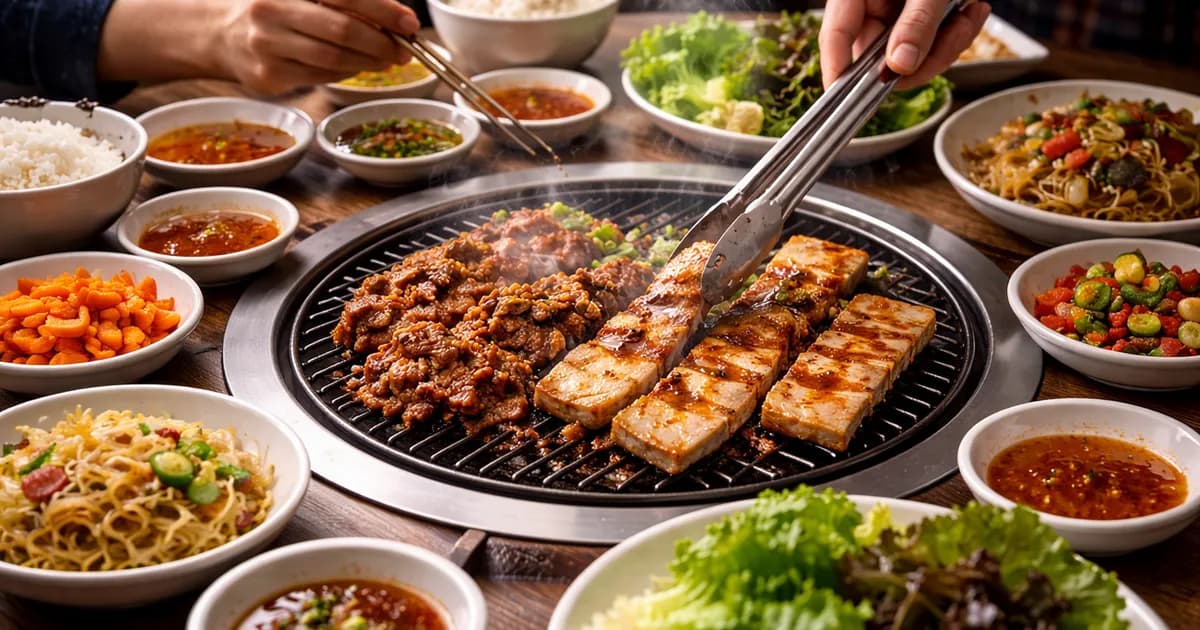
Korean BBQ has become one of Vancouver's most exciting dining experiences, transforming casual meals into interactive celebrations where diners become chefs at their own tabletop grills. Whether you're a complete newcomer to this Korean culinary tradition or simply looking to navigate the menu with confidence, this guide breaks down everything needed to master the art of Korean BBQ in Vancouver. From selecting the perfect cuts of meat to understanding the purpose of those mysterious side dishes, readers will discover how to eat, order, and truly enjoy what makes Korean BBQ such a beloved communal experience.
Last reviewed: March 2026. Data current as of this date.
The Korean BBQ menu cheat sheet (decode the cuts before you sit down)
The first time I took a friend for Korean BBQ here in Vancouver, she froze at the menu — a wall of names like samgyeopsal, chadolbaegi, woosamgyup — and just pointed at a photo. There's nothing wrong with pointing, but knowing what each cut actually is changes the whole night: you order with intent, you grill it right, and you stop overpaying for the marinated stuff when the plain cuts are the real fun. So here's the cheat sheet I wish someone had handed me. I'm Wendy Huang, and the cuts below are the ones I actually order — and the ones I steer first-timers toward — across the KBBQ tables I frequent in Burnaby and Coquitlam.
This table is the vocabulary — what the cuts are, marinated or not, and how a beginner should treat each one. For who-charges-what and which all-you-can-eat spot is worth it, see my companion piece, [the AYCE Korean BBQ Vancouver price guide](/blog/ayce-korean-bbq-vancouver-prices-ranked-2026).
| Menu name (romanized) | What it is | Meat | Marinated? | How to grill it | Beginner note |
|---|---|---|---|---|---|
| Samgyeopsal | Thick-cut pork belly, "three-layered meat" | Pork | No (plain) | Grill until edges crisp; snip into bites with the scissors | The #1 starter cut — forgiving, fatty, hard to ruin |
| Ogyeopsal | Five-layer pork belly (skin-on) | Pork | No | Same as samgyeopsal, a touch longer for the skin | Richer cousin of samgyeopsal; not on every menu |
| Moksal / Hangjeongsal | Pork collar/shoulder ("neck") | Pork | Usually no | Medium heat, don't overcook — leaner than belly | Order alongside belly for a leaner contrast |
| Galbi (Kalbi) | Beef short rib, sweet-savory marinade | Beef | Yes (soy-garlic-sugar) | Watch it — sugar burns fast; flip often | The crowd-pleaser; sweet, kid-friendly |
| Dwaeji galbi | Pork spare rib, often spicy-marinated | Pork | Yes | Lower heat, flip often (marinade chars) | Spicy version is a nice change of pace |
| Bulgogi | Thin marinated beef (sirloin/tenderloin) | Beef | Yes (sweet soy) | Cooks in seconds; some places do it in a pan | Easiest "I'm nervous" order; barely any grilling skill needed |
| Chadolbaegi | Paper-thin beef brisket, unmarinated | Beef | No | Drops on, cooks almost instantly — don't walk away | Dip in sesame-oil-salt; great palate cleanser |
| Woosamgyup | Thin-sliced fatty beef belly | Beef | No | Fast, like chadol; render the fat | Marbled and rich; pairs well with kimchi on the grill |
| Deungsim | Beef sirloin/ribeye, premium cut | Beef | Usually no | Medium-rare; don't overcook a good cut | Splurge cut — order plain, salt only |
| Dak galbi / dak bulgogi | Marinated chicken (often spicy) | Chicken | Yes | Cook through fully — it's chicken | Good for a table that wants a non-pork/beef option |
| Banchan | Free side dishes (kimchi, beansprouts, etc.) | — | — | Don't grill (except kimchi, which is great seared) | Refillable and free; nibble while meat cooks |
| Ssam | Lettuce/perilla leaf wrap | — | — | Wrap meat + rice + sauce, eat in one bite | This is the way to eat KBBQ — build a wrap |
| Ssamjang | Thick dipping paste (gochujang + doenjang) | — | — | Dab onto your ssam wrap | A little goes a long way; it's salty and punchy |
Three beginner-friendly tips before you go
- Pick a spot where staff grill for you on request. Several Vancouver tables (Kook Korean BBQ, for example) let the staff cook the first round so you can watch and copy — ideal for a first timer. Approx — confirm the current policy when you book.
- Start plain, not marinated. Plain cuts like samgyeopsal and chadolbaegi are where KBBQ shines; marinated galbi and bulgogi are easy but sweeter and harder to grill (the sugar burns).
- Build a ssam. Lettuce, a piece of grilled meat, a smear of ssamjang, a little rice — wrap and eat in one bite. That single move makes you look like you've done this before.
One housekeeping note for anyone working off an old list: Arisu Korean BBQ's North Road (Burnaby) location has permanently closed after about a decade and been replaced by a different AYCE operator; the separate Edmonds-area Arisu location was still operating as of early 2026 (approx — confirm hours before going).
References: Cut names and meanings cross-checked against Matador Network, Great British Chefs, Wikipedia (Korean barbecue / Galbi) and The Soul of Seoul; Arisu North Road closure per Noms Magazine (2026). Restaurant policies and any pricing marked "approx — confirm" should be verified directly with the venue.
Craving something fresh?
The Storm Cafe delivers freshly prepared Asian meals across Vancouver — try a free tasting box.
Order Fresh Meals →Korean BBQ in Vancouver: The Complete Beginner's Guide
There is a particular moment during your first Korean BBQ meal when everything clicks. The grill at the centre of your table is smoking. Someone has just laid down a sheet of marbled pork belly that immediately starts to sizzle and curl at the edges. A dozen small dishes you didn't order have appeared — kimchi, pickled radish, seasoned spinach, bean sprouts — arranged in a constellation around the grill. Your dining companion tears off a piece of lettuce, places a strip of charred meat inside, adds a dab of fermented soybean paste and a sliver of raw garlic, and rolls the whole thing into a tight bundle that disappears in one bite. And you realize this isn't a meal. It's an activity.
Korean BBQ — known as gogi-gui (고기구이) in Korean — is one of the most interactive dining experiences you can have in Vancouver, and the city's Korean food scene has grown substantially over the past decade. What was once concentrated in a few blocks around North Road in Burnaby has expanded into downtown, along Robson Street, into Richmond, and across the suburbs[1]. Vancouver now has dozens of dedicated Korean BBQ restaurants, ranging from high-end charcoal-grilled hanwoo beef spots to boisterous all-you-can-eat halls packed with university students on a Tuesday night.
But if you've never been, the experience can be genuinely intimidating. The table is crowded with dishes you didn't request. There's an open flame in front of you. The menu lists cuts of meat you've never heard of — chadolbaegi, kkotsal, gabri — in transliterations that don't immediately help. Someone is going to hand you a pair of tongs and expect you to cook your own dinner. If you don't know what you're doing, you'll overcook the beef, undercook the pork, miss the banchan entirely, and leave wondering what the fuss was about.
This guide is designed to prevent that. What follows is a practical, thorough walkthrough of the Korean BBQ experience as it exists in Vancouver in 2026 — from the culture and etiquette of tabletop grilling to the specific cuts of meat you should order, how to eat them properly, where to find the best restaurants across Metro Vancouver, and how much you should expect to spend.
Summary: Korean BBQ is a communal, tabletop grilling tradition that has become one of Vancouver's most popular dining experiences. This guide covers the essential meat cuts (galbi, bulgogi, samgyeopsal, chadolbaegi, daeji galbi), how to wrap and eat KBBQ properly, the banchan side dish culture, AYCE versus a la carte pricing, drinking traditions, vegetarian options, and the best Korean BBQ restaurants across Burnaby, downtown Vancouver, and the broader metro area.
What Korean BBQ Is: The Culture of Tabletop Grilling
Korean BBQ is not a cuisine in the way that a bowl of pho or a plate of pasta is a cuisine. It is a format — a method of communal cooking and eating that has been central to Korean food culture for centuries. The basic setup is consistent everywhere: a gas or charcoal grill is built into the centre of the table, raw meat is brought out on plates, and you cook it yourself, piece by piece, cutting and turning the meat with tongs and scissors until it reaches the char and doneness you want[2].
The roots of this tradition run deep. Grilled meat has been a part of Korean cuisine since the Goguryeo period (37 BC - 668 AD), with a dish called maekjeok — skewered and grilled meat — referenced in historical records. The modern form of Korean BBQ evolved through the Joseon dynasty (1392-1897), when bulgogi and galbi became associated with royal court cuisine and later spread to the broader population. What you're eating at a Vancouver KBBQ restaurant in 2026 is a direct descendant of a culinary tradition that is well over a thousand years old[3].
But the format is what makes Korean BBQ distinctive. Unlike Western grilling, where one person cooks and everyone else waits, Korean BBQ is participatory. Everyone at the table is involved. Someone is tending the grill, someone is refilling lettuce wraps, someone is flagging down the server for more banchan. The meal unfolds over an hour or two, with meat arriving in stages, the grill surface being swapped or cleaned between rounds, and the conversation rolling alongside the smoke. It is fundamentally social — designed for groups, built around sharing, and structured to keep people at the table longer than a typical restaurant meal.
In Vancouver, this format translates particularly well. The city's food culture already leans communal — hot pot, dim sum, family-style Chinese banquets — and Korean BBQ fits neatly into that tradition. A KBBQ dinner is one of the best group dining experiences the city offers, and it works for everything from a first date to a birthday party to a Tuesday night with friends who couldn't agree on what to eat.
Essential Meats: What to Order and Why
The meat selection is where Korean BBQ lives or dies, and knowing what to order is the single most important skill for a beginner. Most KBBQ menus divide their offerings into beef (so), pork (dwaeji), and sometimes chicken (dak) or seafood (haemul). Within each category, cuts vary dramatically in flavour, texture, and whether they arrive marinated or plain.
Here's what matters.
Galbi (갈비) — Beef Short Ribs
Galbi is the prestige cut of Korean BBQ — cross-cut beef short ribs, sliced thin across the bone so each piece includes a strip of rib bone with the meat fanned out on either side. The traditional preparation is LA galbi (so named because the cross-cut style was popularized by Korean immigrants in Los Angeles), marinated in a mixture of soy sauce, garlic, sesame oil, sugar, and Asian pear, which acts as a natural tenderizer[4].
The marinade gives galbi a sweet, deeply savoury glaze that caramelizes beautifully on the grill. The meat should be slightly charred on the outside but still juicy inside — it cooks quickly because the slices are thin. At most Vancouver KBBQ restaurants, galbi is the most expensive item on the menu, typically $28-$38 per serving at a la carte spots. It is worth it for your first visit. This is the cut that shows you what Korean BBQ can be at its best.
Bulgogi (불고기) — Marinated Beef
Bulgogi translates literally to "fire meat," and it is probably the most widely recognized Korean BBQ preparation outside of Korea. Thinly sliced beef — usually sirloin or rib-eye — is marinated in a blend of soy sauce, sesame oil, garlic, sugar, and puréed pear or apple. The marinade both flavours and tenderizes the meat, producing slices that are sweet, savoury, and almost impossibly tender when grilled quickly over high heat[2].
Bulgogi is more forgiving than galbi for beginners. The thin slices cook in under a minute, and the marinade provides flavour insurance — even if you slightly overcook it, the sugar in the marinade keeps it from drying out completely. At AYCE restaurants, bulgogi is a staple of the standard tier. At a la carte spots, expect to pay $22-$30 per serving.
Samgyeopsal (삼겹살) — Pork Belly
Samgyeopsal — literally "three-layer meat," referring to the alternating bands of fat and lean — is thick-sliced, unmarinated pork belly grilled at the table. It is the single most popular Korean BBQ meat in Korea itself, and for good reason: the fat renders on the grill, the edges crisp up, and the flavour is rich, porky, and deeply satisfying in a way that marinated meats can't replicate[5].
The key to samgyeopsal is patience. The thick slices need time on the grill to render the fat — typically three to four minutes per side. Use scissors to cut the cooked belly into bite-sized pieces directly on the grill, then dip each piece in sesame oil with salt and pepper (gireum-jang) or wrap it in lettuce with ssamjang. This is the cut that teaches you how Korean BBQ really works: the grilling is a skill, and the reward for getting it right is one of the most satisfying bites in the entire meal. Samgyeopsal is also the most affordable option, running $14-$20 per serving at a la carte restaurants.
Chadolbaegi (차돌박이) — Beef Brisket
Chadolbaegi is paper-thin sliced beef brisket, served unmarinated, that cooks on the grill in 15 to 20 seconds. It's delicate, beefy, and lightly fatty — a palate cleanser between heavier cuts. The thinness of the slices means you need to watch it closely; the difference between perfectly done and overdone is a matter of seconds.
This is an excellent second or third order at any KBBQ meal. It's lighter than samgyeopsal, quicker than galbi, and the clean beef flavour pairs well with the stronger-flavoured banchan. Typical a la carte pricing is $18-$26 per serving.
Daeji Galbi (돼지갈비) — Spicy Marinated Pork
Daeji galbi is pork ribs or pork shoulder marinated in gochujang (fermented red pepper paste), gochugaru (red pepper flakes), garlic, ginger, and soy sauce. The result is aggressively flavoured — spicy, sweet, funky from the fermented paste, and deeply red in colour. It's the boldest-tasting item on most KBBQ menus and an essential order if you want to experience the full range of Korean BBQ flavours.
The gochujang marinade chars quickly due to its sugar content, so keep pieces moving on the grill and don't walk away. Daeji galbi at $16-$24 per serving offers excellent value relative to its flavour impact.
Banchan: The Side Dishes You Didn't Order (But Absolutely Need)
One of the most distinctive features of Korean BBQ — and Korean dining in general — is banchan (반찬): the array of small side dishes that arrive at your table before any meat hits the grill. You didn't order them. They're complimentary. And at any respectable KBBQ restaurant, they're refillable for free. Just ask.
The number and variety of banchan varies by restaurant. A budget AYCE spot might bring four or five. A high-end a la carte restaurant might deliver ten to twelve. But certain dishes appear almost universally.
Kimchi (김치) is the anchor. At KBBQ, you'll typically receive baechu-kimchi — napa cabbage fermented with gochugaru, garlic, ginger, fish sauce, and salted shrimp. The kimchi at a Korean BBQ restaurant tends to be well-fermented and tangy, and it serves a specific purpose alongside grilled meat: the acidity and funk cut through the richness of the fat, resetting your palate between bites. You can also grill kimchi directly on the barbecue — a common move that caramelizes the sugars and mellows the sourness.
Kongnamul (콩나물) — seasoned soybean sprouts — provides crunch and a clean, nutty flavour. Sigeumchi-namul (시금치나물) — blanched spinach dressed with sesame oil and garlic — adds an earthy green note. Danmuji (단무지) — bright yellow pickled radish — is sweet, crunchy, and palate-cleansing. Gamja salad (감자 샐러드) — Korean-style potato salad with a slightly sweet mayonnaise dressing — is a textural counterpoint to the grilled meat. And there's almost always a small dish of japchae (잡채) — glass noodles stir-fried with vegetables and sesame oil — that functions as a starchy side.
The banchan is not decoration. It is integral to how Korean BBQ is eaten. Each side dish plays a role in the composition of a single bite: acidic kimchi against fatty pork belly, crunchy radish against tender beef, cool sprouts against smoky char. Ignoring the banchan means you're eating the meal wrong.
How to Eat Korean BBQ Properly
There is a right way to eat Korean BBQ. It's not complicated, but it is specific, and getting it right transforms the experience.
The Ssam (Wrap)
The fundamental unit of Korean BBQ is the ssam — a lettuce wrap that bundles grilled meat with condiments into a single bite. Here's the assembly:
- Take a leaf of lettuce (sangchu, typically red or green leaf lettuce) in your non-dominant hand.
- Place a piece of grilled meat on the lettuce.
- Add a small dab of ssamjang — a thick, savoury-sweet paste made from doenjang (fermented soybean paste) and gochujang. A little goes a long way.
- Add a thin slice of raw garlic and a piece of green chili pepper if you like heat.
- Optionally add a small spoonful of rice and a piece of kimchi.
- Fold the lettuce around the filling and eat it in one bite. The one-bite rule is important — a ssam that falls apart defeats the purpose.
The combination is remarkable. The cool, crisp lettuce against the hot meat. The salty, fermented depth of ssamjang. The sharp bite of raw garlic. The clean sweetness of rice. Every flavour and texture in the Korean BBQ spread is designed to converge in that single wrap.
Dipping Sauces
Beyond ssamjang, you'll typically have access to two other dipping options. Gireum-jang is a simple mixture of sesame oil and salt, sometimes with black pepper — this is the classic companion for samgyeopsal. Cho-gochujang is a vinegary, slightly sweet red pepper sauce that works well with lighter meats and seafood. Use each sauce to match the intensity of the meat: sesame-salt for plain cuts, ssamjang for wraps, cho-gochujang for seafood or when you want acidity.
Grilling Technique
A few practical notes on the grilling itself. First, don't overcrowd the grill. Leave space between pieces so they sear rather than steam. Second, flip beef only once — constant turning prevents proper caramelization. Third, pork belly needs patience; let the fat render fully before cutting. Fourth, use the edge of the grill for already-cooked pieces you want to keep warm, and the centre for active grilling. And fifth, don't be afraid to use the scissors — every KBBQ table has a pair, and they're there for cutting meat on the grill into bite-sized pieces.
The staff at most Vancouver KBBQ restaurants will offer to grill the first round for you if you look uncertain. Accept the offer. Watch what they do. By the second order, you'll have it.
AYCE vs. A La Carte: How to Choose
Korean BBQ restaurants in Vancouver operate under two fundamental models, and the one you choose will shape your entire experience.
All-You-Can-Eat (AYCE)
The AYCE model is dominant in Vancouver's KBBQ scene, particularly in Burnaby and downtown. You pay a fixed price per person — typically $25-$35 for the standard tier, $35-$50 for premium — and order unlimited rounds of meat, vegetables, and sometimes seafood from a set menu within a time limit (usually 90 minutes to 2 hours).
Standard AYCE ($25-$35) typically includes pork belly, bulgogi, chicken, marinated pork, and a selection of vegetables. The quality of the meat at this tier is serviceable but not exceptional — thinner cuts, more marinated options to compensate for lower meat grades, and smaller banchan spreads.
Premium AYCE ($35-$50) adds higher-quality beef cuts: rib-eye, prime short rib, brisket, and sometimes speciality items like beef tongue or wagyu-style cuts. The banchan is more generous, and you may get additional sides like cheese corn, steamed egg, or japchae included.
AYCE is the right choice if you're hungry, dining with a group of four or more, want to try many different cuts, or are on a budget per volume of meat consumed. It's the more social, boisterous format — the energy at an AYCE KBBQ restaurant on a Friday night is electric.
A La Carte
A la carte KBBQ restaurants charge per dish, with individual meat plates ranging from $14 to $38 depending on the cut and quality. The total bill for a full meal at an a la carte restaurant is typically $40-$60 per person for two to three meat dishes plus rice and banchan.
The trade-off is quality. A la carte restaurants serve thicker cuts, higher-grade beef (sometimes imported Korean hanwoo or Japanese wagyu), and more carefully prepared banchan. The grills are often charcoal rather than gas, which adds a smoky dimension that gas grills cannot replicate. The pace is slower, the portions more intentional, and the experience more refined.
A la carte is the right choice for a date, a smaller group of two or three, or when you want to taste the difference that quality makes. You'll eat less total volume but each bite will be more memorable.
Lunch Specials
Many KBBQ restaurants offer discounted lunch pricing, and this is one of the best-kept values in Vancouver dining. AYCE lunch pricing typically runs $20-$28 per person — $5 to $10 less than dinner — with the same menu available. Some a la carte restaurants offer lunch sets that include two or three meats, rice, banchan, and soup for $18-$25 per person. Weekday lunches are the quietest time, which means more attentive service and shorter waits.
Best Korean BBQ Restaurants in Vancouver
The Burnaby Corridor: North Road and Beyond
The stretch of North Road between Lougheed Highway and Hastings Street in Burnaby is Vancouver's de facto Koreatown, and it remains the centre of gravity for Korean BBQ in Metro Vancouver[1].
Insadong Korean Restaurant sits right at the North Road and Lougheed Highway intersection — the heart of the Koreatown strip. It runs an a la carte and set-dinner format rather than all-you-can-eat, with Korean BBQ alongside soups, noodles, and seafood hotpot. Staff are attentive about swapping out grill plates between rounds. Confirm current set-menu pricing when you go.
This is also where you'll find newer all-you-can-eat halls turning over fast on weekend nights; the corridor's lineup shifts often, so check recent reviews before committing to a specific spot.
Downtown and the West End
Sura Korean Royal Cuisine on Robson Street (with a second location in Richmond's Aberdeen Centre) offers a refined, sit-down Korean menu that includes tabletop BBQ alongside traditional dishes. The room is polished and the banchan is generous — a good pick when you want Korean BBQ without the boisterous AYCE energy. Budget $45-$65 per person for a full meal.
Damso Modern Korean Cuisine on Denman Street in the West End offers an intimate, modern a la carte room with strong pork belly and short rib. It's a good option for smaller groups or date nights where the AYCE format feels like too much. Card only, no cash. Budget $45-$55 per person.
Kook Korean BBQ on East 1st Avenue (Hastings-Sunrise, a short hop from downtown) runs smokeless tabletop grills and serves premium combination plates with around fifteen banchan and rice — more of a curated combo format than open-ended AYCE. Confirm the current menu and any grill-for-you policy when you book.
Richmond and Further Afield
Seorae Korean Charcoal BBQ opened its first North American location in Richmond (Hollybridge Way), bringing genuine charcoal grilling — relatively rare here, since most local spots run gas. Charcoal adds a layer of smokiness that gas grills can't match, and it's a strong pick if you want the more traditional, flavourful experience. Confirm current pricing when you go.
Korean BBQ options have also expanded into Coquitlam and Surrey, following the Korean population's suburban growth. Newer spots along Lougheed Highway in Coquitlam offer AYCE at competitive prices, often $2-$5 less than their Burnaby counterparts.
Drinking Culture: Soju, Maekju, and Somaek
Korean BBQ and alcohol are inseparable in Korean dining culture, and Vancouver's KBBQ restaurants embrace this fully. Understanding the drinking traditions will enrich your experience.
Soju (소주) is the default drink at KBBQ — a clear, slightly sweet distilled spirit with an alcohol content typically between 16% and 20%. It's served in small green bottles and poured into shot-sized glasses. Soju is mild enough to drink throughout a meal without overwhelming your palate, and its clean profile complements grilled meat without competing with the marinades and banchan[6].
Maekju (맥주) — Korean for beer — is the other pillar. Korean lagers like Cass, Hite, and Terra are light, crisp, and specifically designed to pair with rich, grilled food. Most Vancouver KBBQ restaurants also stock Canadian and craft beers.
Somaek (소맥) is the real move — a DIY cocktail made by pouring a shot of soju into a glass of beer. The proportions are debated endlessly, but a 3:7 soju-to-beer ratio is a reasonable starting point. Somaek is smoother than straight soju and more interesting than plain beer, and making it at the table has become a social ritual in itself.
A note on drinking etiquette: in Korean custom, you don't pour your own drink. You pour for others, and they pour for you. When someone older or senior pours for you, receive the glass with both hands as a sign of respect. These norms are observed loosely at Vancouver KBBQ restaurants, but knowing them adds to the experience.
Most KBBQ restaurants in Vancouver serve alcohol. Soju bottles typically run $8-$14, beer $6-$9. Several restaurants offer soju and beer combo deals during weekday evenings.
Vegetarian and Seafood Options
Korean BBQ is, by definition, a meat-centric experience. But that doesn't mean vegetarians or pescatarians are shut out entirely.
Most AYCE menus include a selection of grillable vegetables: sliced mushrooms (king oyster and shiitake are common), zucchini, sweet potato, corn, onion, and sometimes tofu. These grill well on the same surface as the meat, though vegetarians should be aware that unless the grill plate is changed, residual meat fat will be present.
Several Vancouver KBBQ restaurants offer seafood platters as part of their premium AYCE tiers or as a la carte additions. Shrimp, squid, and scallops are the most common, and they cook quickly on the grill. Some spots offer a dedicated seafood KBBQ experience, though this is more niche.
For strict vegetarians, the banchan spread is the strongest option: kimchi (note that traditional kimchi contains fish sauce and salted shrimp — ask if a vegan version is available), seasoned vegetables, rice, japchae, and steamed egg (if lacto-ovo vegetarian) provide a filling meal even without grilled protein. However, the honest truth is that a dedicated KBBQ restaurant is not the ideal setting for a fully vegetarian meal. If your group includes vegetarians, calling ahead to confirm the banchan options and request a clean grill plate is the considerate move.
Ventilation and Smell: What to Wear, What to Expect
Let's address the elephant in the room: Korean BBQ is smoky. You are grilling meat at a table, and regardless of how good the ventilation system is, your hair and clothes will absorb smoke and cooking odour. This is unavoidable and part of the experience.
Modern Vancouver KBBQ restaurants have invested heavily in overhead ventilation hoods — the wide, conical extractors that hang directly above each table. These are effective at removing most of the visible smoke but cannot eliminate all odour absorption. Charcoal grill restaurants produce more smoke than gas grill spots, and AYCE restaurants with high table turnover tend to be smokier than a la carte spots with fewer grills running simultaneously.
What to wear: Leave the dry-clean-only blazer at home. Wear clothes you're comfortable throwing in the wash the next day. Many Korean BBQ veterans keep a dedicated "KBBQ jacket" for exactly this purpose. Some restaurants in Korea offer aprons or plastic garment covers; this is less common in Vancouver, but it never hurts to ask. Long hair should be tied back — both for hygiene around the grill and to minimize smoke absorption.
What to expect afterward: Your clothes and hair will smell like grilled meat for several hours. This is universally acknowledged among KBBQ diners and is not a sign of a poorly ventilated restaurant. Some diners bring a change of jacket in the car or plan their KBBQ outings at the end of the evening rather than before other activities.
Frequently Asked Questions
How much does Korean BBQ cost per person in Vancouver?
All-you-can-eat (AYCE) Korean BBQ in Vancouver ranges from $25 to $35 per person at the standard tier and $35 to $50 at the premium tier, with lunch pricing typically $5 to $10 less. A la carte restaurants run $40 to $60 per person for two to three meat dishes with banchan and rice. Add $10 to $20 per person if you're drinking soju or beer. For a first visit, budget $35 to $45 per person at a mid-range AYCE restaurant including one or two drinks.
What should I order first at Korean BBQ as a beginner?
Start with samgyeopsal (pork belly) and bulgogi (marinated beef). Samgyeopsal teaches you the grilling fundamentals — managing fat rendering, using scissors, and timing the flip — while bulgogi is forgiving and flavourful even if you're still learning the grill. On your second round, move to galbi (short ribs) if you're at a restaurant that offers it. Ask the server to grill the first round for you if you're unsure.
Is Korean BBQ gluten-free friendly?
Many unmarinated Korean BBQ cuts — samgyeopsal, chadolbaegi, and plain beef cuts — are naturally gluten-free since they're just unseasoned meat. However, marinated items like bulgogi and galbi typically contain soy sauce, which is wheat-based. Ssamjang and some banchan dishes may also contain gluten. Inform your server of your dietary restriction at the start of the meal. Most restaurants can identify which items are safe, and sticking to unmarinated meats with sesame oil dip and lettuce wraps is a reliable gluten-free strategy.
What is the difference between charcoal and gas grill Korean BBQ?
Charcoal grills produce a distinctive smoky flavour that gas grills cannot replicate, and they generate higher, more uneven heat that creates better char on the meat. The trade-off is more smoke in the restaurant and slightly longer heat-up times. Gas grills are more consistent, produce less smoke, and are standard at most AYCE restaurants in Vancouver. Charcoal is more common at specialist spots like Seorae in Richmond. For a first visit, either format works well. If you want the more traditional and flavourful experience, seek out charcoal.
How many people should I bring to Korean BBQ?
Korean BBQ is designed for groups. The ideal party size is three to five people — large enough to order a variety of meats and share the grilling duties, but small enough that everyone can reach the grill. Two people works fine, especially at a la carte restaurants, though you'll have less variety. Groups of six or more often require a second grill table, which splits the communal dynamic. Most AYCE restaurants set a minimum of two diners per table, and solo Korean BBQ, while possible, misses the social element that makes the format special.
Looking for Vancouver's Asian-fusion meal partner?
The Storm Cafe delivers fresh bento boxes, rice bowls, and catering platters across Metro Vancouver — from Richmond to North Van. Retail orders, family meals, and corporate lunches all in one place.
References
[1]: Korean Business Association of Vancouver. "Koreatown Development on North Road." KBAV Community Report, 2024. The concentration of Korean restaurants along North Road in Burnaby has made it Metro Vancouver's primary hub for Korean cuisine, with over 60 Korean-owned food establishments within a 2-kilometre stretch.
[2]: Chung, Hae-kyung. Korean Cuisine: A Cultural Journey. Korea Foundation, 2019. A comprehensive survey of Korean food traditions including the historical development of tabletop grilling from court cuisine to modern commercial restaurants.
[3]: Institute of Korean Royal Cuisine. "The Historical Origins of Bulgogi and Galbi." Korean Food Culture Series, 2021. Historical documentation tracing grilled meat traditions from the Goguryeo period maekjeok through the Joseon dynasty to contemporary Korean barbecue formats.
[4]: Kwak, Jenny. "The LA Galbi Story: How Korean BBQ Was Reinvented in America." Eater, March 2022. Documents the origin of the cross-cut galbi style in Korean-American butcher shops in Los Angeles and its subsequent adoption in Korea and worldwide.
[5]: Korea Tourism Organization. "Samgyeopsal Day and the Culture of Korean Pork Belly." Visit Korea, 2023. Samgyeopsal is the most consumed cut of meat in South Korea's BBQ tradition, with March 3 (3/3, representing the three layers of pork belly) designated as an unofficial national day of celebration.
[6]: Korea Alcohol and Liquor Industry Association. "Soju Production and Export Statistics, 2023." The pairing of soju with grilled meat is deeply rooted in Korean dining culture, with soju consumption rising approximately 40% during barbecue occasions compared to other meal types.
Discover more Vancouver food guides at Our Food Fix.
Related Articles
Costco vs No Frills vs T&T: Which to Pick?
Compare Costco, No Frills, and T&T for Vancouver newcomers. Prices, selection, and which store is be
Vancouver Farmers Markets 2026 Schedule & Guide
Complete guide to Vancouver farmers markets in 2026. Locations, schedules, prices, and tips for newc
Affordable Meal Prep Ingredients in Vancouver
Cheapest meal prep ingredients in Vancouver for 2026. Where to buy rice, chicken, vegetables, and pa
Part of our guide
Asian Cuisine in Vancouver
Explore the complete guide to Asian dining in Vancouver
Read the full guide →Skip the prep — order fresh meals
The Storm Cafe delivers freshly prepared Asian meals across Vancouver.
Order Fresh Meals →