Vegetarian and Vegan Asian Food in Vancouver: 30+ Options
Vancouver offers one of North America's deepest selections of plant-based Asian restaurants, spanning Chinese Buddhist cuisine, Japanese shojin ryori, Korean temple food, Indian vegetarian staples,...
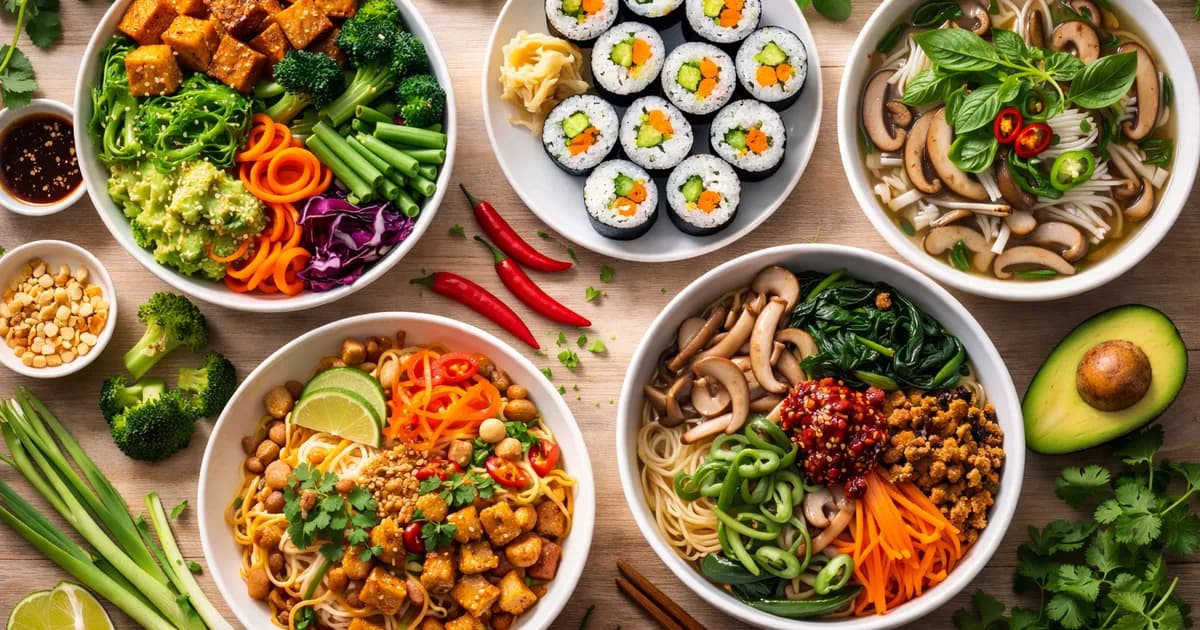
Meta Description: Explore 30+ vegetarian and vegan Asian restaurants in Vancouver — from Buddhist Chinese cuisine to shojin ryori, Indian thalis, and Vietnamese chay dining.
Vancouver sits at a rare intersection of geography and migration history that makes it one of the strongest cities in North America for plant-based Asian dining. More than 40 percent of the city's population identifies as having Asian heritage[1], and that demographic depth translates directly into restaurant diversity. Unlike cities where "vegetarian Asian food" means a single tofu stir-fry on an otherwise meat-heavy menu, Vancouver supports entire restaurants — dozens of them — built around plant-based cooking traditions that stretch back centuries.
The reasons are structural. Chinese Buddhist vegetarian cuisine arrived with Cantonese immigrants more than a hundred years ago. South Asian communities brought a culinary tradition where vegetarianism is not a dietary restriction but a default. Vietnamese and Thai cuisines both contain deep veins of temple and festival cooking designed entirely around plants. And Vancouver's broader culture — health-conscious, environmentally aware, and willing to experiment — has created a market where these traditions can thrive commercially rather than remaining niche.
This guide maps the full landscape: more than thirty restaurants and dishes across six major Asian cuisines, organised by cuisine type, neighbourhood, and price point.
Summary: Vancouver offers one of North America's deepest selections of plant-based Asian restaurants, spanning Chinese Buddhist cuisine, Japanese shojin ryori, Korean temple food, Indian vegetarian staples, Thai jay cooking, and Vietnamese chay dining. This guide covers 30+ options across neighbourhoods from Main Street to Kingsway, with notes on hidden animal products and price comparisons.
Last reviewed: March 2026. Data current as of this date.
Why Vancouver Ranks Among the Best in North
America for Plant-Based Asian Food
Several North American cities claim strong vegetarian scenes — Los Angeles, San Francisco, Toronto, New York — but Vancouver punches above its weight for specifically Asian plant-based dining. The difference is density. Within a fifteen-minute drive from downtown, you can eat Buddhist mock-meat in a Cantonese-style restaurant, order a full South Indian thali with six chutneys, pick up Vietnamese chay banh mi, and finish with matcha mochi from a Japanese patisserie that uses no dairy.
This concentration is not accidental. Vancouver's immigration patterns brought complete food ecosystems, not isolated restaurants. When a city has enough Cantonese speakers to sustain three Chinese-language newspapers, it also has enough demand to support multiple Chinese vegetarian restaurants operating at a level of craft that would be impossible in a smaller market. The same logic applies to Punjabi vegetarian cooking in Surrey, Vietnamese temple cuisine along Kingsway, and the Korean restaurants of North Road in Burnaby.
A 2024 report from the Plant-Based Foods Association of Canada found that British Columbia leads all provinces in per-capita spending on plant-based food products[2], suggesting a consumer base already primed for restaurant-level vegetarian dining.
Chinese Buddhist Vegetarian: Temple
Cuisine on the Street
Chinese Buddhist vegetarian cooking — known as su cai (素菜) — is arguably the world's oldest continuous tradition of plant-based cuisine, with roots stretching back to at least the sixth century. Vancouver is one of the few cities outside Greater China where this tradition operates at full commercial scale.
Chau Veggie Express on Victoria Drive is the city's most visible example. Run by a Vietnamese-Chinese family, it blends Chinese Buddhist technique with Vietnamese flavours. The "Pho Chay" uses a deeply layered vegetable broth built from daikon, cabbage, and dried shiitake, and the mock-meat preparations — "lemongrass chick'n," "satay beef" — are made in-house from layered soy protein and wheat gluten rather than bought from a factory.
The Jade Garden Vegetarian Restaurant in Richmond has served dim sum-style Buddhist vegetarian food for over a decade, offering har gow made with translucent wrappers and vegetable-shrimp filling, siu mai with mushroom-and-tofu centres, and crispy spring rolls that rival any conventional dim sum house.
Other notable spots include Bo Kong Vegetarian on Kingsway, which specialises in Cantonese-style clay pot dishes and congee, and Whole Vegetarian near Metrotown, known for its hot pot sets built entirely around mushrooms, root vegetables, and house-made tofu skin.
The mock-meat tradition deserves particular attention. Unlike Western meat analogues that try to replicate burgers and sausages, Chinese mock meat evolved over centuries in monastery kitchens. The techniques — layering, pressing, braising wheat gluten; shredding and seasoning soy protein; wrapping fillings in tofu skin — produce textures that are interesting on their own terms rather than being pale imitations. Vancouver's Buddhist vegetarian restaurants execute these techniques with a craft that comes from serving a community that grew up eating this food.
Japanese Vegetarian: Beyond Edamame
Japanese cuisine presents a paradox for vegetarians. It looks plant-friendly — rice, vegetables, seaweed, tofu — but dashi, the foundational stock made from bonito (dried skipjack tuna) flakes and kombu kelp, lurks beneath almost everything. Miso soup, simmered vegetables, even some rice seasonings contain bonito dashi by default.
However, Japan also has shojin ryori (精進料理), the Buddhist temple cuisine that predates sushi as a culinary tradition. Shojin ryori uses kombu dashi exclusively and builds complex flavour through techniques like slow-simmering root vegetables in soy sauce and mirin, deep-frying seasonal vegetables in light batter, and preparing elaborate presentations of pickled, grilled, and simmered plant foods.
In Vancouver, Shizenya offers an accessible entry point with brown-rice bowls and vegetable-focused sets. For more traditional preparation, Kino Cafe on Cambie provides a Japanese-influenced menu where plant-based options are treated with the same precision as meat dishes.
Key Japanese vegetarian dishes to seek out in Vancouver:
- Vegetable tempura — when done well, the batter should be gossamer-thin, and the vegetables (shiso leaf, kabocha squash, lotus root, sweet potato) should be the focus
- Inari sushi — seasoned fried tofu pouches stuffed with sushi rice, sometimes with additions like sesame or pickled ginger
- Nasu dengaku — grilled eggplant with sweet miso glaze
- Yasai itame — seasonal vegetable stir-fry with ginger and soy
- Zaru soba — cold buckwheat noodles, provided you confirm the dipping sauce uses kombu dashi rather than bonito
Always ask about dashi. Many Vancouver Japanese restaurants will prepare kombu-only dashi on request, but it requires asking explicitly.
Korean Vegetarian: Bibimbap, Banchan, and Beyond
Korean cuisine is deeply meat-centric in its modern form, but the banchan (side dish) tradition provides a surprisingly strong vegetarian foundation. A typical Korean meal comes with four to eight small plates of seasoned vegetables — spinach with sesame oil, seasoned bean sprouts, stir-fried zucchini, pickled radish — that are vegetarian by nature.
Bibimbap is the easiest entry point: a bowl of rice topped with seasoned vegetables, gochujang (red pepper paste), and a fried egg. Most Vancouver Korean restaurants offer a vegetable version, and the dish works beautifully without meat. Sura Korean Royal Cuisine downtown and Kosoo on Robson both offer well-executed vegetable bibimbap.
Tteokbokki — chewy rice cakes in a spicy-sweet gochujang sauce — is traditionally vegetarian, though some preparations add fish cake. Street-food-style Korean spots like Chi Chi Chi Korean Snack Bar on Commercial Drive offer versions that are naturally plant-based.
Watch for these hidden animal products in Korean cooking:
- Kimchi — traditional recipes use salted shrimp paste (saeujeot) or fish sauce (aekjeot) as a fermentation agent. Vegan kimchi exists but must be specifically labelled or confirmed.
- Japchae — glass noodle stir-fry often includes beef. Vegetable-only versions are easy to request.
- Gochujang — the paste itself is vegan, but some commercial brands add anchovy extract. Restaurant-made versions are typically safe.
Indian Vegetarian: Where Plants Are the Default
Indian cuisine stands apart because vegetarianism is not an accommodation — it is the foundation. Roughly 30 to 40 percent of India's population follows a vegetarian diet[3], and this has produced what is arguably the world's most varied and sophisticated vegetarian culinary tradition.
In Vancouver and Surrey, the South Asian restaurant scene reflects this depth. You are not choosing "the vegetarian option" from a meat-focused menu; you are choosing from dozens of dishes that were always meant to be plant-based.
Key dishes and where to find them:
- Dal (lentil preparations in endless variety) — Vij's on Cambie is famous for its black dal, slow-cooked for 24 hours until the lentils turn silky
- Chana masala — chickpeas in spiced tomato gravy, available at virtually every Indian restaurant but done exceptionally well at Punjab Sweets on Main Street
- Paneer dishes — fresh cheese cubed and cooked in spinach (palak paneer), tomato gravy (paneer butter masala), or with peppers (kadai paneer). Note: paneer is vegetarian but not vegan.
- Dosa — crispy fermented rice-and-lentil crepes, typically stuffed with spiced potato. House of Dosas on Commercial Drive and Dosa Factory in Surrey serve excellent versions
- Thali — a complete meal plate with rice, bread, dal, vegetable curries, raita, pickle, and dessert. The vegetarian thali is a default offering, not a compromise.
For strictly vegan Indian food, look for dishes from South Indian and some Gujarati traditions, which rely on coconut milk rather than dairy. Many dal and vegetable dishes are naturally vegan, and most restaurants will prepare dishes without ghee (clarified butter) or cream on request.
The Surrey stretch of Scott Road and the Punjabi Market area on Main Street near 49th Avenue are the epicentres for Indian vegetarian dining, with restaurants, sweet shops, and grocery stores forming a complete ecosystem.
Thai Vegetarian: Navigating the Fish Sauce Question
Thai cuisine is one of the trickiest for vegetarians to navigate. The flavours are intensely appealing — sweet, sour, spicy, salty — but fish sauce (nam pla) and shrimp paste (kapi) are structural ingredients, woven into curries, stir-fries, soups, and salad dressings. A dish can look entirely plant-based while containing multiple animal-derived seasonings.
However, Thailand has a robust vegetarian tradition rooted in Chinese-Thai Buddhist practice. During the annual Vegetarian Festival (เทศกาลกินเจ, tesakan kin jae), millions of Thai people eat strictly vegan, and restaurants across the country offer "jay" (เจ) food — plant-based cooking that also excludes pungent aromatics like garlic and onion, following Chinese Buddhist dietary rules.
In Vancouver, navigating Thai vegetarian food requires direct communication with the kitchen. These are the key requests:
- Pad thai without fish sauce — many restaurants will substitute soy sauce or mushroom sauce. The dish works well without it. Kin Kao on Broadway is known for accommodating dietary requests.
- Green, red, and yellow curries with tofu — the curry paste itself may contain shrimp paste. Ask if the restaurant makes their own paste or uses a commercial one, and whether a jay version is available.
- Som tam (papaya salad) — traditionally contains fish sauce, dried shrimp, and sometimes salted crab. A jay version uses soy sauce and omits the seafood.
- Tom kha — coconut soup with galangal and lemongrass. The base is naturally close to vegan; just confirm the stock and seasoning.
Thai Basil on Davie Street and Maenam on West 4th both have good track records of preparing genuinely plant-based versions of Thai dishes when asked. Be specific: "no fish sauce, no shrimp paste, no oyster sauce" covers the three main concerns.
Vietnamese Vegetarian: The Chay Tradition
Vietnamese cuisine has one of the strongest Buddhist vegetarian traditions in Southeast Asia. The word "chay" (from the Chinese character 齋, meaning "abstinence" or "vegetarian") marks an entire category of restaurants and dishes. In Vietnam, chay restaurants are everywhere, serving full menus of plant-based food that mirrors the country's omnivorous dishes using tofu, mushrooms, and an extraordinary range of mock meats.
Vancouver's Vietnamese community, concentrated along Kingsway and Victoria Drive, supports several chay-oriented restaurants. Chau Veggie Express (mentioned above under Chinese Buddhist cuisine) is the most prominent, but it is far from the only option.
Vietnamese vegetarian dishes to look for:
- Pho chay — rice noodle soup with vegetable broth, tofu, and vegetables. The broth quality varies enormously; the best versions are built from charred onion, ginger, star anise, and dried mushrooms.
- Banh mi chay — Vietnamese sandwich with tofu, pickled vegetables, cilantro, and chili. Available at several bakeries on Kingsway.
- Bun chay — vermicelli noodle bowls with tofu, spring rolls, vegetables, and nuoc cham (the dipping sauce — check that it is made without fish sauce).
- Com tam chay — broken rice plates with mock-meat items, a fried egg or tofu, and pickled vegetables.
- Goi cuon chay — fresh spring rolls with tofu, vermicelli, herbs, and vegetables.
The Vietnamese mock-meat tradition is particularly impressive. Soy protein and wheat gluten are shaped, coloured, and flavoured to resemble everything from roast duck to grilled pork chops. The quality in Vancouver's better chay restaurants is high enough that these preparations are enjoyable on their own terms, not merely as substitutes.
Hidden animal products: Vietnamese cooking uses fish sauce (nuoc mam) as pervasively as Thai cooking uses nam pla. Always confirm that chay dishes use soy sauce or mushroom seasoning instead. Some restaurants labelled "vegetarian" in Vietnamese communities use the term loosely to mean "mostly vegetables" rather than strictly plant-based.
Hidden Animal Products: A Field Guide
Eating vegetarian or vegan in Asian restaurants requires knowing where animal products hide. These are the most common traps:
| Ingredient | Found In | Cuisine | Vegan Alternative |
|---|---|---|---|
| Fish sauce | Soups, stir-fries, dressings, curries | Thai, Vietnamese, Korean | Soy sauce, mushroom sauce |
| Oyster sauce | Stir-fried vegetables, noodle dishes | Chinese, Thai | Mushroom oyster sauce |
| Bonito flakes/dashi | Miso soup, simmered dishes, rice | Japanese | Kombu dashi, shiitake dashi |
| Shrimp paste | Curry pastes, dipping sauces | Thai, Malaysian | Fermented soybean paste |
| Lard | Fried rice, pastry, some noodle dishes | Chinese, Vietnamese | Vegetable oil |
| Ghee/butter | Naan, curries, dal finish | Indian | Request oil-based preparation |
| Salted shrimp | Kimchi, dipping sauces | Korean | Vegan kimchi (specify) |
The safest approach: name the specific ingredients you want to avoid. "I'm vegetarian" can be interpreted differently across cultures. "No fish sauce, no oyster sauce, no shrimp paste, no animal stock" is unambiguous.
Fully Vegan Asian Restaurants in Vancouver
Several Vancouver restaurants operate as fully vegan or have menus extensive enough to function as vegan destinations:
- Chau Veggie Express — Vietnamese-Chinese, fully vegan. Victoria Drive.
- Heirloom Vegetarian — Pan-Asian influenced, fully plant-based. West 12th Avenue.
- Virtuous Pie — Vegan pizza with strong Asian-inspired toppings (kimchi, teriyaki jackfruit). Main Street.
- Lo Shack — Vegan Chinese comfort food, including congee and noodle soups. Kingsway.
- Chau Bar — Cocktail-focused offshoot of Chau Veggie Express with full vegan food menu.
For restaurants that are not fully vegan but offer substantial vegan sections: Kin Kao (Thai), House of Dosas (South Indian), and Sura Korean Royal Cuisine all provide multiple vegan options with clear labelling.
Price Comparison: Plant-Based vs. Meat Dishes
One persistent myth about vegetarian Asian dining is that it costs the same as — or more than — meat-based meals. In practice, plant-based dishes at Asian restaurants in Vancouver tend to cost less.
A typical plant-based entree at a Chinese Buddhist restaurant runs $12 to $16 CAD — roughly 20 to 30 percent less than comparable meat dishes at conventional Chinese restaurants. Indian vegetarian thalis average $14 to $18, while meat-based thalis at the same restaurants run $18 to $24. Vietnamese chay entrees sit in the $10 to $14 range, among the most affordable restaurant meals in the city.
The exception is Japanese cuisine, where vegetarian options at higher-end restaurants can cost as much as or more than fish-based dishes, particularly for multi-course shojin ryori meals. At casual Japanese restaurants, however, vegetable-focused dishes like inari sushi, vegetable tempura sets, and noodle bowls are typically the least expensive items on the menu.
Neighbourhood Guide: Where to Eat
Main Street (Riley Park to South Main): The strongest concentration of diverse plant-based options. Punjabi Market near 49th for Indian vegetarian. Virtuous Pie near 20th. Multiple Vietnamese and Chinese options between King Edward and 33rd.
Kingsway (from Knight to Boundary): Vancouver's most underrated food corridor. Dense with Vietnamese, Chinese, and Thai restaurants. Bo Kong Vegetarian, Lo Shack, and numerous pho houses with chay options. Lower rents mean lower prices — this is where locals eat.
Commercial Drive: Eclectic and walkable. House of Dosas for South Indian, Chi Chi Chi for Korean street food, and a rotating cast of plant-forward cafes. More fusion-leaning than the ethnic-specific corridors.
Richmond (Alexandra Road, No. 3 Road): The centre of gravity for Chinese cuisine in Metro Vancouver. Jade Garden Vegetarian for dim sum. Multiple hot pot restaurants with vegetarian broth options. The food courts in Aberdeen Centre and Richmond Centre both have vegetarian stalls.
West Broadway to West 4th (Kitsilano): Higher price points but strong quality. Maenam for Thai, Heirloom Vegetarian for pan-Asian plant-based, and several Japanese restaurants with good vegetable-focused options.
Surrey (Scott Road corridor): The heart of Metro Vancouver's South Asian community. Dozens of Indian restaurants where vegetarian is the primary menu, not an afterthought. Punjab Sweets, Tasty Indian Bistro, and the sweet shops and chaat counters that line the corridor.
How to Order: Practical Tips
- Name the ingredients, not the category. Saying "I'm vegetarian" leaves room for interpretation. Saying "no fish sauce, no oyster sauce, no shrimp paste, no bonito, no lard" does not.
- Ask about the broth. The number one hidden animal product in Asian soups is the stock base. Pho, ramen, tom yum, and miso soup all default to animal-based broths in most restaurants.
- Buddhist restaurants are the safest bet. If a restaurant identifies as Buddhist vegetarian, the entire kitchen is plant-based. There is no risk of cross-contamination with meat products.
- Check the kimchi. If you eat Korean, ask specifically whether the kimchi contains shrimp paste or fish sauce. Many restaurants now offer vegan versions, but it is not yet the default.
- Sweet shops are a hidden gem. Indian sweet shops (mithai) produce extensive ranges of vegetarian sweets and snacks — samosas, pakoras, gulab jamun, jalebi — that make excellent cheap meals.
Craving something fresh?
The Storm Cafe delivers freshly prepared Asian meals across Vancouver — try a free tasting box.
Order Fresh Meals →Frequently Asked Questions
What is the best fully vegan Asian restaurant in Vancouver?
Chau Veggie Express on Victoria Drive is widely considered the top fully vegan Asian restaurant in the city. It serves Vietnamese-Chinese Buddhist cuisine with an entirely plant-based menu, including house-made mock meats, pho chay, and banh mi. The restaurant has been operating for over a decade and consistently earns strong reviews for both food quality and affordability.
Which Asian cuisines are easiest for vegetarians to navigate in Vancouver?
Indian cuisine is the most naturally vegetarian-friendly, with many restaurants offering menus where the majority of dishes are plant-based by default. Chinese Buddhist vegetarian restaurants are the second easiest option because their entire kitchens are meat-free, eliminating concerns about hidden animal products or cross-contamination.
What hidden animal products should vegetarians watch for in Asian restaurants?
The most common hidden ingredients are fish sauce (Thai and Vietnamese cooking), oyster sauce (Chinese stir-fries), bonito flakes and bonito dashi (Japanese soups and simmered dishes), shrimp paste (Thai curry pastes and Korean kimchi), and lard (some Chinese fried rice and pastries). Always ask specifically about these ingredients rather than simply saying you are vegetarian.
Are plant-based Asian meals cheaper than meat-based ones in Vancouver?
Generally, yes. Vegetarian entrees at Chinese Buddhist restaurants typically cost 20 to 30 percent less than comparable meat dishes at conventional restaurants. Indian vegetarian thalis average $14 to $18 compared to $18 to $24 for meat-based versions. Vietnamese chay dishes are among the most affordable restaurant meals in the city at $10 to $14 per entree.
Where are the best neighbourhoods for vegetarian Asian food in Vancouver?
Kingsway between Knight and Boundary streets offers the highest density of affordable options across Vietnamese, Chinese, and Thai cuisines. Main Street near 49th Avenue is the hub for Indian vegetarian dining. Richmond along No. 3 Road and Alexandra Road is best for Chinese Buddhist vegetarian dim sum and hot pot. Commercial Drive provides a walkable mix including South Indian and Korean options.
Looking for Vancouver's Asian-fusion meal partner?
The Storm Cafe delivers fresh bento boxes, rice bowls, and catering platters across Metro Vancouver — from Richmond to North Van. Retail orders, family meals, and corporate lunches all in one place.
References
[1]: Statistics Canada, "Census Profile, 2021 Census of Population — Vancouver, City," Government of Canada, 2022. Available at: https://www12.statcan.gc.ca/census-recensement/2021/dp-pd/prof/index.cfm
[2]: Plant-Based Foods Association of Canada, "State of the Industry Report: Plant-Based Food in Canada," 2024. Available at: https://www.plantbasedfoodscanada.com
[3]: Pew Research Center, "Religion in India: Tolerance and Segregation — Diet and Religion," June 2021. Available at: https://www.pewresearch.org/religion/2021/06/29/religion-in-india-tolerance-and-segregation/
[4]: Vancouver Economic Commission, "Vancouver Food Strategy," City of Vancouver, 2013 (updated 2023). Available at: https://vancouver.ca/people-programs/vancouver-food-strategy.aspx
[5]: Barr, S.I. and Chapman, G.E., "Perceptions and Practices of Self-defined Current Vegetarian, Former Vegetarian, and Nonvegetarian Women," Journal of the American Dietetic Association, vol. 102, no. 3, 2002, pp. 354-360.
[6]: Tourism Vancouver, "Vancouver Dining Guide: Vegetarian and Vegan," 2025. Available at: https://www.destinationvancouver.com/eat-drink/
Related Articles

Costco vs No Frills vs T&T: Which to Pick?
Compare Costco, No Frills, and T&T for Vancouver newcomers. Prices, selection, and which store is be
Vancouver Farmers Markets 2026 Schedule & Guide
Complete guide to Vancouver farmers markets in 2026. Locations, schedules, prices, and tips for newc
Affordable Meal Prep Ingredients in Vancouver
Cheapest meal prep ingredients in Vancouver for 2026. Where to buy rice, chicken, vegetables, and pa
Part of our guide
Asian Cuisine in Vancouver
Explore the complete guide to Asian dining in Vancouver
Read the full guide →Skip the prep — order fresh meals
The Storm Cafe delivers freshly prepared Asian meals across Vancouver.
Order Fresh Meals →