Meal Prep for Busy Vancouver Families: A Weekly Plan...
A weekly 3-hour meal prep session can save a Vancouver family over 3.5 hours of active kitchen time during the week compared to cooking nightly. The time savings come from consolidating tasks like chopping, cooking bases, and cleaning.
Last reviewed: April 2026. Data current as of this date.
Introduction
A recent study found that the average Canadian family spends over 7 hours a week on meal-related activities, from planning to cooking to cleaning up[1]. In Vancouver, where commutes are long and after-school activities fill the calendar, that time feels even more precious. The constant question of "what's for dinner?" can become a major source of daily stress, especially when trying to balance nutrition, budget, and picky eaters.
This guide is for the Vancouver parents juggling it all. We are not talking about Instagram-perfect bento boxes. This is about real, actionable systems to get food on the table without losing your mind. Whether you cook everything from scratch, use a hybrid approach with some pre-made items, or opt for full delivery, having a plan is the key.
The goal is to free up your evenings. Time spent arguing over broccoli or scrubbing pans is time you could be reading a book with your kids, helping with homework, or just sitting down for ten quiet minutes. We will break down the math of time and money, provide a concrete weekly plan using Vancouver's diverse food landscape, and show you how to make meal prep work for your specific family.
Quick Answer
[What is the best family meal prep strategy in Vancouver?]
The best family meal prep strategy in Vancouver combines a core weekly cooking session with strategic use of local prepared foods and delivery services to save maximum time.
For most families, a hybrid approach works best. Dedicate 2-3 hours on a Sunday to prepare 2-3 core components. For example, roast a large tray of chicken thighs from a butcher like Windsor Meat Market (2093 W 41st Ave), cook a big pot of rice, and chop vegetables for stir-fries and salads. This gives you a foundation for 3-4 weeknight meals.
Then, fill the gaps with high-quality, family-friendly prepared foods. Pick up a large, ready-to-bake lasagna from Bosa Foods (562 Victoria Dr) for around $25, which feeds a family of four. Grab a tub of hearty soup from The Soup Market (multiple locations). For a night off cooking, order a family bundle from a local caterer like The Storm Cafe, which offers fresh, daily-made meals that just need reheating.
The total weekly active cooking time drops from 10+ hours to about 4 hours. You save money compared to full-service delivery, reduce food waste, and still have control over what your family eats. The key is using Vancouver's incredible grocery stores and food producers as your pantry.
The Vancouver Family Meal Prep Time Math
Understanding where your time goes is the first step to reclaiming it. Let's compare three common scenarios for a family of four over a standard five-day school and work week.
The traditional "cook fresh every night" model is a major time sink. It involves daily planning, 30-45 minutes of active cooking, and another 20 minutes of cleaning. That's roughly 1.5 hours per night, or 7.5 hours per week, not including grocery shopping. In contrast, a dedicated weekly meal prep session might take 3 hours on a Sunday afternoon. This includes washing and chopping vegetables, cooking proteins and grains, and assembling some meals. On weeknights, you only need 15 minutes to reheat and plate.
Total weekly time: about 4 hours. The third option, using a prepared meal delivery service, reduces your active time to near zero, with only reheating and minimal cleanup required.
Summary: A weekly 3-hour meal prep session can save a Vancouver family over 3.5 hours of active kitchen time during the week compared to cooking nightly. The time savings come from consolidating tasks like chopping, cooking bases, and cleaning. For the busiest weeks, shifting to a prepared meal service can reclaim that entire 4-hour block for family time.
Calculating Your Family's Food Time Budget
Track your time for one week. How long do you spend scrolling for recipes, making lists, at the store, cooking, and cleaning? For many, it exceeds 10 hours. Once you see the total, you can decide where to invest and where to outsource. Your time has value. If those 10 hours could be spent on work, rest, or family, what is that worth to you? This calculation makes the cost of a meal prep service or premium groceries easier to justify.
Local Grocery Stores That Speed Up Prep
Vancouver is full of stores that do some of the prep work for you. H-Mart (multiple locations) and T&T Supermarket offer vast selections of pre-marinated meats (like bulgogi and kalbi), washed and cut vegetables, and fresh noodles. Meinhardt Fine Foods (3002 Granville St) has excellent pre-made salads, sauces, and marinated proteins ready for the oven. Famous Foods (1595 Kingsway) is a treasure trove of bulk grains, legumes, and spices, allowing you to buy exactly what you need for your weekly recipes without waste.
Using these resources turns your Sunday prep from "cooking from zero" to "assembling with quality parts."
The 15-Minute Weeknight Reheat Strategy
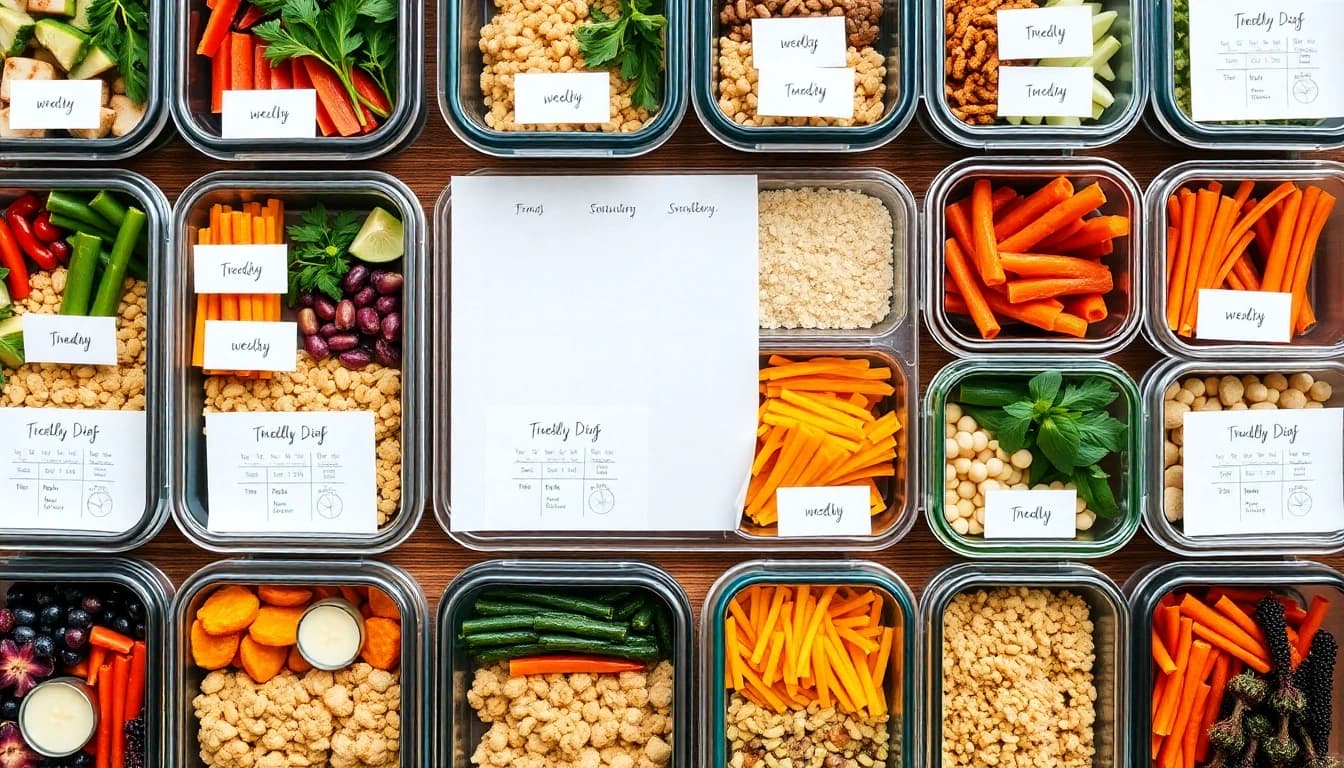
Your prep is done. Now what? Organize your fridge with the week's meals in clear glass containers. Label them with the day if it helps. For a typical Wednesday, you might pull out a container of cooked ground turkey taco meat, a container of shredded lettuce and diced tomatoes, and tortillas. Dinner is assembled and on the table in the time it takes to warm the meat and set out toppings. This system eliminates the 5 PM panic. For more ideas on quick, healthy assemblies, see our guide on High-Protein Asian Meal Prep for Vancouver Gym-Goers, which has many family-friendly adaptations.
Need meals for your team?
Automate your office lunch program with hassle-free corporate catering.
Book a Free Tasting →A Sample Weekly Meal Plan for Vancouver Families
This five-day plan leverages local flavours and includes options for from-scratch cooking, store-bought helpers, and full delivery. It assumes a family with school-aged children. The focus is on meals that are flavourful for adults but not too spicy for kids, often using sauces on the side.
Monday starts with a crowd-pleaser: Teriyaki Chicken Bento. Marinate chicken thighs in a simple teriyaki sauce (soy sauce, mirin, brown sugar, ginger) during your Sunday prep. Cook a large batch of sushi rice. On Monday night, reheat the chicken and rice. Serve with quick-pickled cucumber (slice cucumber, toss with rice vinegar, sugar, and salt) and steamed edamame from the freezer. Tuesday is Korean Bulgogi Bowl night. Use store-bought marinated bulgogi beef from H-Mart, cook it quickly in a pan, and serve over rice with shredded carrots and sliced cucumber.
Wednesday is a classic: Pasta Bolognese. Make a large batch on Sunday with ground beef, onions, carrots, celery, and canned tomatoes. It freezes and reheats perfectly. Serve with whole-wheat spaghetti and a simple green salad. Thursday brings Thai Basil Chicken. This is a fast stir-fry you can cook fresh if you pre-chopped the chicken, garlic, and chilies on Sunday. The dish comes together in 10 minutes. Serve with jasmine rice. Friday is Pizza Night. You've earned it. Order from your local favourite, pick up a frozen cheese pizza from Santa Barbara Market (1322 Commercial Dr) and add your own toppings, or use pre-made dough from Bosa Foods.
Summary: A balanced weekly meal plan for a Vancouver family mixes make-ahead staples (Bolognese), quick-cook proteins (bulgogi), and one designated easy night (pizza). This sample plan incorporates Asian and Western flavours popular in the city, reducing mealtime boredom. The key is preparing base components like rice, marinated proteins, and chopped aromatics in advance.
Monday: Teriyaki Chicken Bento
This meal is all about the prep. On Sunday, cook 2-3 cups of dry sushi rice. Let it cool and store it in a large container. Marinate 8-10 chicken thighs in teriyaki sauce in a sealed bag. Make the quick-pickled cucumbers and store them in a jar. On Monday, bake or pan-fry the chicken (about 25 minutes), reheat the rice in the microwave with a damp paper towel over it, and assemble. The edamame can be microwaved straight from the freezer in 3 minutes.
Wednesday: Pasta Bolognese from Scratch
A good Bolognese is a weekend project that pays off all week. Use a mix of ground beef and pork for depth of flavour. Cook it low and slow for at least 2 hours on Sunday afternoon. Let it cool, then portion it into meal-sized containers. One batch should yield 2-3 family meals. Freeze what you won't use within 3 days. For a healthier twist, add finely chopped mushrooms to the sauce to stretch the meat and add nutrients.
Friday: Vancouver Pizza Night Options
If you're ordering, local favourites include AJ's Brooklyn Pizza Joint (2563 W Broadway) for New York-style slices or Pizzeria Farina (915 Main St) for Neapolitan style. For a DIY approach, Santa Barbara Market sells excellent frozen pizzas for about $12- 18. Their quattro formaggi is a great base. Add fresh arugula and prosciutto after baking. For a fun activity, buy dough balls from Bosa Foods or Fratelli Bakery (1795 W 1st Ave), set out toppings, and let everyone make their own personal pizza.
Family Meal Prep Cost Comparison: Groceries vs. Services
The financial aspect of feeding a family is as critical as the time investment. Let's break down the approximate weekly costs for a family of four (two adults, one teen, one school-aged child) using different strategies. These are estimates based on 2026 Vancouver prices for five dinners, excluding breakfasts, lunches, and snacks.
| Strategy | Estimated Weekly Cost (5 Dinners) | Cost Per Meal | Time Commitment | Best For |
|---|---|---|---|---|
| Groceries (From Scratch) | $125 - $175 | $6.25 - $8.75 per person | 7-10 hours | Families on a tight budget with more time. |
| Hybrid (Prep + Premium Grocery) | $175 - $250 | $8.75 - $12.50 per person | 3-4 hours | Families wanting balance of control, health, and time. |
| Meal Prep Delivery (e.g. The Storm Cafe) | $250 - $350 | $12.50 - $17.50 per person | <1 hour | Busy families who value time over money. |
| Restaurant Takeout/Delivery | $300 - $500+ | $15 - $25+ per person | <1 hour | Occasional treat, not sustainable weekly. |
The grocery-from-scratch model requires smart shopping at places like No Frills or Sunrise Market and a focus on legumes, grains, and seasonal vegetables. The hybrid model includes costs for time-saving items like pre-marinated meats, pre-chopped veggies, and a premium ready-made meal. Full meal prep delivery, such as family bundles from The Storm Cafe, costs more but eliminates all shopping, prep, and cooking time. Frequent restaurant takeout is the most expensive and often least healthy option for regular consumption.
Summary: For a family of four in Vancouver, the weekly cost for five homemade dinners typically ranges from $125 to $250, while full meal delivery services range from $250 to $
- The hybrid model offers the best compromise, saving significant time while keeping costs 30-50% lower than full delivery. Your choice depends on whether your priority is maximizing your budget or maximizing your free time.
Breaking Down the Grocery Bill
To hit the lower end of the grocery estimate, your menu needs to be plant-forward. Meals like lentil soup, chickpea curry, and black bean tacos are nutritious, filling, and inexpensive. Buy proteins like chicken thighs and ground pork on sale and freeze them. Shop at Asian supermarkets for affordable produce and bulk rice. A resource like Health Canada food nutrition guidelines provides a framework for building balanced, cost-effective plates[2].
When Does a Meal Prep Service Make Financial Sense?
It makes sense when you calculate the value of your time. If the 6-8 hours saved by using a service can be used for freelance work, overtime, or even a side hustle that generates more than the $100-$150 weekly premium, it's a net financial gain. It also makes sense during exceptionally busy periods like back-to-school, final exams, or when a parent is traveling for work. It's a tool for managing capacity, not a permanent failure. For a full overview of options, read our Complete Guide to Meal Prep Services in Vancouver 2026.
Hidden Costs of Cooking at Home
Don't forget to factor in the utilities (gas, electricity, water), cleaning supplies, and the wear and tear on your kitchen equipment. There's also the cost of food waste from spoiled produce or uneaten leftovers. A service with pre-portioned meals can virtually eliminate this waste. For large offices looking to provide meals for employees, a B2B service like My Great Pumpkin can handle the logistics and cost management at scale.
Kid-Friendly Asian Meals the Whole Family Will Eat
One of Vancouver's greatest culinary advantages is its access to diverse, family-friendly Asian cuisine. The goal is to avoid making separate "kid food." Instead, choose dishes with broad appeal and deconstruct them for picky eaters.
Korean BBQ at home is a perfect example. Grill or pan-fry marinated meats (bulgogi, pork belly) and set out a variety of banchan (side dishes) like steamed spinach, bean sprouts, and cucumber salad. Kids can build their own rice bowls with just the meat and rice, while adults add kimchi and spicy sauces. Japanese curry is another universal winner. Brands like House Vermont Curry are mild, sweet, and packed with vegetables. Serve it with chicken katsu (store-bought from T&T or homemade) over rice.
For a deep dive into comforting flavours, see Best Chinese Comfort Food for Vancouver's Rainy Season.
Summary: Vancouver families can use the city's Asian food culture for meals that please both kids and adults. Dishes like Japanese curry, deconstructed Korean BBQ bowls, and Vietnamese rice paper rolls allow for customisation. Sourcing pre-marinated meats and sauces from local Asian grocers cuts prep time while delivering authentic flavour.
Deconstructing Meals for Picky Eaters
The "deconstructed bowl" is your best friend. Instead of serving a mixed stir-fry, place each component in a separate section of a plate or in small bowls: plain rice, plain cooked protein, steamed broccoli, shredded carrots, and the sauce on the side. This gives children autonomy and reduces anxiety about mixed textures. It works for everything from Thai basil chicken to beef and broccoli.
Where to Buy Family-Sized Ready-Made Asian Meals
For nights with zero prep, many local restaurants and grocers sell family meals. HK BBQ Master (4651 No. 3 Rd, Richmond) sells whole roast ducks and crispy pork by the pound with rice and vegetables. Dinesty Dumpling House (multiple locations) offers family combos with soup, dumplings, and main dishes. T&T Supermarket has hot food counters with items like sweet and sour pork, lemon chicken, and chow mein that can be combined into a quick feast. Always check the sodium content if this is a regular option; our guide to Low-Sodium Asian Meals in Vancouver offers healthier alternatives.
Mild but Flavourful Sauce Recipes
You don't need to choose between bland and spicy. Make a simple, mild teriyaki by combining 1/2 cup soy sauce, 1/4 cup mirin, 2 tbsp brown sugar, and 1 tsp grated ginger. Simmer until slightly thickened. For a peanut sauce, mix 1/4 cup smooth peanut butter, 2 tbsp soy sauce, 1 tbsp lime juice, 1 tbsp honey, and a few tbsp of warm water to thin. These sauces can be drizzled over proteins, noodles, or used as dips.
Portioning, Storage, and Food Safety for Families
Getting the portions right prevents waste and ensures everyone is fed. Proper storage keeps food safe and tasting fresh throughout the week.
For portion sizing, use this as a rough guide per meal: Toddlers (1-3 yrs): 1/4 to 1/2 cup of each component (protein, grain, veg). School-Age Children (4-12 yrs): 1/2 to 3/4 cup of each component. Teens & Adults: 3/4 to 1 cup of each component. These are starting points; adjust based on your family's activity level and appetite. It's better to start slightly smaller, as you can always offer seconds of fruit or yogurt.
Summary: Proper portioning and storage are essential for successful family meal prep. Use glass containers for reheating and visibility, and label everything with contents and date. A general guideline is 1/2 to 1 cup of each food group per person per meal. Always cool food quickly before refrigerating and reheat to an internal temperature of 74°C (165°F) to ensure safety[3].
Choosing the Right Containers: Glass vs. Plastic
Invest in a set of high-quality, rectangular glass containers with locking lids. Brands like Pyrex or IKEA 365+ are widely available. Glass doesn't stain or retain odours, it's microwave and oven-safe, and it allows you to see the contents easily. It is also more environmentally friendly and durable long-term than plastic. For freezing soups and stews, Mason jars work well, but leave ample headspace (about 2 inches) for expansion.
Labeling and the "First In, First Out" Rule
As soon as your food is cooled and packed, label the container with a piece of masking tape and a marker. Write the dish name and the date it was prepared. When loading the fridge, place the newest containers behind the older ones. This "first in, first out" system ensures you use the oldest food first, reducing spoilage. It's a simple practice used in professional kitchens that makes a big difference at home.
Safe Reheating Practices
Reheating food properly is critical to avoid foodborne illness. Always reheat leftovers until they are steaming hot all the way through. For sauces, soups, and stews, bring them to a boil. Use a food thermometer to ensure meats reach an internal temperature of 74°C (165°F). Do not reheat food more than once. Only take out the portion you plan to eat immediately. For more detailed food safety information, consult the BC CDC health information website[4].
Frequently Asked Questions
How much should I budget for weekly groceries for a family of four in Vancouver?
For a family of four preparing most meals at home, a realistic weekly grocery budget in 2026 is between $250 and $ 350. This covers breakfast, lunch, dinner, and snacks. To hit the lower end, focus on plant-based proteins, buy in bulk, shop at discount grocers, and plan meals around weekly sales flyers. The higher end includes more premium proteins, organic produce, and convenience items.
What are the best meal prep delivery services for families in Vancouver?
Services that offer family-sized portions or bundles are ideal. The Storm Cafe provides fresh, daily-made family meals that require only reheating. HelloFresh and Chefs Plate offer family plan meal kits that simplify cooking. For fully prepared, diet-specific meals, FitChef and PowerUp Foods are popular. Compare menus, portion sizes, and delivery schedules in our Vancouver Meal Prep Guide 2025.
How long do meal prepped foods last in the fridge?
Cooked grains and legumes last 3-5 days. Cooked meats and soups/stews last 3-4 days. Cooked vegetables last 2-3 days before losing texture. Salads with dressing separate last 1-2 days. Always store food in airtight containers and refrigerate within two hours of cooking. When in doubt, freeze it for longer storage.
Can I freeze cooked rice for meal prep?
Yes, cooked rice freezes well. Portion cooled rice into freezer bags or containers, pressing out excess air. To reheat, add a tablespoon of water per cup of rice and microwave covered for 2-3 minutes, fluffing with a fork halfway through. This is a great way to always have a ready base for bowls and stir-fries.
What are some easy, healthy snacks I can prep for my kids' lunches?
Pre-portion snacks on Sunday: cut vegetables with hummus, cheese cubes with whole-grain crackers, homemade muffin tin frittatas, yogurt tubes (frozen), trail mix with nuts and dried fruit, or apple slices with a side of peanut butter. This prevents grabbing less healthy packaged options during the morning rush.
Where can I find healthy, pre-made family meals in Vancouver?
Beyond meal services, check the prepared food sections at Meinhardt Fine Foods, Whole Foods, and Urban Fare. Butcher shops like Windsor Meat Market often have ready-to-cook marinated meats and side dishes. Many local catering companies, including The Storm Cafe, sell their daily offerings as take-home family packs.
How do I get my kids involved in meal prep?
Assign age-appropriate tasks. Young children can wash vegetables, tear lettuce, or stir ingredients. Older kids can measure, chop soft foods with a safe knife, set the table, or assemble their own lunch boxes. Involving them increases the likelihood they'll try the food and teaches valuable life skills.
References
[1] Statistics Canada, "Census Profile: Vancouver Census Metropolitan Area, 2021." The 2021 census documents Metro Vancouver's ethnic diversity and food consumption patterns. https://www12.statcan.gc.ca/census-recensement/2021/dp-pd/prof/index.cfm
[2] City of Vancouver, "Vancouver Food Strategy," 2023. The city's long-term plan for a healthy, sustainable food system. https://vancouver.ca/people-programs/vancouvers-food-strategy.aspx
[3] Destination Vancouver, "Vancouver Restaurants and Dining," 2026. Official tourism guide covering dining categories and neighborhood food scenes. https://www.destinationvancouver.com/restaurants/
[4] Daily Hive Vancouver, "Food Section," 2026. Local news coverage of Vancouver restaurant openings, closures, and food trends. https://dailyhive.com/vancouver/food
[5] Vancouver Sun, "Food and Dining," 2026. Coverage of Metro Vancouver's restaurant scene and food culture. https://vancouversun.com/tag/restaurants/
[6] Georgia Straight, "Food and Drink," 2026. Independent coverage of Vancouver's food, drink, and restaurant scene since 1967. https://www.straight.com/food
Related Articles
Late-Night Eats Vancouver: Open After 10pm, By Area (2026)
The 2026 by-area table of Vancouver late-night food: real spots open after 10pm with verified kitche
Cheap Eats Vancouver Under $15 — by Neighbourhood (2026), Every Entry a Real Dish at a Real Price
A price-verified guide to cheap eats in Metro Vancouver under $15 (2026). Every entry is a real dish
All-You-Can-Eat Korean BBQ Vancouver, BC: Prices Ranked (2026), By Neighbourhood
The complete 2026 price guide to all-you-can-eat Korean BBQ in Vancouver, BC and Metro Vancouver. AY
Need meals for your team?
Automate your office lunch program with hassle-free corporate catering.
Book a Free Tasting →