How to Order Dim Sum in Richmond, BC: A Complete Guide...
Dim sum in Richmond, BC, is a Cantonese brunch tradition centered on sharing small plates of steamed, fried, and baked dishes while drinking tea.
Last reviewed: April 2026. Data current as of this date.
Introduction
Richmond, BC, is home to over 800 Asian restaurants, with a concentration of dim sum teahouses that rivals Hong Kong itself[1]. For newcomers and locals alike, navigating the vibrant, sometimes overwhelming, world of weekend dim sum can be a challenge. This guide cuts through the noise. We will explain exactly how dim sum ordering works in Richmond, from the bustling halls of traditional cart service to the modern efficiency of checklist menus. You will learn what to order, how to navigate a busy restaurant, and the cultural nuances that make the experience more enjoyable.
Whether you are treating family or exploring with friends, knowing how to order dim sum in Richmond unlocks one of the region's most cherished culinary traditions.
Quick Answer
How to Order Dim Sum in Richmond, BC
To order dim sum in Richmond, BC, you typically choose between traditional pushcart service, where you select dishes as they pass your table, or a modern checklist menu where you mark your selections with a pencil.
Most large, traditional restaurants like Fisherman's Terrace Seafood Restaurant (4151 Hazelbridge Way, Richmond) and Sea Harbour Seafood Restaurant (3711 No. 3 Rd, Richmond) still offer cart service, especially on weekends. You sit down, servers push heated carts laden with bamboo steamers and plates past your table, and you point at what you want. They will stamp a card on your table to track your order. For a more streamlined experience, many spots like Kirin Restaurant (7900 Westminster Hwy, Richmond) and Dynasty Seafood Restaurant (4331 Dominion St, Burnaby) use a paper checklist menu.
You receive a menu with pictures and English names, mark the quantity of each item you want with a pencil, and hand it to your server. Prices are usually categorized as Small, Medium, Large, or Special, ranging from about $7 to $15 per dish. The key is to go early (before 11 AM) to avoid long waits and to order a mix of steamed, fried, and baked items for a balanced meal.
What is Dim Sum? A Brief Introduction to the Richmond Scene
Dim sum, which translates to "touch the heart," is a Cantonese style of dining involving small, shareable plates traditionally enjoyed with tea. In Richmond, it is not just a meal, it is a weekend social ritual. Families gather around large round tables, friends catch up over steaming baskets of har gow, and the constant hum of conversation and clinking porcelain creates an energetic atmosphere. The city's dim sum scene is directly influenced by Hong Kong, offering an authentic experience that has made it a destination for food lovers across the Pacific Northwest.
The Core Concept: Yum Cha
The practice is properly called "yum cha," meaning "drink tea." Tea is the foundation. Upon sitting, you will be asked what type of tea you prefer. Common choices include jasmine (light and floral), pu-erh (earthy and strong), tieguanyin (oolong with a complex aroma), or chrysanthemum (sweet and herbal). The server will bring a pot and cups. There is a simple tea-pouring etiquette: when someone's cup is empty, refill it for them. It is a gesture of respect and care. The meal then progresses through a series of small dishes, designed for sharing and sampling a wide variety of flavors and textures.
Why Richmond is a Dim Sum Powerhouse
Richmond's dim sum excellence stems from its demographic makeup and competitive dining landscape. With a large, discerning Cantonese-speaking population, restaurants must maintain high standards to succeed. Chefs often train in Hong Kong or Guangzhou, and ingredients like fresh seafood are sourced daily. This results in a concentration of top-tier establishments, from massive banquet halls to specialized shops focusing on specific items like rice noodle rolls or baked pastries. For a deeper dive into specific dishes perfect for beginners, check out our Beginner's Guide to Dim Sum: What to Order in Vancouver.
Summary: Dim sum in Richmond, BC, is a Cantonese brunch tradition centered on sharing small plates of steamed, fried, and baked dishes while drinking tea. The city's authentic scene is driven by a large Cantonese community and chefs with direct ties to Hong Kong, ensuring high-quality standards. A typical meal involves selecting 3-4 dishes per person from categories like dumplings, buns, and rice rolls, with tea service being an essential, ritualistic part of the experience.
The Traditional Cart Service vs. Modern Checklist Ordering for Dim Sum in Richmond
Understanding the two primary ordering systems is the first step to a confident dim sum experience. Each method has its own rhythm, advantages, and charm. Your choice might depend on whether you value the theatre and spontaneity of the carts or the precision and calm of a checklist.
The Traditional Pushcart Experience
This is the classic, bustling dim sum hall experience. As you enjoy your tea, servers navigate the dining room with specialized steam carts, fry carts, and dessert carts. When a cart stops near your table, lift the lid of the bamboo steamers to see what is inside. Do not be shy. You can ask "What is this?" and they will tell you. If you want it, nod or point, and they will place the dish on your table and stamp your order card with a unique mark corresponding to the price category. The thrill is in the discovery.
You might see a dish you did not know you wanted. However, it can be chaotic, and popular items can run out before the cart reaches you. For the full traditional experience, visit Sun Sui Wah Seafood Restaurant (4940 No. 3 Rd, Richmond) on a Sunday morning.
The Modern Checklist Menu System
The checklist, or "check-off" menu, has become standard for its efficiency. You are given a paper menu, often with photos, English, and Chinese names. Dishes are grouped by cooking method (Steamed, Fried/Roasted, Dessert) and price (S, M, L, SP). write the number of orders you want in the box next to each item. This method is excellent for groups, as everyone can review and discuss choices. It ensures you get exactly what you crave without waiting for a cart to come by. It is also less intimidating for first-timers.
Restaurants like Chef Tony Seafood Restaurant (4600 No. 3 Rd, Richmond) are known for their extensive, high-quality checklist menus. This system is also common for delivery or takeout orders from services like thestormcafe.com.
Which System is Right for You?
Your preference may depend on the occasion. For a lively, authentic experience with visual cues, choose cart service. For a focused meal with a specific craving, or with a large group that needs to coordinate, the checklist is superior. Many restaurants now offer a hybrid: a checklist for your initial order, with carts circulating for top-ups or impulse selections. The following table compares the two systems common in Richmond dim sum restaurants.
| Feature | Traditional Cart Service | Checklist Menu |
|---|---|---|
| Atmosphere | Lively, bustling, theatrical | Calmer, more controlled |
| Ordering Pace | Variable, depends on cart routes | Immediate, at your own pace |
| Best For | Adventurous eaters, small groups | First-timers, large groups, specific cravings |
| Visual Aid | See the actual dish | Rely on photos/descriptions |
| Example Restaurant | Fisherman's Terrace | Kirin Restaurant |
Summary: Ordering dim sum in Richmond involves either traditional pushcart service or a modern checklist menu. Cart service offers a dynamic experience where you select dishes as they pass by, ideal for spontaneity. The checklist menu allows for careful planning and is better for large groups or first-timers. Many Richmond restaurants, such as Chef Tony, use the checklist system to ensure accuracy and efficiency, especially during peak hours.
Must-Try Classic Dishes When You Order Dim Sum in Richmond
A dim sum menu can have over 100 items. Knowing the classics ensures a rewarding first meal. These are the foundational dishes you will find at every reputable teahouse in Richmond. Aim for a balance of steamed, fried, and baked items.
The Steamed Staples: Dumplings and Buns
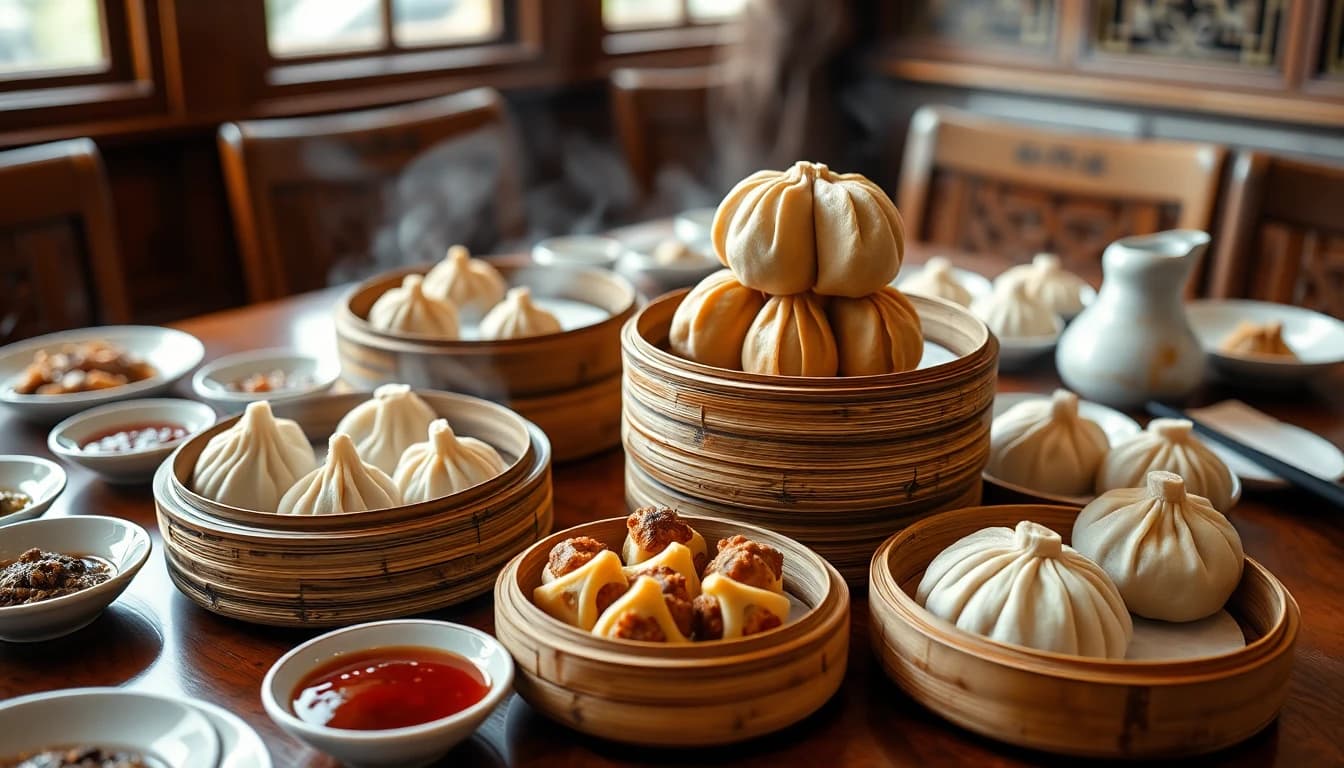
The heart of dim sum is found in the steamers. Start with Har Gow (shrimp dumplings). The wrapper should be translucent, thin, and slightly chewy, encasing whole, crunchy shrimp. Siu Mai (pork and shrimp dumplings) are open-topped, with a coarse, juicy filling often topped with crab roe or a single pea. Char Siu Bao (barbecue pork buns) are fluffy, white steamed buns filled with sweet, savory roasted pork. For something unique, try Phoenix Talons (chicken feet), braised in a black bean sauce.
They are gelatinous and flavorful, an acquired taste for some but a true classic.
Fried, Baked, and Rice Noodle Rolls
Texture contrast is key. Ham Sui Gok (fried glutinous rice dumplings) are crescent-shaped, with a crispy, bubbly shell and a savory pork filling. Wu Gok (taro dumplings) are similar but made with mashed taro for a fluffy interior. For baked goods, Dan Tat (egg tarts) are essential, with either a flaky pastry or a cookie-like crust holding a smooth, sweet custard. Cheung Fun (rice noodle rolls) are silky sheets of rice noodle, often filled with shrimp, beef, or BBQ pork, and served with a sweet soy sauce.
At Empire Seafood Restaurant (5951 No. 3 Rd #150, Richmond), their shrimp rice noodle roll is a benchmark dish.
Don't Forget the "Heavy Hitters"
Beyond small bites, consider one or two larger, shared plates. Lo Bak Go (pan-fried turnip cake) is a savory cake made from shredded daikon radish and rice flour, often studded with Chinese sausage and shrimp, fried until crispy on the outside. Ngau Yuk Yee Mein (beef brisket with yee noodles) is a comforting, braised dish. For a Richmond-specific tip, many restaurants offer new, high-end dishes like abalone dumplings or truffle siu mai, reflecting the city's luxurious take on the tradition.
Exploring different venues is part of the fun, much like navigating the diverse options in our Richmond Food Court Guide.
Summary: First-time dim sum diners in Richmond should focus on classic dishes like Har Gow (shrimp dumplings), Siu Mai (pork dumplings), Char Siu Bao (steamed BBQ pork buns), and Cheung Fun (rice noodle rolls). A balanced order includes steamed items for freshness, fried items like Wu Gok (taro dumplings) for crunch, and a shared plate like Lo Bak Go (turnip cake). A meal for four people typically requires 10-12 different dishes to sample a proper variety.
Step-by-Step Guide to Ordering at Top Richmond Dim Sum Restaurants
Let's walk through the practical process, from arrival to payment, at a typical busy Richmond dim sum hall. This will demystify the entire experience.
Step
1: Planning and Arrival Dim sum is primarily a lunch affair, served from about 10:00 AM to 2:30 PM. Go early. Arriving by 10:30 AM on a weekend reduces your wait time. Most restaurants do not take reservations for small tables during peak hours. When you arrive, give your name and party size to the host. You will receive a numbered ticket. Wait in the designated area. This is a good time to review a menu if available, or plan your must-order dishes. Use TransLink's Trip Planner to check bus or SkyTrain schedules to busy areas like Aberdeen Centre, as parking can be challenging[2].
Step
2: Seating and Initial Tea Service When your number is called, you will be led to your table. A server will immediately ask about tea. Choose a type for the table. They will bring a pot, often with a tea light underneath to keep it warm. You will also receive cups, a bowl for rinsing utensils (a cultural practice), and your order card or checklist menu. If you have a checklist, now is the time to start marking. If it is cart service, your card will be placed on the table ready for stamps. Your server may also ask if you want any immediate "kitchen" items, like congee or noodle soups, which are made to order.
Step
3: The Ordering Process in Action For Cart Service: Keep an eye on the carts. Raise your hand or make eye contact with a server pushing a cart that looks promising. Ask what they have. When you accept a dish, the server will stamp your card. It is okay to say "no, thank you" if nothing appeals. Different carts carry different items, so be patient. For Checklist Menu: Complete your menu, double-checking quantities. Raise your hand to flag down a server, or there is often a dedicated server for collecting menus. Hand it to them. They may read it back to you in Cantonese for confirmation. Your dishes will then arrive from the kitchen in a steady stream, not all at once.
Step
4: During the Meal and Final Bill Dishes will accumulate on the table. Servers will periodically check your tea pot and refill it with hot water. To ask for the bill, make eye contact with a server and mimic writing a check in the air, or say "maai dan" (check, please). They will bring your order card, which now has a tally of all your dishes and the total. Payment is usually done at the front cashier station on your way out. Most places accept credit cards, but it is wise to have some cash, especially for smaller places or during busy times.
For planning your food budget, you can use our free income tax calculator to manage your dining expenses.
Summary: To order dim sum at a Richmond restaurant, arrive before 11 AM to avoid long waits. Upon seating, select a tea for the table. For cart service, choose dishes as they pass and servers will stamp your card. For a checklist menu, mark your selections and hand it to a server. Dishes arrive as they are prepared. Request the bill by saying "maai dan" and pay at the front cashier. A typical per-person cost ranges from $25 to $40, including tea and tax.
Etiquette Tips and Cultural Notes for Ordering Dim Sum in Richmond
A little knowledge goes a long way in feeling comfortable and showing respect for the culture surrounding dim sum.
Tea Etiquette and Table Manners
The tea pot lid is a communication tool. If you need a refill of hot water, place the lid of the tea pot slightly ajar or on top of the handle. A passing server will notice and refill it. When someone pours tea for you, tap two fingers (index and middle) lightly on the table next to your cup. This is a silent "thank you," a tradition said to originate from an emperor in disguise. Never let someone's teacup remain empty; refilling others' cups before your own is polite. When serving yourself food, use the communal serving spoons or chopsticks provided.
Do not use your personal eating chopsticks to take food from the shared plates.
Ordering for the Table and Sharing
Dim sum is a shared, family-style meal. It is customary for one person to take charge of ordering for the group, considering everyone's preferences. Dishes are placed in the center, and everyone takes a piece at a time. Do not hoard a dish for yourself. It is acceptable to ask for a second order of a popular item. If you are hosting, it is a gracious gesture to pour tea for your guests first. For large gatherings, like office teams, some of the principles of sharing and variety apply, similar to when you're selecting from Vancouver catering companies for large office orders.
Practical Richmond-Specific Tips
Dress is casual. The dining rooms can be noisy, so expect a lively atmosphere. It is not considered rude to be direct with servers when ordering from a cart; a simple point or nod is sufficient. Tipping is expected, with 10-15% being standard for adequate service. If you have dietary restrictions, the checklist menu is your friend, as you can carefully select items. Be aware that some dishes may contain hidden shellfish or pork. When in doubt, ask. For the most current information on food safety and allergens, you can refer to Health Canada's guidelines[3].
Finally, embrace the pace. Dim sum is meant to be leisurely. Enjoy the tea, the conversation, and the gradual parade of delicious food.
Summary: Key dim sum etiquette in Richmond includes using the tea pot lid to signal for a refill, tapping two fingers on the table to thank someone for pouring tea, and using serving utensils for shared dishes. Meals are communal, with dishes placed in the center for everyone to share. Tipping 10-15% is standard, and the atmosphere is generally casual and lively. Understanding these nuances enhances the dining experience and shows cultural respect.
Key Takeaway
To successfully order dim sum in Richmond, BC, arrive early on weekends and understand the two main systems: traditional cart service for a dynamic experience or a checklist menu for precision. Start with classic dishes like har gow and siu mai, use tea etiquette like the finger tap, and remember the meal is meant for sharing. The average cost is $25-$40 per person for a satisfying, authentic experience.
Frequently Asked Questions
What is the best time to go for dim sum in Richmond to avoid a wait?
The absolute best time is on weekdays, right when they open (usually 10 AM). For weekends, aim to arrive before 10:30 AM. Wait times can easily exceed an hour after 11:30 AM at popular spots like Sea Harbour or Fisherman's Terrace. Late lunch (after 1:30 PM) is another option, but some popular dishes may be sold out.
How many dim sum dishes should I order per person?
A good rule of thumb is 3-4 dishes per person, plus one shared "special" item like a rice or noodle dish. For a table of four, ordering 10-12 different dishes provides a excellent variety to sample. Remember, you can always order more if you are still hungry, as dishes come out continuously.
Can I get dim sum for takeout or delivery in Richmond?
Yes, many restaurants offer takeout. You can call in an order using their checklist menu. For delivery, services like thestormcafe.com specialize in delivering full dim sum meals from local kitchens. Some restaurants also partner with major delivery apps. The quality of steamed items is best fresh, but fried and baked items travel well.
Are there vegetarian dim sum options in Richmond?
Yes, though selection is more limited. Look for dishes like steamed vegetable dumplings, fried tofu skin rolls, vegetarian spring rolls, turnip cake (check for meat bits), and steamed buns filled with mushrooms or red bean paste. Always inform your server of dietary restrictions, as some vegetable dishes may be cooked in animal-based broths.
What's the difference between "Small," "Medium," "Large," and "Special" on the menu?
These are price categories that generally reflect the complexity or cost of ingredients. "Small" might be simple steamed buns or desserts ($6-$8). "Medium" could be standard dumplings ($8-$10). "Large" often covers rice noodle rolls or fried items ($10-$12). "Special" is for premium dishes like those with scallops, abalone, or more expensive meats ($13-$18+).
Is it okay to go for dim sum alone?
While it is a social meal, it is perfectly acceptable to go alone. You will likely be seated at a smaller table. The checklist menu system is ideal for solo diners, as you can order just 2-3 dishes you want. Some places even have counter seating. It is a great way to enjoy a quiet, focused meal.
How do I handle the payment if I want to treat my family or friends?
The most straightforward way is to take the order card to the front cashier and pay there before your guests get up. In Cantonese culture, it is common for a polite but brief "fight" over the bill, but the person who invited or is eldest often insists on paying. Let the server know you are paying when you ask for the bill.
References
[1] Tourism Richmond, "Richmond Dining Guide," 2026. Official guide to Richmond's Asian restaurant scene and food courts. https://www.visitrichmondbc.com/eat-drink/
[2] TransLink, "SkyTrain and Bus Network," 2026. Metro Vancouver public transit routes connecting food neighborhoods across the region. https://www.translink.ca/
[3] Richmond Night Market, "Official Website," 2026. Seasonal night market information including dates, vendors, and food stalls. https://richmondnightmarket.com/
[4] Destination British Columbia, "Travel Guide," 2026. Official BC tourism information including itineraries and seasonal guides. https://www.hellobc.com/
Related Articles
Late-Night Eats Vancouver: Open After 10pm, By Area (2026)
The 2026 by-area table of Vancouver late-night food: real spots open after 10pm with verified kitche
Cheap Eats Vancouver Under $15 — by Neighbourhood (2026), Every Entry a Real Dish at a Real Price
A price-verified guide to cheap eats in Metro Vancouver under $15 (2026). Every entry is a real dish
All-You-Can-Eat Korean BBQ Vancouver, BC: Prices Ranked (2026), By Neighbourhood
The complete 2026 price guide to all-you-can-eat Korean BBQ in Vancouver, BC and Metro Vancouver. AY