How to Open a Canadian Bank Account Before You Arrive (2026)
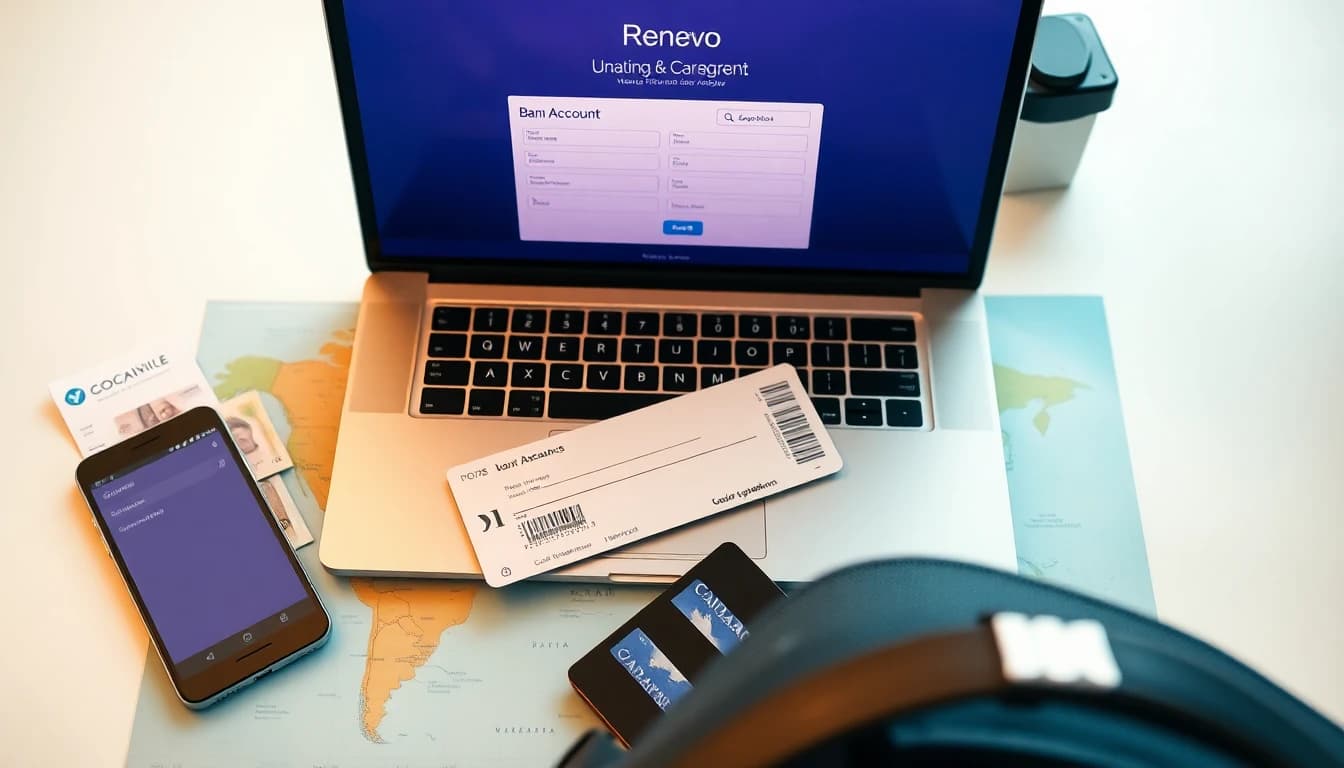
RBC, TD, Scotiabank, and BMO offer formal pre-arrival account opening for newcomers in 2026. RBC stands out for allowing credit card applications before landing, a key step for building Canadian credit history immediately.
Last reviewed: April 2026. Data current as of this date.
Introduction
In 2025, over 430,000 new permanent residents landed in Canada, with a significant portion choosing British Columbia as their new home[1]. For many, their first financial steps begin before their plane even touches down. I remember landing at Vancouver International Airport (YVR) in 2020, jet-lagged and overwhelmed, with a wad of foreign cash and no way to pay for a taxi or buy a SIM card. My first week was a scramble to find a bank branch, book an appointment, and wait for my account to be active, all while trying to settle into a new city.
It was a stressful introduction that I want to help you avoid.
Setting up your banking before you arrive is one of the smartest moves you can make as a newcomer. It means you can receive an e-transfer for your rental deposit, get your employer to direct deposit your first paycheck immediately, and start building your Canadian credit history from day one. In a city like Vancouver, where the cost of living is high and digital transactions are the norm, not having local banking can seriously delay your settlement.
This guide will walk you through exactly which banks let you open an account from overseas, what you can and can't do before landing, and how to complete the process once you're in Vancouver. I'll share the specific mistakes I made, the bank branches in Vancouver that are most helpful for newcomers, and a clear comparison so you can choose the best option for your situation.
Quick Answer
Can You Open a Canadian Bank Account Before Arriving?
Yes, you can open a Canadian bank account from overseas, but only with specific banks that offer formal pre-arrival programs for newcomers.
Major banks like RBC, TD, Scotiabank, and BMO have dedicated "newcomer" or "pre-arrival" banking services. You can apply online from your home country, often up to a year before your planned move. Your account will be pre-approved and set up, but it will have limited functionality until you physically visit a branch in Canada within a set period (usually 30 to 90 days) to show your immigration documents and finalize everything. This process lets you secure an account number, transfer initial funds, and even apply for a credit card in some cases, so your financial life is ready to go the moment you land.
Which Banks Allow Pre-Arrival Account Opening in 2026?
When I was preparing to move, I assumed all big banks would let me sign up online. I was wrong. Only a handful have invested in the systems and international verification processes needed for secure pre-arrival banking. These programs are specifically designed for people with approved study permits, work permits, or permanent residency. Tourists or visitors generally cannot use them.
The main players haven't changed much, but their offerings have become more competitive. Here’s a breakdown of who does what.
RBC’s Newcomer Advantage Program
The Royal Bank of Canada (RBC) is often the first name newcomers hear, and for good reason. Their program is one of the most established. You can apply online up to one full year before your arrival date. The process is straightforward: you fill out a digital application, and they perform a soft credit check (which doesn't affect your score) using your international credit history if available. Once approved, you get a welcome package with your account number.
A key benefit is that RBC will let you apply for a credit card as part of the pre-arrival process. If approved, the card will be waiting for you at the branch you select. This is a huge head start on building Canadian credit. I chose the RBC branch at 5951 No. 3 Road in Richmond for my landing appointment because it's in a central, newcomer-friendly area and the staff were exceptionally patient.
TD’s Cross-Border Banking
TD Canada Trust offers a "Cross-Border Banking" package that is popular with people moving from the United States, but it's also available to newcomers from other countries. You can open both a U.S. and a Canadian account simultaneously, which is fantastic if you have assets or income in both countries. The pre-arrival application is done online, and you'll need to fund the account with a minimum deposit (often around $1,000 CAD).
Once you land, you have 90 days to visit a TD branch to activate your account. A great location for this in Vancouver is the TD branch at 601 West Hastings Street. It's large, handles many international clients, and is close to other settlement services.
Scotiabank’s StartRight Program
Scotiabank’s StartRight Program is a strong contender, especially for students. They offer a no-fee banking package for the first year, which includes unlimited transactions. Their pre-arrival application is integrated with some international student agencies, making it a smooth process if you're coming to study at UBC, SFU, or BCIT.
One unique feature is their partnership with CIBC for ATM access in certain regions, giving you a wider network. For your landing appointment in Vancouver, the Scotiabank at 650 West Georgia Street (downtown) is a major hub that processes many newcomer accounts daily.
BMO and CIBC’s Offerings
Bank of Montreal (BMO) offers pre-arrival account setup, but it may require you to apply through an international partner bank in your home country in some regions. It's worth checking their newcomer website to see if your country is listed. CIBC’s pre-arrival options have historically been more limited, often requiring you to be physically in Canada or to have a specific type of visa. They are better approached once you've landed.
| Bank | Program Name | How Early to Apply | Minimum Deposit | Credit Card Pre-Approval? | Best For Newcomers Because... |
|---|---|---|---|---|---|
| RBC | Newcomer Advantage | Up to 1 year before | $0 to open | Yes, can apply online | Most established process; credit card head start is a major advantage. |
| TD | Cross-Border Banking | Before arrival | ~$1,000 CAD | Sometimes | Ideal if you have US ties or assets; long 90-day window to activate. |
| Scotiabank | StartRight Program | Before arrival | $0 to open | No, apply after landing | Best no-fee package (first year); great for students. |
| BMO | NewStart Program | Before arrival | Varies | Limited | Good if your home country has a partner bank with BMO. |
| CIBC | Smart Account | After arrival | $0 to open | No | Not recommended for pre-arrival; better as an in-person option. |
Summary: RBC, TD, Scotiabank, and BMO offer formal pre-arrival account opening for newcomers in
- RBC stands out for allowing credit card applications before landing, a key step for building Canadian credit history immediately. Choosing the right program depends on whether your priority is credit building, US-Canada banking, or avoiding fees.
Step-by-Step Guide to Opening Your Account from Overseas
Let's walk through the exact steps I took with RBC, as it's the most common path. The principles are similar for other banks, but the interfaces and required documents will vary.
Step
1: Gather Your Documents (Before You Click Apply) You cannot start the application without having digital copies of your key documents ready. You will need:
- A valid passport. This is non-negotiable.
- Your Confirmation of Permanent Residence (COPR) document, your study permit approval letter (I-20 for US, Letter of Introduction for Canada), or your work permit approval letter. This proves your eligibility for the newcomer program.
- Your planned Canadian address. You don't need to have a signed lease yet. I used the address of the Airbnb I had booked for my first two weeks in Vancouver. The bank knows this is temporary. You can update it later.
- Your planned arrival date. Be as accurate as possible.
I made the mistake of starting the application late at night and then scrambling to find a scanner for my documents. Prepare them in PDF or JPEG format first.
Step
2: Complete the Online Application
Navigate to the bank's dedicated newcomer page. For RBC, it's rbc.com/newcomers. You'll be guided through a secure form that asks for your personal details, immigration information, and employment intentions. The form will ask how much money you plan to transfer initially. This isn't a test; it's for regulatory reporting. You can estimate.
You will be asked to select a "home branch" in Canada. This is important. Choose a branch in the city where you will first live, ideally one known for handling newcomers. In Vancouver, besides the Richmond branch I used, the RBC at 1025 Dunsmuir Street downtown is also experienced. Selecting the right branch ensures the staff expecting you are familiar with the process.
Step
3: Account Approval and Initial Funding Once you submit, the bank will review your application. This can take from a few hours to a few business days. You will receive an email confirmation with your new Canadian bank account number and a customer number. This is a big moment. You now officially have a Canadian financial identity.
At this point, you can initiate an international wire transfer to fund your account. I used Wise (formerly TransferWise) to send my initial funds because their exchange rates were better than my home bank's. It took two business days for the money to arrive in my new RBC account. Important: The account is still in a "pre-arrival" or "restricted" status. You can receive money, but you likely cannot spend it or use online bill payments until you visit the branch.
Step
4: The Landing Appointment in Vancouver This is the most critical step. You typically have 30 to 90 days from your arrival in Canada to visit your chosen branch. Call ahead to book an appointment as a "newcomer finalizing a pre-arrival account." Bring the following original documents:
- Your passport.
- Your actual study/work permit or COPR (the paper document you received at the border).
- A proof of address in Canada. This can be a rental agreement, a bank statement from your home country sent to your Canadian address, or a letter from your employer or school. If you don't have this yet, ask the bank what alternatives they accept. Some will accept a cell phone bill.
- Your Social Insurance Number (SIN) if you have it. You can get this at a Service Canada Centre. The one at 757 Hastings Street in Vancouver is usually busy but efficient. Go early.
At the appointment, the banker will verify your documents, remove the restrictions on your account, order your debit card, and help you set up full online and mobile banking. If you applied for a credit card, they will give it to you here.
Summary: The four key steps are: 1) prepare digital copies of your passport and immigration papers, 2) complete the online application on the bank's newcomer site, 3) fund your account via an international transfer, and 4) visit your chosen Canadian branch within the deadline with original documents. Booking your branch appointment within your first week in Vancouver should be a top priority.
Benefits and Limitations of Pre-Arrival Banking
Understanding what you can and cannot do with a pre-arrival account will set the right expectations and help you plan your first weeks.
The Major Benefits: Why It’s Worth the Effort
The biggest benefit is immediate financial functionality. When I landed, my roommate asked for an e-transfer for my share of the rent and security deposit. Because my RBC account was already funded, I could send it the same day. Without a Canadian account, I would have had to give her cash or try an expensive international transfer.
Direct deposit for your job or government benefits is another huge advantage. If you secure a job quickly, your employer can pay you right away. Similarly, benefits like the Canada Child Benefit or GST/HST credit can be deposited seamlessly. You can use our free income tax calculator to estimate your take-home pay and see what benefits you might be eligible for.
It also reduces stress during a chaotic time. Having one major task (banking) already checked off your list lets you focus on finding a home, getting a phone plan, and exploring your new neighbourhood, like grabbing a comforting bowl of ramen at Marutama Ra-men at 780 Bidwell Street after a long day of errands.
The Key Limitations: What You Still Have to Wait For
The primary limitation is that your account is not fully operational until you visit the branch. You cannot use a debit card, withdraw cash, or set up pre-authorized payments. Think of it as a "holding" account for your money.
You cannot usually get a debit card or cheque book mailed overseas. These are only issued in person for security reasons. Also, while some banks (like RBC) allow credit card applications, you will not have the physical card or the ability to use it until your in-person verification.
Finally, some digital features may be locked. For instance, you might not be able to enroll in Interac e-Transfer Autodeposit or link external accounts until the account is fully activated. Don't plan on using this as your primary spending account until after your branch visit.
Summary: A pre-arrival account lets you securely receive funds, set up direct deposit, and reduce landing-day stress, acting as a financial landing pad. However, you cannot spend the money, get a debit card, or fully use digital banking until you complete an in-person branch visit within your first month in Canada.
Common Mistakes Newcomers Make (And How to Avoid Them)
I learned these lessons the hard way or saw friends struggle with them. Avoiding these can save you time, money, and frustration.
Mistake
1: Waiting Too Long to Visit the Branch The bank gives you a window (e.g. 30 days) to visit. It’s easy to think, "I'll get settled first." But without activating your account, you're stuck. I’ve seen newcomers miss the deadline by a few days and have their account frozen or even closed, requiring a completely new application. Cost of mistake: Potential loss of access to your transferred funds for weeks and a $50-$100 wire transfer fee to send money elsewhere.
The Fix: Book your branch appointment for your second or third day in Canada. Treat it with the same urgency as getting your SIN. Use the morning to visit Service Canada on Hastings Street, then walk to your bank appointment in the afternoon.
Mistake
2: Not Bringing the Correct Original Documents The online application uses copies, but the branch needs originals. The most common issue is bringing the approval letter for your study or work permit instead of the actual permit you received at the border. They are different documents. The border officer stamps and issues the official permit; that's the one the bank needs to see.
The Fix: As soon as you clear customs at YVR, put your immigration documents (COPR, Permit) in a safe, separate folder in your carry-on luggage. Do not pack them in your checked baggage.
Mistake
3: Underestimating the Need for a Proof of Address You have an account, but to remove all restrictions, the bank needs proof you live in Canada. If you're in temporary housing, this can be tricky. A common error is bringing a lease agreement for a future move-in date that hasn't started yet.
The Fix: Open a Canadian mobile phone plan immediately. Providers like Fido or Koodo will give you a bill with your name and Canadian address, which most banks accept. Alternatively, ask your employer or school for a confirmation of address letter on official letterhead. For more on managing early costs, check out our guide on creating your first budget in Canada.
Mistake
4: Not Using a Cost-Effective Method to Transfer Initial Funds I almost made this mistake. My home bank offered to do the wire transfer for a $50 flat fee plus a poor exchange rate that cost me an extra 3% on a $10,000 transfer. That's $350 lost.
The Fix: Use specialized international transfer services like Wise or Remitly for your large initial transfer. They offer mid-market exchange rates and much lower fees. Transfer a small amount first to test, then send the bulk of your funds. Save our guide on sending money to Canada for a detailed comparison.
Summary: The most costly newcomer banking mistakes include delaying the branch visit (risking account closure), bringing the wrong immigration papers, lacking a Canadian proof of address, and using expensive wire transfers. Proactive planning in your first 72 hours in Vancouver can prevent all of these issues and save you hundreds of dollars.
Frequently Asked Questions
Can I open a Canadian bank account online before arriving as a tourist?
No, you generally cannot. The pre-arrival programs described here are exclusively for individuals who have been approved for permanent residency, a study permit, or a work permit. Tourists and visitors must be physically present in Canada to open an account, and they will need to provide different forms of identification, such as a passport and a second government-issued ID.
What happens if I don't like the bank I chose with the pre-arrival program? Can I switch?
Yes, you can switch banks at any time after your account is fully activated. The process is called "switching" and is common in Canada. However, it's easier to do once you are fully settled, have a stable address, and have built a bit of credit history. There may be fees to close your old account if you don't maintain a minimum balance. It's best to research and choose carefully from the start to avoid the hassle.
Do I need a Social Insurance Number (SIN) to open a bank account?
No, you do not need a SIN to open a personal bank account in Canada. This is a common misconception. However, you do need a SIN to open an account that earns interest (like a savings account) or to apply for a credit card, as the bank is required by law to report interest income to the Canada Revenue Agency. You can open your chequing account first, then add a savings account or credit card once you obtain your SIN.
I am an international student. Are there any special banking offers for me?
Absolutely. Most major banks have special packages for students that include no monthly fees for a set period (often 4-5 years) and other perks like free Interac e-Transfers. Scotiabank's StartRight program and RBC's Student Banking are particularly popular. You will need your letter of acceptance from a designated learning institution (like UBC or SFU) and your study permit to apply.
Can my spouse or dependent children also open accounts through my pre-arrival application?
Usually, each individual over the age of majority (18 or 19, depending on the province) must apply separately. However, some banks allow you to start a joint account application during the pre-arrival process. You should indicate on your application that you wish to open a joint account and provide your spouse's details. They will likely still need to complete their own identity verification when you visit the branch together.
How much money should I transfer into my new Canadian account before I arrive?
This depends entirely on your situation, but a good rule of thumb is to transfer enough to cover your initial living expenses for 2-3 months. For Vancouver in 2026, this could easily be $8,000 to $12,000 CAD to cover temporary housing, a rental deposit, food, transportation, and initial household purchases. Use our free rent affordability calculator to budget for housing. Transferring a larger sum at once is often more cost-effective than multiple small transfers due to fixed fees.
Is my money safe in a Canadian bank account before I land?
Yes. Funds held in Canadian bank accounts are protected by the Canada Deposit Insurance Corporation (CDIC), a federal crown corporation. CDIC insures eligible deposits up to $100,000 per insured category (e.g. chequing, savings) per member institution. This protection applies as soon as your account is opened and funded, even in its pre-arrival status.
References
[1] Financial Consumer Agency of Canada, "Choosing a Bank Account," 2025. Guide to opening and comparing Canadian bank accounts. https://www.canada.ca/en/financial-consumer-agency/services/banking/opening-bank-account.html
[2] Immigration, Refugees and Citizenship Canada, "Your First Few Days in Canada," 2025. Official settlement checklist for new permanent residents. https://www.canada.ca/en/immigration-refugees-citizenship/services/new-immigrants/new-life-canada/pre-arrival-services.html
Related Articles
Vancouver Transit & Compass Card: Newcomer Guide
How to use Vancouver public transit and the Compass Card. Zones, fares, SkyTrain, buses, and money-s
Best Driving Schools in Vancouver for Newcomers
Top driving schools in Vancouver for newcomers. Multilingual instructors, ICBC road test prep, price

Cheapest Car Insurance in BC for Newcomers 2026
How to get cheap car insurance in BC as a newcomer. ICBC basics, optional coverage, foreign driving