Canada Child Benefit (CCB): How Much You Will Get in 2026
The Canada Child Benefit is a tax-free monthly payment that provides up to $7,787 per child under 6 and $6,570 per child aged 6-17 annually, with amounts reducing as family net income rises above $36, 502.
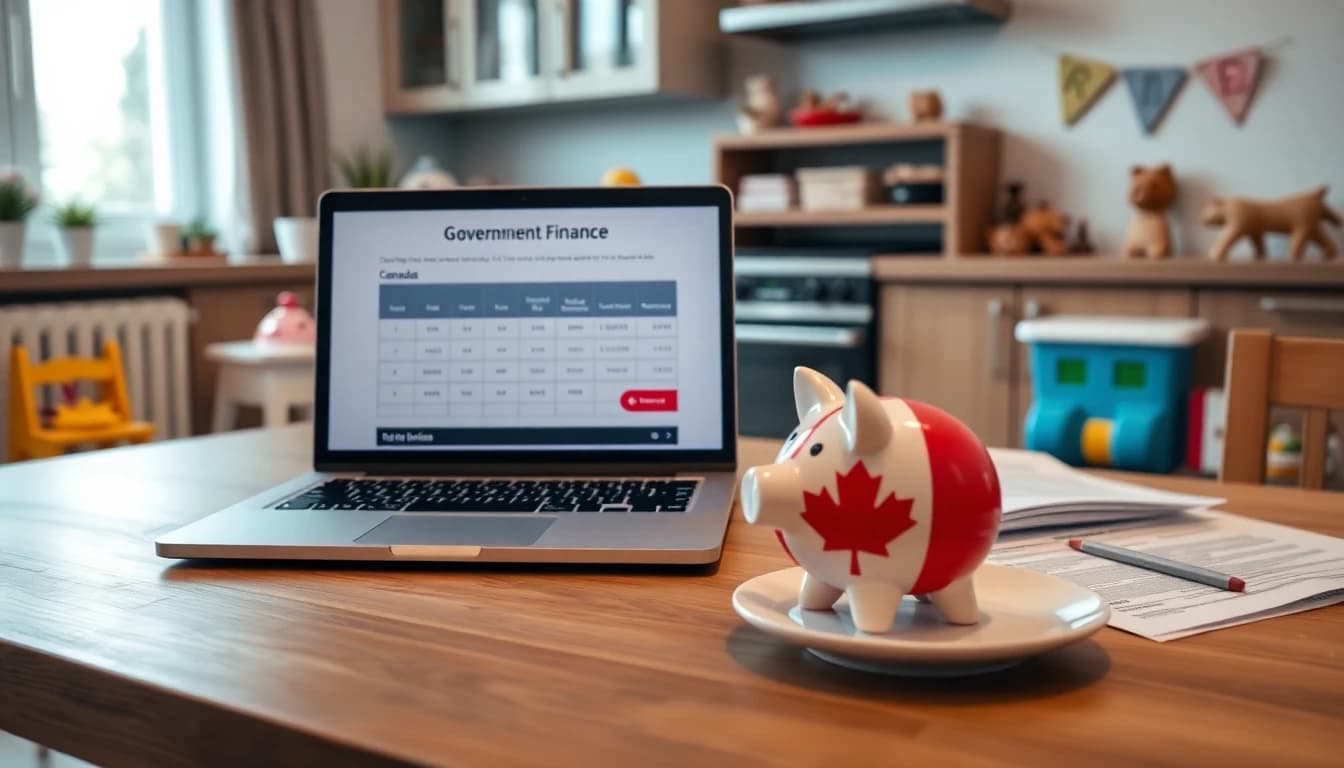
Last reviewed: April 2026. Data current as of this date.
Introduction
In the 2023-2024 benefit year, the Government of Canada distributed over $27 billion in Canada Child Benefit payments to support more than 3.5 million families across the country.[1] For a newcomer family in Vancouver, this monthly payment can be the difference between feeling stretched thin at the grocery store and being able to comfortably afford fresh produce, after-school activities, and the occasional family meal out. I remember my own first winter here, figuring out budgets between rent and groceries, and how a financial boost like the CCB would have changed our weekly rhythm.
This isn't just government paperwork, it's real money that can help you settle in, feed your family well, and explore your new city without constant financial worry.
Vancouver is a wonderful but expensive place to raise a family. A carton of berries, a kids' swimming lesson at the community centre, or a simple dinner for four at a casual spot like Red Robin (multiple locations, burgers $18-$25) adds up quickly. The CCB is designed to help with these exact costs. It's a tax-free payment sent monthly to eligible families, and for newcomers, it's one of the first and most important benefits to secure. However, the process has specific steps that aren't always obvious when you're also setting up banking, finding a home, and learning a new system.
This guide will walk you through exactly how much you can expect, how to calculate your payment, and the critical actions you need to take as a new resident to ensure you receive every dollar your family is entitled to.
Quick Answer
How Much is the Canada Child Benefit and How Do Newcomers Get It?
For the 2024-2025 benefit year, the maximum Canada Child Benefit is $7,787 per year ($649 monthly) for each child under 6, and $6,570 per year ($547.50 monthly) for each child aged 6 to 17, with payments starting to reduce for family net income over $36,502.[2]
As a newcomer, you cannot get the CCB automatically. You must actively apply for it by filing a Canadian income tax return, even if you had no income in Canada that year, and submitting the RC66 form (Canada Child Benefits Application) to the Canada Revenue Agency (CRA). Your payments will begin after your tax return and application are processed, which typically takes 8 to 11 weeks, and you will receive retroactive payments for up to 11 months prior to the month you applied. You must also apply for the BC Family Benefit, a separate provincial top-up that can provide an additional maximum of about $1,600 per year per child.
The key is to file your taxes as soon as you have your Social Insurance Number (SIN) and become a resident for tax purposes, which is usually the date you enter Canada.
What is the Canada Child Benefit and How Much Can You Get?
The Canada Child Benefit (CCB) is the federal government's primary tax-free monthly payment to help eligible families with the cost of raising children under 18 years old. It replaced several previous benefits in 2016 and is intentionally designed to be simpler and more generous for low and middle-income families. The amount you receive is based on your family's net income, the number of children you have, and their ages. Think of it not as a universal handout, but as a targeted support that scales down as your family income increases, ensuring it goes to those who need it most for essentials like healthy food, clothing, and school supplies.
For the current 2024-2025 benefit year, the maximum annual amounts are set at $7,787 for a child under 6 and $6,570 for a child aged 6 through 17. These maximums are paid in full to families with a net income below $36, 502. Above this threshold, the benefit begins to phase out. The reduction rate is 7% for families with one child, 13.5% for two children, and 19% for three or more children on the income above $36, 502. There is a second income threshold at about $130,000, where the phase-out rate changes again. The government indexes these amounts each July to inflation, so for the 2026 benefit year (which runs from July 2026 to June 2027), the figures will be slightly higher. You can expect an official announcement in early 2026.
How the CCB Phases Out With Income
To make this concrete, let's look at a Vancouver example. The Cho family has a 4-year-old and a 7-year-old. Their adjusted family net income is $55, 000. Their CCB would be calculated as follows:
- For the 4-year-old (under 6): Maximum benefit: $7,
- Income above threshold: $55,000 - $36,502 = $18,
- Reduction (13.5% for 2 children): $18,498 x 0.135 = $2,497.
- Net annual benefit: $7,787 - $2,497.23 = $5,289.77 (about $440.81 per month).
- For the 7-year-old (6-17): Maximum benefit: $6,
- Reduction: Same $2,497.
- Net annual benefit: $6,570 - $2,497.23 = $4,072.77 (about $339.40 per month). Their total monthly CCB would be approximately $
- This money could cover a significant portion of their monthly grocery bill at T&T Supermarket (multiple locations) or pay for a term of swimming lessons at the Vancouver Aquatic Centre.
The BC Family Benefit: Extra Money from the Province
On top of the federal CCB, British Columbia provides its own provincial top-up called the BC Family Benefit. You apply for this with the same RC66 form. For 2024, the maximum first-child benefit is about $1,600 per year, paid monthly alongside your CCB. This is a substantial addition. For a family with a toddler, this provincial portion could cover the entire monthly cost of a weekly vegetable and fruit box from a local service like SPUD or a season pass to the Vancouver Aquarium. It's important to ensure your application is complete so you receive both federal and provincial payments.
Summary: The Canada Child Benefit is a tax-free monthly payment that provides up to $7,787 per child under 6 and $6,570 per child aged 6-17 annually, with amounts reducing as family net income rises above $36,
- It is supplemented by the BC Family Benefit, adding up to $1,600 more per child. For a family in Vancouver, this combined support can directly offset high costs for groceries and children's activities, making a tangible difference in the household budget.
How to Use a CCB Calculator and Estimate Your Payment
Trying to manually calculate your CCB with phase-out rates can be confusing. This is where a reliable CCB calculator becomes an essential tool. It lets you input your specific situation (income, number of children, ages, province) and get a close estimate of your monthly and annual payments. This is helpful for family budgeting. Knowing an approximate amount helps you plan for recurring expenses, like whether you can afford the kids' menu at White Spot (burgers $12-$16) twice a month or if you should allocate those funds towards winter boots instead.
The most authoritative calculator is the official one provided by the Canada Revenue Agency (CRA). You can find it on the CRA website by searching "Child and family benefits calculator." It's complete and accounts for the BC Family Benefit. To use it, you'll need a good estimate of your family's net income for the tax year. If you're new and your income is hard to estimate, you can run multiple scenarios. Remember, the calculator provides an estimate. Your actual payment will be determined by the CRA after they process your tax return.
A Comparison of CCB Estimation Tools
While the CRA tool is best, other financial institutions offer simpler calculators. Here’s a quick comparison:
| Calculator | Best For | Pros | Cons |
|---|---|---|---|
| CRA Official Calculator | Final, accurate planning. | Most accurate, includes all provincial benefits, official source. | Can be complex for first-time users. |
| Bank Calculators (e.g. RBC, TD) | Quick, ballpark estimates. | Simple interface, easy to use. | May not include latest provincial rates, less precise. |
| OurFoodFix Income Tax Calculator | Understanding your net income first. | Helps you find your net income, which is the key input for CCB. | Doesn't calculate CCB directly, but is a important first step. |
I recommend using our free income tax calculator first to get a clear picture of your family's net income after taxes. This number is the critical input for any CCB calculation. Once you have that, head to the CRA site for the final estimate.
What Your CCB Estimate Means for Your Vancouver Budget
Let's say the calculator tells you to expect $650 per month for your two children. In Vancouver terms, that could be allocated as:
- $300 for a dedicated "healthy food" boost to your grocery budget at Persia Foods on Commercial Drive.
- $200 into a registered education savings plan (RESP).
- $150 for children's extracurriculars (e.g. one community centre class per child). Having this estimate transforms the benefit from an abstract concept into a practical budgeting line item. It allows you to make informed decisions about your family's lifestyle in your new city. For more on managing a food budget in Vancouver, see our guide on how to grocery shop smart in Vancouver.
Summary: Using the official CRA CCB calculator is the best way to estimate your payment. Start by determining your family net income, perhaps with our tax calculator, then use that figure in the CRA tool. An accurate estimate of, for example, $650 per month allows you to concretely plan for Vancouver-specific costs like higher-quality groceries or saving for your child's education.
Child Benefit Canada Newcomer: The Step-by-Step Application Guide
This is the most critical section for new residents. The CCB is not automatic. Many newcomers miss out on months of benefits because they don't know the specific steps required. As someone who navigated the Canadian tax system as a new permanent resident, I can tell you that taking these steps early is one of the highest-return financial tasks you can do. The key principle is this: You must file a Canadian tax return to qualify, even if you had zero Canadian income in the year you arrived. The CRA uses your tax return to assess your income and confirm your residency.
Your first step is to ensure everyone in the family has a Social Insurance Number (SIN). This is non-negotiable. Next, you need to determine your date of residency for tax purposes. This is usually the date you physically arrived in Canada with the intent to live here. You will report this on your tax return. Then, you must file a tax return for the year you became a resident, reporting your worldwide income from that year (from your date of arrival onward). Even if it's zero, you must file. Finally, you must submit the RC66 form (Canada Child Benefits Application).
You can do this through your CRA My Account once your first tax return is processed, or you can mail in the form.
Essential Documents and Forms You Need to Gather
- Social Insurance Numbers (SINs): For you, your spouse or common-law partner, and each child.
- Immigration Documents: Permanent resident cards, confirmation of permanent residence (IMM 5292 or IMM 5688), or work/study permits.
- Proof of Birth: For each child (long-form birth certificate is best, translated if necessary).
- Proof of Residency: Rental agreement, utility bill, or bank statement with your Vancouver address.
- RC66 Form: The Canada Child Benefits Application.
- RC66SCH Form: If applicable, the Status in Canada/Statement of Income form to report income from before you came to Canada. Gathering these documents early will save you time. For official guidance on settlement, you can refer to resources from Immigration, Refugees and Citizenship Canada.
The Application Timeline and What to Expect
After mailing your forms or submitting them online, processing typically takes 8 to 11 weeks. Once approved, you will receive a notice explaining your benefit amount. Payments are then made monthly, usually on the 20th of each month. Crucially, the CRA will backdate your application up to 11 months. So if you arrived in June 2025 but didn't apply until April 2026, you should receive a lump-sum retroactive payment for the months you were eligible. This lump sum can be significant. Imagine using a surprise $4,000 retroactive payment to buy quality beds for the kids, a year's membership to Science World, or to bulk-buy pantry staples at Costco in Burnaby.
You must keep your information up to date with the CRA. Any change in marital status, number of children, address, or custody arrangements must be reported immediately through your CRA My Account. If you leave Canada, you must inform the CRA, as it may affect your eligibility. For local BC support during this process, organizations listed on Settlement.Org BC newcomer resources can provide free help with tax filing and benefit applications.
Summary: Newcomers must proactively apply for the CCB by filing a Canadian tax return (even with $0 income) and submitting the RC66 form. Processing takes 8-11 weeks, with payments backdated up to 11 months. A retroactive lump-sum payment can provide a major financial cushion for settling-in costs, from furniture to stocking your kitchen in Vancouver.
Common CCB Mistakes Newcomers Make and How to Avoid Them
Seeing families miss out on money they're entitled to is frustrating. Based on community conversations and my own experience, here are the most frequent pitfalls and how to steer clear of them. Avoiding these mistakes can literally put thousands of dollars back in your pocket over your children's upbringing.
**
- Not Filing a Tax Return Because You Had No Canadian Income.** This is the number one error. The CCB is administered by the CRA, which needs a tax return to establish your income level (even if it's zero) and confirm your residency status. No return, no benefit. File that first return as soon as you have your SIN and your residency date.
** 2. Not Reporting Your Spouse's or Partner's Income.** The CCB is based on family net income. You must report the worldwide income of your spouse or common-law partner, even if they are not in Canada yet or are not a permanent resident. Failing to do this will result in an overpayment, which the CRA will eventually claw back, often with interest. It's a stressful headache you don't need.
** 3. Not Applying for the BC Family Benefit.** The federal RC66 form also serves as your application for the provincial top-up. However, some newcomers aren't aware this separate benefit exists. Ensure you are checking for both the Canada Child Benefit and the BC Family Benefit on your payment statements. That extra $100-$150 per month per child is specifically to help with BC's high cost of living.
** 4. Not Updating Your Marital Status.** If you get married, enter a common-law relationship, or separate, you must inform the CRA. Your benefit is based on your family income, and a change in status dramatically changes that calculation. An update can be done quickly online via CRA My Account.
** 5. Assuming the Benefit is Automatic or Instant.** It's not. You must apply, and there is a significant processing delay. Don't budget for the CCB in your first two months in Vancouver. Plan your initial grocery runs and expenses without it. When it arrives, it will feel like a welcome boost. To plan those early meals on a tight budget, consider affordable meal prep options from local services like The Storm Cafe, which can help manage food costs while you're getting settled.
** 6. Moving and Not Updating Your Address.** The CRA sends notices and payments by mail unless you set up direct deposit. If you move and don't update your address, you could miss important letters or even cheques. Set up direct deposit through your bank and CRA My Account at your earliest convenience. It's the safest and fastest way to receive funds.
Staying organized with your documents and using the CRA's online services are the best defenses against these mistakes. Treat your relationship with the CRA like an important administrative task, similar to renewing your health card. A little diligence goes a long way. For more tips on managing your new financial life, read our article on building your credit score in Canada as a newcomer.
Summary: The most costly CCB mistakes include not filing a tax return, not reporting a spouse's income, and missing the separate BC Family Benefit application. By filing taxes promptly, reporting all income, and using CRA's online portal to update information, newcomers can secure their full entitlement and avoid stressful repayment issues later.
Frequently Asked Questions
When will I get my first CCB payment after applying as a newcomer?
After the CRA processes your first tax return and your RC66 application, which typically takes 8 to 11 weeks, you will receive a notice of determination. Your first monthly payment will arrive on the next scheduled payment date (usually the 20th of the month). You will also receive a lump-sum retroactive payment for all eligible months going back up to 11 months before your application month. So, your first deposit could be large.
Can I get the Canada Child Benefit if I am on a work permit or study permit?
Yes, you may be eligible if you are a resident for tax purposes and you or your spouse or common-law partner is one of the following: a permanent resident, a protected person, a temporary resident who has lived in Canada for the previous 18 months and has a valid permit in the 19th month, or an Indigenous person under the Indian Act. You must still file a tax return and meet the other eligibility criteria.
How is the CCB paid, and can I get it by direct deposit?
The CCB is paid monthly. The CRA strongly encourages direct deposit, as it is the fastest and most secure method. You can set this up through your financial institution or via your CRA My Account online portal. If you do not set up direct deposit, you will receive a cheque by mail, which is slower and less secure.
Do I need to re-apply for the CCB every year?
No, you do not need to re-apply annually. However, you and your spouse or partner must file your tax returns every year, even if you have no income. The CRA automatically recalculates your benefit every July based on the family net income reported on your last processed tax return. If you stop filing returns, your payments will stop.
What happens to the CCB if my family income changes dramatically during the year?
The CCB amount for the benefit year (July to June) is based on your previous year's tax return. A current-year income change won't affect your payments until the next July recalculation. However, if your income drops due to a life event like job loss, you can request a recalculation by calling the CRA. They may use an estimate of your current-year income to adjust your payment.
Is the Canada Child Benefit considered taxable income?
No, a key feature of the CCB is that it is tax-free. You do not need to report it as income on your tax return. This means the full amount you receive is yours to keep and use for your family's needs.
Where can I get free help in Vancouver to apply for the CCB and file my taxes?
Several community organizations offer free tax clinics for eligible individuals and families. You can find a clinic near you through the CRA's Community Volunteer Income Tax Program (CVITP) webpage. Additionally, settlement agencies like those listed on Settlement BC's website often provide guidance on benefit applications for newcomers.
References
[1] Financial Consumer Agency of Canada, "Choosing a Bank Account," 2025. Guide to opening and comparing Canadian bank accounts. https://www.canada.ca/en/financial-consumer-agency/services/banking/opening-bank-account.html
[2] Immigration, Refugees and Citizenship Canada, "Your First Few Days in Canada," 2025. Official settlement checklist for new permanent residents. https://www.canada.ca/en/immigration-refugees-citizenship/services/new-immigrants/new-life-canada/pre-arrival-services.html
[3] Daily Hive Vancouver, "Food Section," 2026. Local news coverage of Vancouver restaurant openings, closures, and food trends. https://dailyhive.com/vancouver/food
Related Articles

Daycare Waitlist Strategy in Vancouver 2026
How to get off daycare waitlists in Vancouver. Strategies, $10/day program, costs, and tips for newc

Best Neighborhoods for Families in Vancouver
Top family-friendly neighborhoods in Metro Vancouver. Best schools, parks, safety, and affordability
Vancouver Transit & Compass Card: Newcomer Guide
How to use Vancouver public transit and the Compass Card. Zones, fares, SkyTrain, buses, and money-s