Asian Fusion Restaurants in Vancouver: Where East Meets West
Explore Vancouver's best Asian fusion restaurants, from Japanese-French omakase to Korean-Mexican tacos. A local guide to where Pacific Rim flavours meet Western technique.
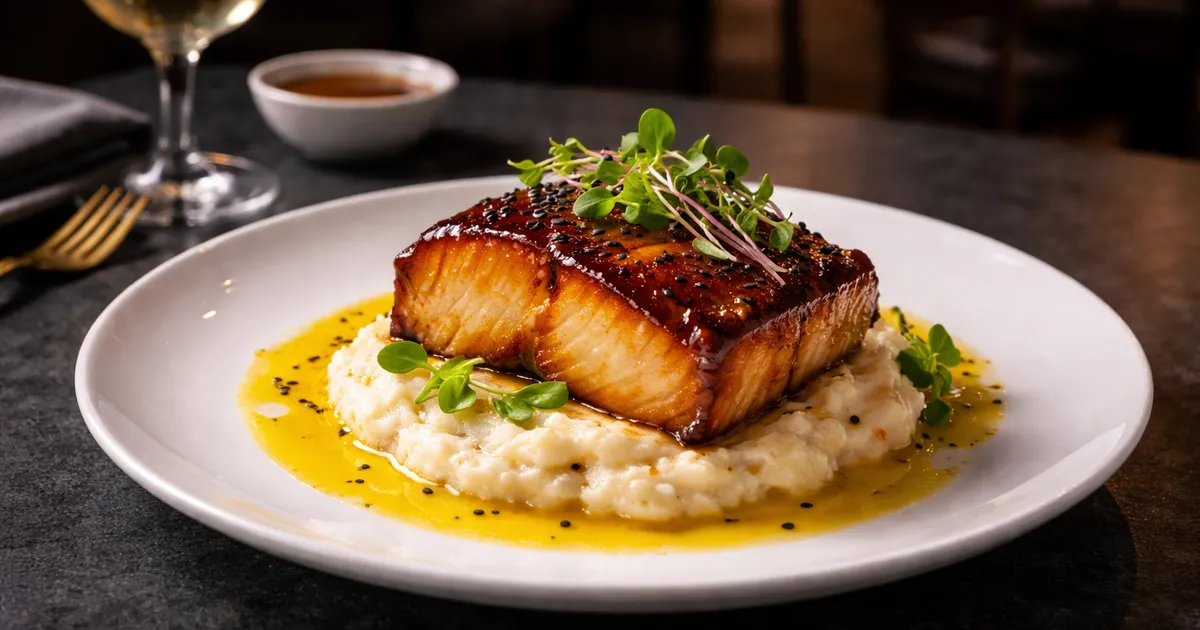
Vancouver didn't invent Asian fusion. But no city in North America does it with the same fluency. When nearly half your metropolitan population traces roots to Asia, and your geography places you closer to Tokyo than to Toronto, fusion isn't a gimmick bolted onto a Western menu. It's the natural outcome of a city that has been cooking at the intersection of the Pacific and the West for over a century[1].
The term "Asian fusion" gets thrown around loosely. In most cities, it signals a vaguely pan-Asian menu with a few French techniques and some microgreens. In Vancouver, fusion cooking carries a different weight. It emerges from real communities: Cantonese families who arrived during the Gold Rush and adapted their cooking to available BC ingredients. Japanese fishermen who settled on the coast and supplied the very salmon and spot prawns that now appear in aburi preparations. Korean and Filipino immigrants who brought fermentation traditions that turned out to pair beautifully with Pacific Northwest produce[2].
What follows is a deep guide to Vancouver's Asian fusion landscape -- who does it well, where the price points fall, and why this city's version of the genre deserves to be taken seriously.
Summary: Vancouver's Asian fusion scene is rooted in over a century of Pacific Rim immigration, not trendy marketing. This guide covers the full spectrum -- Japanese-French fine dining, Chinese-Western adaptations, Korean-Mexican street food, and farm-to-table Asian concepts -- with specific restaurant recommendations, price ranges, neighbourhood maps, and the cocktail programs worth seeking out.
Last reviewed: March 2026. Data current as of this date.
Asian-Fusion Restaurants in Vancouver: My Side-by-Side Table
Half of Metro Vancouver traces its roots to Asia, so "fusion" here rarely means a Western kitchen sprinkling soy sauce on a plate — it means a Japanese-Italian counter in Chinatown or a chef cooking modern Thai with Pemberton produce. To keep this table honest, I limited it to places that genuinely braid two traditions together, not gimmicks. Everything below is current as of June 2026; where I could not tie a dish to a published menu price I tagged it "approx — confirm" so you call ahead, and I flagged one important change at the bottom so you do not show up expecting the old concept.
Restaurant Area Signature Fusion Dish Price (CAD) Notes Kissa Tanto Chinatown, Vancouver Japanese-Italian; flash-fried whole fish w/ daikon soy approx — confirm Michelin Guide; Bao Bei team (Tannis Ling, Joël Watanabe); reservations strongly advised Bao Bei Chinese Brasserie Chinatown (163 Keefer St), Vancouver Mantou buns w/ braised pork, miso-serrano aioli approx — confirm "Chinese-ish" since 2010; Taiwan/Shanghai influence; shared small plates; Michelin Guide PiDGiN Gastown, Vancouver Asian-French fusion tasting plates approx — confirm Michelin recommended; dinner only (~5pm onward); cocktail-forward Torafuku Mount Pleasant (958 Main St), Vancouver Pan-Asian "Kickass Rice" w/ fried chicken $18 (lunch bowl) Michelin Guide; rice bowls at lunch, more adventurous at dinner; closed Mondays Miku Downtown (70-200 Granville St), Vancouver Aburi (flame-seared) salmon oshi sushi $16–17 / 6 pcs; $26 premium plate Pioneered aburi sushi in Canada; European-influenced sauces over Japanese technique Vij's 3106 Cambie St, Vancouver Indian fine dining; wine-marinated lamb popsicles $33 Vikram Vij flagship (since 1994); Michelin Guide; BC produce + Indian method; no reservations Maenam Kitsilano (1938 W 4th Ave), Vancouver Modern Thai w/ local/seasonal BC ingredients approx — confirm Chef Angus An (opened 2009); Michelin recommended Don at Kitsilano Kitsilano (2186 W 4th Ave), Vancouver Chili crunch fried chicken don approx — confirm Asian-fusion; Chef Victor He (ex Shanghai/Korea Michelin kitchens); small cozy room Anh and Chi Main St (3388), Vancouver "Vietnamese reimagined"; DIY street-side platter approx — confirm Michelin Bib Gourmand 2022–2025; modern take on home-style Vietnamese Kingyo Denman St (871), West End, Vancouver Stone-grilled beef tongue (tableside) approx — confirm Creative Japanese izakaya; reservations essential on weekends Fat Mao Noodles Chinatown + Downtown, Vancouver Thai-style khao soi noodle soup approx — confirm Casual Thai noodle shop by Chef Angus An (Maenam group) Published on Main Mount Pleasant (3593 Main St), Vancouver Hyper-local tasting menu, global technique $170++ (Green tasting menu) No. 17 on 2026 North America's Best Restaurants; not strictly "Asian" but fusion-forward Japadog Multiple locations + cart, Vancouver Japanese-flavoured street hotdogs (e.g. Terimayo) approx — confirm Iconic Vancouver Japanese-Western street food; budget-friendly Kosoo Pocha at Sai Woo Chinatown (158 E Pender St), Vancouver Korean pocha; "Chinatown Paella" (legacy dish) approx — confirm Permanently closed February 2025 — the 158 E Pender space later reopened as Uchu, a Peruvian cevicheria (Feb 2026); the Asian-fusion / Korean-pocha concept is gone A few notes from someone who actually eats out there
- The two anchors of the scene are in Chinatown: Kissa Tanto (Japanese-Italian) and its sibling Bao Bei (modern Chinese) are the names to know if you want the most distinctive fusion cooking. Both are small and busy — book ahead.
- Best value fusion: Torafuku's $18 lunch "Kickass Rice" bowls and Japadog's street dogs are the easiest ways to taste the genre without a fine-dining bill.
- Prices marked "approx — confirm" come from review snippets or menus I could not verify to an exact current dish price as of June 2026. Call or check the restaurant site if the number matters to you.
A flag before you go
- Sai Woo / 158 E Pender — the long-running Chinatown Asian-fusion spot became Kosoo Pocha at Sai Woo (a Korean pocha) in late 2023, but that closed permanently in February 2025. The historic 158 E Pender space reopened in February 2026 as Uchu, a Peruvian cevicheria and raw bar — the Asian-fusion and Korean-pocha concepts are both gone, so don't show up expecting either.
_References: restaurant websites (kissatanto.com, bao-bei.ca, pidginvancouver.com, torafuku.ca, mikurestaurant.com, vijs.ca, maenam.ca, anhandchi.com, fatmaonoodles.com, saiwoo.ca), Michelin Guide, Wikipedia (Kissa Tanto), Vancouver Magazine, Georgia Straight, Scout Magazine, plus Yelp/Tripadvisor status checks — all accessed June 2026._
Vancouver as a Pacific Gateway: Why Fusion Is Native Here
Most North American food scenes bolt Asian fusion onto an existing Western restaurant culture. Vancouver is the inverse. Asian cooking is the foundation, and Western techniques layer on top.
The numbers tell the story. Metro Vancouver is home to approximately 1.1 million residents of Asian descent, representing about 48 percent of the region's population according to Statistics Canada[3]. Richmond alone has a Chinese-origin population exceeding 54 percent. This isn't a "diverse neighbourhood" situation -- it's a metro area where Asian foodways are the dominant culinary grammar.
That density creates something rare: fusion that works both directions. A classically trained Cantonese chef at a Richmond banquet hall might incorporate sous vide technique learned from a French-trained colleague. A Japanese-Canadian sushi chef might cure salmon with cedar, drawing on Coast Salish smoking traditions. A Korean restaurateur on Commercial Drive might discover that gochujang and local blueberries make a glaze that works better than either tradition alone.
The result is a fusion ecosystem with real depth -- not one-directional appropriation, but a genuine two-way exchange between traditions that have been in conversation for generations.
Craving something fresh?
The Storm Cafe delivers freshly prepared Asian meals across Vancouver — try a free tasting box.
Order Fresh Meals →Japanese-French Fusion: Omakase Meets Fine Dining
The most refined expression of Vancouver's fusion identity lives at the intersection of Japanese and French technique. This pairing has deep roots: Japan's own modern culinary tradition absorbed French cooking principles during the Meiji era, so the two cuisines share a structural affinity for precision, seasonality, and visual composition[4].
Miku (Downtown Waterfront)
Miku is arguably the restaurant that put Vancouver's Japanese-French fusion on the international map. Located at 70-200 Granville Street with views across Coal Harbour, Miku pioneered the Aburi style in Canada -- flame-seared sushi that applies a blowtorch to nigiri, creating a caramelized top layer that bridges raw Japanese preparation with the Maillard reaction beloved by French kitchens.
The signature Aburi Salmon Oshi is the dish that launched a hundred imitators across the city. Beyond the sushi program, Miku's kaiseki-influenced tasting menus structure courses in the French progression while drawing entirely from Japanese flavour profiles -- dashi-based soups where a French chef might place a consomme, yuzu granita where sorbet would appear as a palate cleanser.
Price range: $60-$120 per person. Lunch service offers a more accessible entry point at $35-$55.
Minami (Yaletown)
Miku's sister restaurant takes the same Aburi DNA and tilts it toward a more contemporary, design-forward experience. The space itself reads as a Tokyo-Paris hybrid: clean lines, warm woods, and a bar program that leans heavily into Japanese whisky and French technique.
Minami's menu is more adventurous than Miku's. The kitchen experiments with preparations like miso-marinated sablefish with beurre blanc, and wagyu tataki with truffle ponzu. The fusion here is more explicit and more willing to take risks.
Price range: $55-$100 per person.
Masayoshi (East Vancouver)
For a more intimate expression of Japanese-French fusion, Masayoshi on Fraser Street offers an omakase experience where chef Masayoshi Baba weaves in French mother sauces and BC ingredients alongside traditional Edomae sushi technique. The counter seats about a dozen diners, and the experience feels closer to a Tokyo sushiya than a Vancouver fine dining room -- except for the moments when a beurre monte or a cured BC spot prawn reveals the Pacific Rim dialogue happening in the kitchen.
Price range: Omakase at $150-$200 per person.
Chinese-Western Fusion: A Century of BC Evolution
Vancouver's Chinese food didn't need a "fusion moment." It has been evolving in dialogue with Western Canadian ingredients and tastes since Cantonese immigrants built the Canadian Pacific Railway in the 1880s[5]. What we call BC Chinese food is itself a fusion tradition -- one that developed organically over five generations.
Bao Bei (Chinatown)
Bao Bei Chinese Brasserie is the restaurant that most explicitly frames this history as a modern dining concept. The name translates loosely to "precious" or "darling," and the menu treats Chinese cooking as a living tradition that has always absorbed outside influences. Mantou buns with pork belly draw on Northern Chinese street food but get plated with the precision of a French bistro. The cocktail list incorporates Shaoxing wine and oolong tea alongside Italian amari.
Bao Bei's Chinatown location is significant. It sits in the neighbourhood where Vancouver's Chinese-Western culinary exchange began, and the restaurant's approach feels less like appropriation and more like continuation.
Price range: $40-$70 per person.
Heritage Asian Eatery (Downtown)
Heritage positions itself as a modern interpretation of Asian comfort food. The menu pulls from Chinese, Japanese, and Southeast Asian traditions, but the execution leans on Western plating, portion sizing, and ingredient sourcing. BC spot prawns show up in a Thai-ish curry. Hainanese chicken rice gets deconstructed. The bowls are generous by Asian standards and priced for the downtown lunch crowd.
What Heritage does well is make fusion accessible without dumbing it down. The flavours are genuine even when the format is Westernized.
Price range: $18-$30 per person.
The Evolution of BC Chinese Cooking
The broader story extends far beyond individual restaurants. Richmond's Chinese restaurant scene -- the densest in North America outside of actual Chinese cities -- includes banquet halls where chefs incorporate French pastry technique into dim sum, seafood restaurants where live BC Dungeness crab gets wok-fried with techniques imported from Hong Kong but applied to local catch, and noodle houses where hand-pulled lamian share the menu with fusion appetizers.
This evolution happened without anyone calling it "fusion." It was just cooking. The label gets applied retroactively by food media, but the practitioners themselves often resist the term, seeing their work as authentic to the tradition of adaptation that defines diaspora cooking everywhere.
Korean-Mexican Crossover: The Taco Truck Revolution
The Korean-Mexican fusion trend that exploded out of Los Angeles in the late 2000s found fertile ground in Vancouver, where both communities are well-established and the street food culture already embraced bold flavours[4].
Korean Taco and Burrito Concepts
The pairing works because Korean and Mexican cuisines share structural DNA: both build meals around a protein with fermented/pickled condiments wrapped in or served over a starch. Swap kimchi for salsa, gochujang for chipotle, and the architecture holds.
In Vancouver, this crossover shows up in food trucks and casual counter-service spots more than in sit-down restaurants. The best iterations respect both traditions rather than treating one as a novelty topping for the other.
Sushi Burrito spots across the city have also absorbed Korean elements -- bulgogi-style beef with pickled daikon and sriracha mayo in a nori-wrapped burrito format. The concept sounds gimmicky on paper, but when executed with quality ingredients, the flavour combinations are genuinely compelling.
Tacos El Gordo Meets Koreatown
The corridor along Robson Street between Denman and Burrard has become an informal testing ground for Korean-Latin fusion, with several restaurants and pop-ups experimenting with birria-style short rib tacos using gochujang-braised beef, and kimchi quesadillas that trade cheddar for melted mozzarella.
Price range: $12-$22 per person for most Korean-Mexican concepts.
Pan-Asian Concepts: Blending Multiple
Traditions with PNW Ingredients
Some of Vancouver's most interesting fusion work happens in restaurants that refuse to identify with a single Asian cuisine, instead drawing from multiple traditions and filtering everything through BC's exceptional local ingredients.
Torafuku (Mount Pleasant)
Torafuku explicitly bills itself as modern Asian, pulling from Chinese, Japanese, Korean, and Southeast Asian pantries while sourcing proteins and produce from BC farms and fisheries. The rice bowls layer flavours from different traditions -- a single bowl might combine Korean chili crisp, Japanese furikake, and Chinese five-spice-rubbed pork.
The space is industrial-chic, the music leans hip-hop, and the vibe is unapologetically millennial. But the cooking is serious. Torafuku was opened by the Le Tigre food truck team — executive chef Clement Chan and co-owner Steve Kuan — and the menu reflects genuine fluency across Japanese, Taiwanese, Korean, and Vietnamese cooking rather than superficial borrowing.
Price range: $20-$40 per person.
Anh and Chi (Mount Pleasant)
While technically a Vietnamese restaurant, Anh and Chi pushes the boundaries of what Vietnamese food can incorporate. The kitchen draws on French-Vietnamese colonial history, applying techniques from France's culinary tradition to Vietnamese flavour profiles in ways that feel natural rather than forced -- because France and Vietnam have been in culinary conversation since the 19th century.
Dishes like lemongrass-cured hamachi crudo and tamarind-glazed lamb chops demonstrate how Vietnamese flavours can operate at a fine dining register without losing their identity.
Price range: $35-$60 per person.
Farm-to-Table Asian: BC Ingredients in Asian Preparations
British Columbia's natural larder is extraordinary for Asian cooking. Wild Pacific salmon, Qualicum Bay scallops, Pemberton potatoes, Fraser Valley duck, Okanagan stone fruit, and foraged mushrooms from Vancouver Island all have natural affinities with Asian flavour profiles.
The farm-to-table movement in Vancouver's Asian restaurants isn't an import from the Western farm-to-table tradition. It's a recognition that the ingredients growing and swimming in BC's waters and soils are often closer to their Asian counterparts than to their European ones. Pacific salmon behaves more like Japanese sake salmon than like Atlantic salmon. BC spot prawns rival amaebi. Matsutake mushrooms grow in BC forests.
Restaurants like Farmer's Apprentice (South Granville) have incorporated Japanese and Korean fermentation techniques into their hyper-local tasting menus. Published on Main has featured courses that apply Chinese red-braising technique to BC lamb. The cross-pollination is increasingly bidirectional: dedicated Asian restaurants are sourcing from the same Pemberton farms that supply the city's French and Italian kitchens.
Fine Dining Fusion vs. Casual Fusion: What You
Get at Each Price Point
The fusion spectrum in Vancouver spans from $12 food truck bowls to $200 omakase counters. Understanding the tiers helps set expectations.
The Fine Dining Tier ($80-$200+ per person)
Restaurants like Miku, Minami, and Masayoshi operate at a level where fusion is a philosophical position, not a marketing angle. At this tier, expect multi-course progressions, premium proteins (wagyu, toro, live spot prawns), beverage pairings that cross French wine with Japanese whisky, and service standards calibrated to an international fine dining audience. These restaurants compete not just with other Asian restaurants but with the city's top French and Italian establishments.
The Mid-Range Tier ($35-$75 per person)
This is where much of Vancouver's most interesting fusion work happens. Bao Bei, Anh and Chi, and similar restaurants have the creative freedom to experiment without the margin pressure of fine dining. The mid-range tier is also where BC ingredients get the most creative treatment -- chefs at this level can afford quality local sourcing without needing to charge omakase prices.
The Casual Tier ($12-$30 per person)
Food trucks, counter-service spots, and fast-casual restaurants dominate this space. Heritage Asian Eatery, Torafuku, and the various Korean-Mexican concepts fall here. The food can be excellent, but the experience is streamlined: order at the counter, eat at communal tables, no tablecloths. This tier is where fusion is most democratic and most experimental, because the risk of a failed dish is a $15 loss, not a $150 one.
The Authenticity Debate: When Fusion
Works and When It Falls Flat
No honest guide to Asian fusion can skip this conversation. The question of when fusion crosses from respectful synthesis into clumsy appropriation is one that Vancouver's food scene wrestles with regularly.
Fusion works when it comes from knowledge. A chef who has spent years learning Japanese knife technique and separately mastered French saucework can create a miso beurre blanc that honours both traditions. A chef who Googles "miso paste" and stirs it into a bechamel has made a novelty, not fusion.
The restaurants in this guide share a common trait: depth of knowledge in the traditions they combine. Miku's kitchen includes sushi chefs trained in Japan and pastry chefs trained in France. Bao Bei's menu is built by people who understand both Chinatown's history and modern bistro culture. Torafuku's chef grew up eating across multiple Asian cuisines before training in Western kitchens.
Fusion falls flat when it treats Asian ingredients as exotic accessories to a fundamentally Western plate. Drizzling sriracha on a burger is not fusion. Putting wontons in a French onion soup is not fusion. These are novelty plays that flatten the complexity of the source cuisines.
Vancouver's food media and diners have gotten increasingly sophisticated about this distinction. Restaurants that attempt surface-level fusion without genuine cultural fluency tend to get called out quickly and don't last long. The city's Asian community is too large, too knowledgeable, and too present in the conversation for lazy fusion to survive.
Best Fusion Restaurants by Neighbourhood
Downtown and Waterfront
The highest concentration of Japanese-French fine dining fusion. Miku and Minami anchor the waterfront. Several hotel restaurants along West Georgia also run fusion-forward menus, though quality varies.
Chinatown
The spiritual home of Chinese-Western fusion, with Bao Bei as the flagship. The surrounding blocks include tea shops blending Chinese tea traditions with Western cafe culture, and bakeries that merge Hong Kong egg tart technique with French pastry.
Mount Pleasant and Main Street
The epicentre of casual and mid-range fusion. Torafuku, Anh and Chi, Published on Main, and a rotating cast of pop-ups make this the neighbourhood to visit if you want to see where Vancouver's fusion scene is heading next.
Yaletown
Minami anchors the fusion scene here. The neighbourhood's broader dining scene skews upscale casual, and several restaurants incorporate Asian elements into otherwise Western menus.
Richmond
Paradoxically, Richmond is both the least "fusion" and the most authentically fused. Many restaurants there practice what might be called invisible fusion -- BC ingredients and Western service norms absorbed into fundamentally Asian cooking, without anyone calling it fusion. Banquet halls and dim sum houses incorporate local Dungeness crab, BC spot prawns, and techniques that would be unusual in Hong Kong but feel natural in the BC context.
Asian-Inspired Cocktail Programs
Vancouver's fusion ambitions extend well beyond the plate. Several restaurants have built cocktail programs that apply the same cross-cultural logic to drinks.
Bao Bei leads the pack with cocktails that incorporate Shaoxing wine, oolong tea, and Chinese five-spice alongside Western spirits, including a rotating list of sours built around Chinese tea and fruit. It is one of the most consistently inventive Asian-Western bar programs in the city.
Miku and Minami pair Japanese whisky (Yamazaki, Hakushu, Nikka) with cocktails incorporating yuzu, shiso, and umeshu. The bar programs are designed to complement the food rather than compete with it.
Kissa Tanto (Chinatown) deserves special mention as a restaurant that fuses Japanese and Italian cooking, with a cocktail program that somehow makes amaro and shochu coexist in the same glass. The bar is one of the best in the city for adventurous drinkers.
More broadly, Vancouver's craft cocktail scene has absorbed Asian ingredients so thoroughly that yuzu, matcha, lychee, and togarashi have become standard pantry items at bars across the city. What started as novelty has become vocabulary.
Fusion Brunch: The Weekend Scene
Brunch in Vancouver is a religion, and fusion restaurants have adapted to serve the congregation.
Heritage Asian Eatery runs a weekend brunch that applies Asian flavours to brunch architecture: congee replaces oatmeal, bao buns sub in for English muffins in a pork belly eggs benedict variation, and black sesame waffles appear alongside more conventional options.
Anh and Chi offers a Vietnamese-inflected weekend brunch with lemongrass French toast, banh mi eggs benedict, and Vietnamese iced coffee that puts most brunch cocktails to shame.
The fusion brunch trend reveals something about Vancouver's food culture: the city doesn't compartmentalize cuisines by meal. Asian flavours at breakfast aren't "exotic" here -- they're expected. A Saturday brunch that includes congee, bao buns, and matcha lattes alongside avocado toast and mimosas is just a normal Vancouver weekend.
Frequently Asked Questions
What makes Vancouver's Asian fusion different from other cities?
Vancouver's Asian population represents nearly half the metropolitan area, making fusion a natural outcome of daily life rather than a trend. The city's position as a Pacific gateway means Asian and Western culinary traditions have been in direct conversation for over a century. Unlike cities where a single chef or restaurant launches a fusion trend, Vancouver's version grows organically from community kitchens, immigrant adaptation, and geographic proximity to Asia. The result is fusion with genuine depth, where chefs often hold expertise in multiple traditions rather than borrowing surface-level elements.
Is Asian fusion in Vancouver expensive?
The price range is enormous. Casual fusion at food trucks and counter-service restaurants runs $12-$22 per person. Mid-range sit-down fusion restaurants like Bao Bei and Torafuku fall in the $35-$70 range. Fine dining fusion at Miku, Minami, or Masayoshi can reach $100-$200 per person, especially with beverage pairings. Lunch service at most sit-down restaurants is 20-30 percent cheaper than dinner. The best value in fusion dining tends to be at the casual and mid-range tiers, where creative energy is highest and overhead is lowest.
Which Vancouver neighbourhoods are best for Asian fusion restaurants?
Mount Pleasant and Main Street have the densest concentration of innovative casual and mid-range fusion restaurants, including Torafuku and Anh and Chi. Downtown and the waterfront anchor the fine dining fusion scene with Miku and Minami. Chinatown offers the most historically rooted Chinese-Western fusion, led by Bao Bei and Kissa Tanto. Richmond practices what might be called invisible fusion, where BC ingredients are so deeply integrated into Asian cooking that the lines between traditions blur without anyone labelling it.
How do I know if a fusion restaurant is genuinely good or just gimmicky?
Look for depth of knowledge behind the combinations. Genuine fusion restaurants employ chefs trained in the source cuisines they blend, not just someone who added sriracha to a Western dish. Check whether the menu explains or contextualizes its combinations, whether the restaurant has longevity in Vancouver's competitive market, and whether it draws diners from the Asian communities whose cuisines it references. Vancouver's large and knowledgeable Asian dining population acts as a natural quality filter: restaurants that treat Asian ingredients as novelty accessories tend to close within a year or two.
Can I find good Asian fusion options for dietary restrictions?
Yes. Most mid-range and fine dining fusion restaurants in Vancouver handle dietary restrictions well, partly because Asian cuisines already offer extensive vegetarian, vegan, and gluten-free traditions. Torafuku and Heritage Asian Eatery clearly mark dietary options on their menus. Anh and Chi offers multiple vegetarian Vietnamese fusion dishes. For gluten-free diners, Japanese-French fusion restaurants tend to be the safest bet, since rice-based preparations dominate. Always communicate allergies directly to the kitchen, especially at restaurants blending multiple Asian cuisines, as soy, sesame, shellfish, and tree nuts appear across many Asian culinary traditions.
Looking for Vancouver's Asian-fusion meal partner?
The Storm Cafe delivers fresh bento boxes, rice bowls, and catering platters across Metro Vancouver — from Richmond to North Van. Retail orders, family meals, and corporate lunches all in one place.
References
[1]: "Vancouver, British Columbia." Encyclopaedia Britannica. Vancouver has been a major Pacific trade port since the 1880s, shaping its multicultural identity. https://www.britannica.com/place/Vancouver-British-Columbia
[2]: Chan, A. B. The Gold Mountain: The Chinese in the New World. New Star Books, 1983. Documents the history of Chinese immigration to British Columbia beginning in the 1850s Gold Rush era.
[3]: Statistics Canada. "Visible Minority and Population Group by Generation Status: Canada, Provinces and Territories, Census Metropolitan Areas." 2021 Census. https://www12.statcan.gc.ca
[4]: Rath, E. C. Food and Fantasy in Early Modern Japan. University of California Press, 2010. Covers the historical absorption of European culinary techniques into Japanese cooking during the Meiji period.
[5]: Li, P. S. The Chinese in Canada. Oxford University Press, 1998. Comprehensive history of Chinese-Canadian communities and their cultural contributions, including food culture in British Columbia.
Related Articles
Costco vs No Frills vs T&T: Which to Pick?
Compare Costco, No Frills, and T&T for Vancouver newcomers. Prices, selection, and which store is be
Vancouver Farmers Markets 2026 Schedule & Guide
Complete guide to Vancouver farmers markets in 2026. Locations, schedules, prices, and tips for newc
Affordable Meal Prep Ingredients in Vancouver
Cheapest meal prep ingredients in Vancouver for 2026. Where to buy rice, chicken, vegetables, and pa
Part of our guide
Asian Cuisine in Vancouver
Explore the complete guide to Asian dining in Vancouver
Read the full guide →Skip the prep — order fresh meals
The Storm Cafe delivers freshly prepared Asian meals across Vancouver.
Order Fresh Meals →