Japanese Izakaya Culture in Vancouver: Beyond Sushi and Ramen
Explore Vancouver's izakaya scene — Japanese pub dining with yakitori, karaage, sake, and whisky highballs. Neighbourhood guide, etiquette tips, menu decoder, and price expectations.
When most Vancouverites think of Japanese food, the mental image defaults to two things: sushi rolls on a conveyor belt and a steaming bowl of tonkotsu ramen. Fair enough. Vancouver has world-class versions of both, and they have earned their dominance in the city's dining conversation. But there is an entire category of Japanese dining that sits between those two poles — louder, more social, more adventurous, and arguably more representative of how Japanese people actually eat on a weeknight — that has been quietly building a serious foothold in this city for over a decade.
That category is the izakaya.
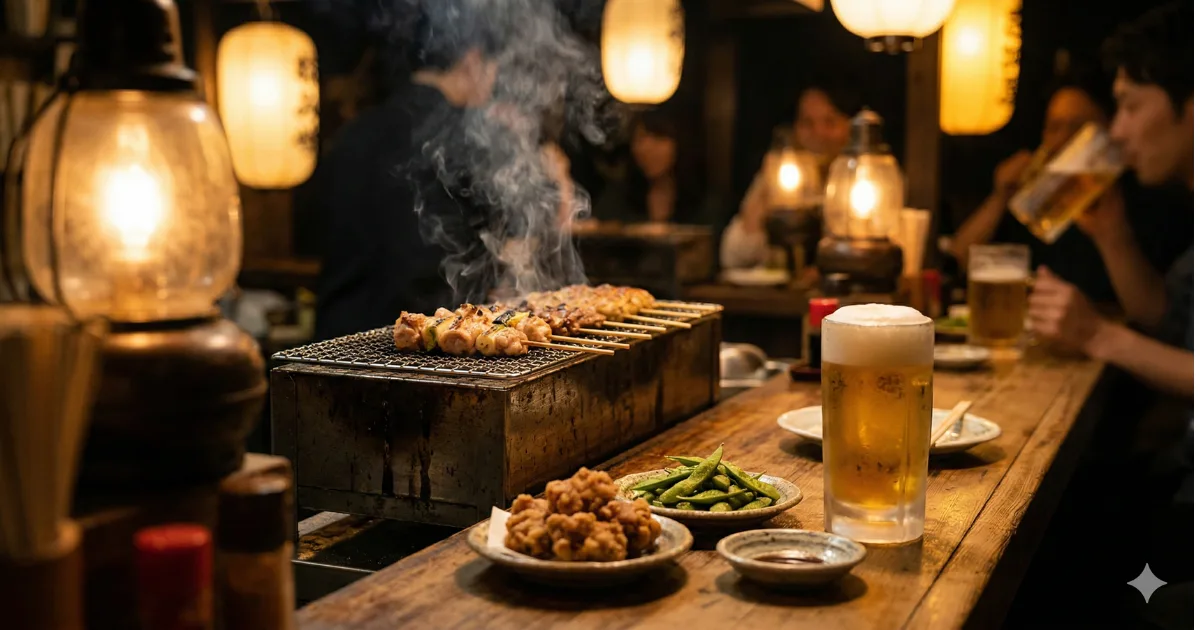
If you have walked along Denman Street on a Friday night and noticed the warm glow spilling out of narrow doorways, the sound of clinking glasses and shouted greetings, the smell of charcoal smoke from a yakitori grill — you have brushed against Vancouver's izakaya scene without necessarily knowing what to call it. The izakaya is Japan's answer to the British pub, the Spanish tapas bar, the Korean hof. It is a place where food and drink are inseparable, where the menu is designed for sharing and grazing over hours, and where the point of the evening is the company as much as the cuisine[1].
Vancouver now has dozens of izakayas scattered across its core neighbourhoods, ranging from hole-in-the-wall spots that feel transplanted directly from a Tokyo side street to modern interpretations that would be unrecognizable to a salaryman in Shimbashi. Understanding what makes an izakaya different from a sushi bar or ramen shop, and knowing where to find the best ones in this city, opens up one of Vancouver's most rewarding and underappreciated dining experiences.
Summary: Vancouver's izakaya scene has grown into one of the city's richest dining categories, offering a Japanese pub experience built around shared small plates, yakitori, karaage, sake, and whisky highballs. Unlike sushi bars or ramen shops, izakayas are designed for social, multi-hour evenings where food and drink are inseparable. This guide covers what an izakaya is, where to find the best ones in Vancouver, how to navigate the menu and etiquette, and what to expect for pricing.
What Is an Izakaya?
The word izakaya combines "i" (to stay) with "sakaya" (sake shop) — literally, a place where you stay to drink sake[1]. The format originated centuries ago in Japan when sake shops began allowing customers to drink on the premises and eventually started serving small dishes to accompany the drinking. Over time, the food became as important as the drink, and the izakaya evolved into a distinct dining category that now accounts for a massive share of Japan's casual restaurant industry.
In Japan, izakayas serve as the social infrastructure of after-work life. Groups of coworkers, friends, and families gather at izakayas to unwind, eat communally, and drink at a pace that stretches the evening across several hours. The menu is structured around this format: dozens of small plates, each designed to be shared among the table, ordered in rounds rather than all at once, and calibrated to pair with beer, sake, shochu, or whisky[2].
The experience is fundamentally different from Western restaurant dining in several ways:
- No individual entrees. You do not order a main course for yourself. The table orders together, plates arrive as they are ready, and everyone shares everything.
- Drinking is central, not optional. The menu is built to accompany alcohol. While you can certainly eat at an izakaya without drinking, the food portions, flavour profiles, and pacing are all designed with the assumption that drinks are flowing.
- Extended stays are expected. Unlike a ramen shop where you eat in 15 minutes and leave, an izakaya evening typically runs 2-3 hours. The kitchen keeps producing food as long as you keep ordering.
- The atmosphere is deliberately lively. Staff greet you with a loud "irasshaimase!" (welcome), kitchen calls ring through the room, and conversations at neighbouring tables are part of the ambience, not an intrusion.
This format translates remarkably well to Vancouver, a city where the dining culture already gravitates toward communal eating, craft cocktails, and extended social evenings. The izakaya concept slots neatly into the gap between Vancouver's fine dining establishments and its casual ramen shops.
How Vancouver's Izakaya Scene Differs from Japan
Walking into a Vancouver izakaya and walking into one in Osaka or Tokyo are recognizably related experiences, but there are real differences worth understanding. Neither version is more "authentic" than the other — they have simply adapted to different markets, ingredients, and drinking cultures.
Menu breadth: Japanese izakayas in Japan often have menus running 80 to 150 items, including seasonal specials, regional dishes, and items that change daily based on what the kitchen sourced that morning. Vancouver izakayas typically offer 30-60 items, which is still extensive by local restaurant standards but narrower than what you would find in Japan. This partly reflects the smaller kitchen spaces in Vancouver and partly reflects a market that is still learning the format.
Price structure: In Japan, many izakaya dishes cost between 300-800 yen ($3-$8 CAD), making it easy to order 5-6 plates per person without spending much. Vancouver izakayas price most dishes between $8-$18, which changes the calculus. You still order multiple plates to share, but the per-person total is higher than in Japan simply because of Vancouver's cost structure[3].
Drinking culture: Japanese izakayas lean heavily on beer (particularly draft nama-biiru), sake, shochu highballs, and chuhai (flavoured shochu sodas). Vancouver izakayas carry these options but often supplement them with a broader cocktail program, local craft beers, and a curated whisky selection that caters to the city's cocktail culture. You are as likely to see a Japanese whisky highball on a Vancouver izakaya menu as you are a classic martini or a local IPA.
The otoshi custom: In Japan, most izakayas charge an otoshi — a small table charge that arrives as a complimentary appetizer (usually edamame, a small salad, or pickles) that you did not order. This functions as both a cover charge and an appetizer, typically costing 300-500 yen. Some Vancouver izakayas have adopted a version of this practice, but it is not universal. If a small dish arrives at your table that you did not order, it is likely the otoshi, and it will appear on your bill[4].
Smoking: Japanese izakayas have traditionally allowed smoking, though regulations have tightened significantly in recent years. Vancouver izakayas are smoke-free indoors, consistent with BC's Tobacco and Vapour Products Control Act. This is one area where Vancouver's version is unambiguously better for most diners.
The Essential Izakaya Menu: What to Order
Walking into an izakaya for the first time can be overwhelming. The menu reads like a glossary of Japanese culinary terms, and unlike a sushi bar where the format is self-explanatory, the izakaya menu requires some decoding. Here is what you should know about the core categories and the dishes within each.
Yakitori: The Heart of the Izakaya Grill
Yakitori — skewered chicken grilled over charcoal — is the dish that most directly captures the spirit of izakaya dining. In Japan, entire izakayas are dedicated solely to yakitori, with chefs spending years mastering the art of grilling each cut of chicken over binchotan (white charcoal) at precisely the right temperature for precisely the right amount of time[5].
In Vancouver, the best izakayas take yakitori seriously. The key to good yakitori is the quality of the chicken, the quality of the charcoal, and the choice between shio (salt) or tare (a sweet soy-based glaze). If you are new to yakitori, start with momo (thigh) on salt — it is the most forgiving cut and the best introduction to what good grilled chicken should taste like. From there, explore tsukune (chicken meatball), negima (thigh with green onion), and kawa (chicken skin, grilled until impossibly crispy).
Most Vancouver izakayas price yakitori between $3-$6 per skewer, and ordering 3-5 skewers per person in the first round is standard. A table of four might start with 12-15 skewers as a communal opening move, paired with a round of beers or highballs.
Karaage: Japanese Fried Chicken Done Right
If yakitori is the slow, contemplative side of izakaya meat cookery, karaage is the loud, crunchy, unabashedly satisfying side. Japanese fried chicken is marinated in soy sauce, ginger, and garlic before being coated in potato starch (not wheat flour, which is what makes the crust distinctively light and shatteringly crispy) and deep-fried. The result is chicken that stays juicy inside a shell that stays crispy far longer than Western fried chicken. A squeeze of lemon and a dab of Kewpie mayo complete the picture.
Every izakaya in Vancouver serves karaage, and it is one of the most reliable dishes on any izakaya menu. Even middling izakayas produce good karaage because the technique is forgiving and the flavour profile is universally appealing. Expect to pay $10-$15 for a plate that serves 2-3 people as a shared dish.
Gyoza, Takoyaki, and Other Essential Small Plates
Gyoza are pan-fried dumplings with a pork-and-cabbage filling, served crispy-side-up with a dipping sauce of soy, rice vinegar, and chili oil. The best gyoza have a thin, almost translucent wrapper with a golden-brown crust on the bottom. Vancouver izakayas serve them in orders of 5-8 pieces for $8-$13.
Takoyaki are battered octopus balls, a street food from Osaka that has become a standard izakaya offering. The batter is poured into a special hemispherical mould, a piece of octopus is dropped in, and the cook rotates the balls continuously until they form a crispy exterior around a creamy, almost molten interior. Topped with takoyaki sauce, Kewpie mayo, bonito flakes, and aonori (seaweed flakes), they arrive at the table looking like savoury truffles. They are also molten hot inside, so wait a moment before biting in. Expect $9-$14 for an order of 6-8 pieces.
Agedashi tofu is lightly battered silken tofu, deep-fried and served in a warm dashi broth with grated daikon and bonito flakes. It is delicate where karaage is robust, and it demonstrates the range that izakaya cooking covers. A good agedashi tofu should have a thin, barely-there crust giving way to custard-soft tofu and a broth that is clean and savoury. Priced at $8-$12, it is one of the best vegetarian options on a typically meat-heavy menu.
Okonomiyaki — the savoury Japanese pancake stuffed with cabbage, protein (usually pork or seafood), and topped with a web of mayo and sweet brown sauce — appears on some Vancouver izakaya menus, though it is more commonly found as a standalone specialty item. When it does appear, it is typically priced at $14-$18 and is one of the most filling items on the menu.
Edamame barely needs introduction. Steamed soybeans in the pod, salted, served as the default table snack. Order them as your first move while you study the rest of the menu. $6-$9 everywhere.
The Drinking Side: Sake, Shochu, Whisky, and Beer
An izakaya without drinks is just a restaurant with small portions. The drink menu is integral to the format, and understanding the major categories helps you navigate ordering without defaulting to "whatever beer you have."
Beer
Japanese beer is the gateway drink at most izakayas. Sapporo, Asahi, and Kirin are the three major brands you will encounter, and most Vancouver izakayas carry at least two of the three. They are all clean, crisp lagers designed to complement salty, grilled, and fried food — exactly the kind of food that dominates an izakaya menu. Draft beer at a Vancouver izakaya runs $7-$10 for a pint. Many izakayas also carry a selection of Vancouver craft beers for drinkers who prefer more flavour complexity.
Sake
Sake intimidates people more than it should. At its simplest, sake is brewed rice wine that ranges from light and fruity to rich and full-bodied, served either chilled, at room temperature, or warm depending on the style and the season. Most Vancouver izakayas carry a curated list of 8-15 sakes, and the staff can usually guide you to a good pairing.
Key terms worth knowing: junmai (pure rice sake, no added alcohol, tends toward richer flavours), ginjo (premium sake with the rice polished to at least 60%, lighter and more aromatic), and daiginjo (super-premium, polished to at least 50%, the most refined and expensive category). A small carafe (tokkuri) at a Vancouver izakaya runs $12-$22 depending on the quality level. A glass or ochoko runs $8-$14[6].
Shochu and Highballs
Shochu is a Japanese distilled spirit made from barley, sweet potato, or rice. It is stronger than sake (typically 25-35% ABV) but lighter than most Western spirits. The most popular way to drink shochu at an izakaya is as a highball — mixed with soda water and ice, sometimes with a squeeze of lemon or grapefruit. The chuhai (short for shochu highball) is the workhorse drink of Japanese casual dining, refreshing enough to drink across an entire evening without overwhelming the food.
Vancouver izakayas have enthusiastically adopted the highball format, often extending it to Japanese whisky highballs, which have become one of the most popular drinks in the city's cocktail scene. A whisky highball — Suntory Toki or Nikka Coffey Grain whisky poured over ice with sparkling water — is crisp, low-proof per sip, and pairs beautifully with grilled and fried izakaya food. Expect $10-$16 for a highball at most Vancouver izakayas.
Japanese Whisky
The global Japanese whisky boom has arrived at Vancouver's izakayas with full force. Names like Suntory Yamazaki, Hakushu, Nikka Yoichi, and Miyagikyo appear on menus across the city, though the rarer bottles are increasingly difficult to source and priced accordingly. A pour of entry-level Japanese whisky (Suntory Toki, Nikka Days) runs $12-$16. Mid-range expressions (Yamazaki 12, Hakushu 12) run $20-$35 per pour. If you see a Yamazaki 18 on a menu, expect $50 or more per pour, and consider it a special-occasion order[7].
For most izakaya visits, the whisky highball is the smartest way to enjoy Japanese whisky. It stretches the flavour across a larger drink, pairs better with food than a neat pour, and costs half as much.
Vancouver's Best Izakayas by Neighbourhood
Robson and Downtown: The Accessible Cluster
The blocks along Robson Street between Burrard and Denman have the highest concentration of Japanese restaurants in Vancouver, and several of these are izakayas or carry significant izakaya-style menus. This is the most accessible entry point for anyone new to the format: the locations are central, the menus often include English descriptions, and the vibe tends toward modern rather than traditionally Japanese.
Downtown izakayas in this corridor typically run later than restaurants in other neighbourhoods, with kitchens staying open until 11 PM or midnight on weekends. The price point is mid-range for Vancouver izakayas: expect $30-$45 per person for food and a couple of drinks. The crowd skews young professional and international, reflecting the neighbourhood's demographics.
For first-timers, the Robson corridor offers the gentlest introduction to izakaya dining. The menus are approachable, the staff are accustomed to explaining dishes, and the atmosphere balances authentic izakaya energy with enough Western restaurant comfort that nobody feels out of their depth.
West Broadway and Kitsilano: The Neighbourhood Gems
The stretch of West Broadway between Cambie and Granville, spilling into the edges of Kitsilano, hosts a cluster of Japanese restaurants that includes several excellent izakayas. These spots tend to draw a more neighbourhood-oriented crowd than the downtown locations: regulars who come weekly, families on weeknight outings, and couples on casual dates.
The izakayas along this corridor often feel more intimate than their downtown counterparts. Smaller spaces, tighter seating, and a higher ratio of Japanese and Japanese-Canadian diners create an atmosphere that tilts closer to what you would experience in a residential neighbourhood in Japan. The menus may be less explicitly translated, the sake lists may be more adventurous, and the chef may send out off-menu specials that reward regulars and adventurous first-timers alike.
Price expectations here are similar to downtown ($30-$45 per person), though some of the smaller spots run slightly lower because their overhead is less.
Richmond: The Deep Cuts
Richmond's Japanese restaurant scene is less well-known than its Chinese dining dominance, but the city has a meaningful concentration of Japanese restaurants, including izakayas, particularly around the No. 3 Road corridor and in the blocks near Richmond Centre. These spots cater primarily to a Japanese and broader Asian clientele, and the menus, atmosphere, and food reflect that orientation.
What sets Richmond's izakayas apart is a tendency toward dishes and preparations that you are less likely to find downtown. Organ meats on the yakitori menu, Japanese-style curry rice, natto (fermented soybeans), and other items that cater to Japanese tastes rather than Western expectations appear more frequently in Richmond. If you have eaten at several downtown izakayas and want to push further into the cuisine, Richmond is where to go.
Pricing in Richmond tends to run slightly lower than downtown Vancouver, with per-person totals of $25-$40 for a full izakaya meal with drinks.
Izakaya Etiquette: What You Should Know
Izakaya etiquette is less formal than sushi counter etiquette or kaiseki dining, but there are customs worth understanding, both to show respect and to get the most out of the experience.
Ordering in Rounds
The fundamental rhythm of an izakaya meal is: order drinks, order a first round of food (edamame, yakitori, one or two cold dishes), eat and drink, then order a second round (fried items, hot dishes, maybe some sashimi), and continue in this pattern until you are satisfied. Ordering everything at once defeats the purpose of the format and overwhelms both the kitchen and your table. The pacing is part of the experience[2].
Sharing Is Mandatory
Every dish on an izakaya menu is designed to be shared. Ordering a plate of karaage for yourself while your tablemates watch is a social misstep. When plates arrive, everyone reaches in. This communal approach is central to why izakaya dining works as a social format.
The Otoshi (Table Charge)
As mentioned earlier, some Vancouver izakayas charge an otoshi — a small cover charge ($2-$5) that comes with a small appetizer. This is a Japanese tradition, not an attempt to overcharge you. If you see a small dish you did not order arrive at your table, eat it and enjoy it. It will appear as a line item on your bill[4].
Kampai
When the first round of drinks arrives, it is customary to wait until everyone at the table has their drink before the collective "kampai!" (cheers). This is a small gesture, but it signals the start of the evening and sets a communal tone.
Tipping
Despite originating from a no-tipping culture in Japan, Vancouver izakayas operate under Canadian tipping norms. Tip 15-20% as you would at any Vancouver restaurant.
Price Expectations: What a Night at an Izakaya Actually Costs
The variable pricing of izakaya dining — many small plates rather than one big bill — makes it harder to predict your total compared to ordering a $22 ramen bowl. Here is a realistic breakdown of what different izakaya evenings cost in Vancouver:
Casual weeknight (2 people): 1 round of yakitori (6 skewers, $20-$30), 1 plate of karaage ($10-$15), 1 order of edamame ($6-$9), 2-3 drinks each ($30-$50 for two). Total: $70-$110 for the table, or $35-$55 per person.
Full evening out (4 people): 2 rounds of yakitori (12-15 skewers, $40-$60), karaage ($10-$15), gyoza ($8-$13), agedashi tofu ($8-$12), takoyaki ($9-$14), 1-2 additional dishes ($15-$30), 3-4 drinks each ($90-$160 for four). Total: $180-$300 for the table, or $45-$75 per person.
Budget-conscious visit (2 people): Skip the spirits, drink beer. 4-5 yakitori skewers ($14-$22), 1 shared dish like gyoza ($8-$13), 2 beers each ($28-$40 for two). Total: $50-$75 for the table, or $25-$38 per person.
The sweet spot for most diners is the $35-$50 per person range, which buys a satisfying mix of food and 2-3 drinks. This positions izakaya dining as comparable to a mid-range restaurant meal in Vancouver, but with a more social, extended format.
Best for Groups vs. Solo Dining
Groups of 3-6: The Ideal Format
Izakayas are at their best with groups. The shared-plate format means more variety — a table of four can try 8-10 different dishes in an evening, while a duo might manage 4-5. The communal ordering dynamic also makes izakayas excellent for mixed groups where people have different tastes: vegetarians can fill up on edamame, agedashi tofu, and vegetable skewers while meat-eaters demolish the yakitori. Nobody needs to agree on a single restaurant the way you would if choosing between a steakhouse and a sushi bar.
Groups of 5-6 at a Vancouver izakaya should budget $250-$400 for the table, including drinks. Call ahead or make a reservation if your group exceeds 4 — most izakayas are small spaces, and accommodating larger groups on a walk-in basis is difficult on weekend evenings.
Solo Dining: The Counter Seat
Solo izakaya dining is a Japanese tradition. Many izakayas in Japan have counter seating facing the kitchen, and sitting alone at the counter while watching the chef grill yakitori and assembling plates is one of the most pleasurable solo dining experiences available. In Vancouver, several izakayas maintain counter seating, and sitting there as a solo diner is not only acceptable but often preferable to a table. You can chat with the chef, ask what is fresh, and order at your own pace without the social obligation of sharing.
Solo diners at Vancouver izakayas can eat well for $25-$40 including a drink or two. Order a few yakitori, one fried or hot dish, and a beer or highball. The counter seat format means no wasted food and no awkwardness.
Happy Hour Deals and When to Go
Several Vancouver izakayas run happy hour specials, typically between 5 PM and 6:30 PM on weekdays. These specials often include discounted yakitori ($2-$3 per skewer instead of $4-$6), reduced drink prices (particularly beer and highballs), and occasionally special pricing on a limited selection of appetizers.
Best time to visit: Weekday evenings between 5:30 PM and 7:30 PM offer the best combination of availability and happy hour pricing. Walk-ins are usually possible during this window, and the atmosphere is lively without being overwhelmingly crowded. Friday and Saturday nights after 8 PM are the busiest period — reservations are strongly recommended, and happy hour pricing will have ended.
Late-night izakaya: Several izakayas in the Davie Village and Robson corridors keep kitchens open until 11 PM or midnight on weekends. Late-night izakaya dining — arriving at 9:30 or 10 PM, ordering rounds until close — is one of Vancouver's best alternatives to the standard post-bar pizza slice. The food is better, the atmosphere is warmer, and the per-person cost is comparable to a few drinks at a cocktail bar plus a late-night snack elsewhere.
How to Navigate a Japanese-Only Menu
Some of Vancouver's most rewarding izakayas have menus that lean heavily on Japanese text with minimal English translation. This can be intimidating, but a few strategies make it manageable.
Ask the staff. This sounds obvious, but it bears stating. Izakaya staff are accustomed to guiding non-Japanese-speaking diners through the menu, and most are happy to describe dishes in detail. Simply saying "what do you recommend for a first visit?" will get you pointed toward the kitchen's strongest dishes.
Look for the specials board. Many izakayas have a handwritten board (often in Japanese) listing the day's specials — seasonal items, fresh fish, or preparations the chef is particularly proud of that evening. Ask your server to translate it. The specials board is often where the most interesting food lives.
Use your phone. Google Translate's camera function can read Japanese text from a menu in real time. It is not perfect — food terminology sometimes translates oddly — but it gives you a working foundation. Combine the translation with a quick image search of the dish name, and you will have a good sense of what you are ordering.
Learn the category words. Even basic familiarity with the major Japanese menu categories helps enormously. Yakimono (grilled), agemono (fried), nimono (simmered), sashimi (raw sliced), and sunomono (vinegared) cover most of what you will encounter. If you can read which category a dish falls into, you already know the cooking method even if you cannot read the specific ingredients.
The Evolution: From Sushi Bars to Izakayas in Vancouver
Vancouver's Japanese dining scene has undergone a meaningful shift over the past 15 years. Through the 1990s and early 2000s, the city's Japanese restaurant landscape was dominated by sushi bars — hundreds of them, ranging from high-end omakase counters to casual neighbourhood spots offering cheap lunch specials. Ramen shops followed in a second wave that peaked around 2012-2016, when it seemed like every second new restaurant opening in the city was a ramen-ya[8].
The izakaya wave represents a third, more mature phase of Vancouver's engagement with Japanese cuisine. Where sushi and ramen are essentially single-format experiences — you go, you eat one type of food, you leave — the izakaya offers something more expansive. It is a venue, a social format, and a culinary philosophy rolled into one. The rise of izakayas in Vancouver reflects both a growing sophistication in how the city consumes Japanese food and a deeper influence from Japan's broader dining culture beyond the sushi-and-ramen basics.
This evolution also mirrors demographic shifts. Vancouver's Japanese and Japanese-Canadian community has always supported Japanese dining beyond sushi, but it is the broader Vancouver dining public — the food-curious segment that drives restaurant trends — that has embraced the izakaya format most visibly in the past decade. Instagram and food media have helped by making the izakaya's photogenic small plates and dramatic yakitori presentations visible to an audience that might never have walked into one otherwise.
The result is a city where you can now eat izakaya-style food at a dozen different establishments across multiple neighbourhoods, at a range of price points, with a range of atmospheres from strictly traditional to thoroughly modern. For a food city that built its Japanese reputation almost entirely on raw fish and noodle soup, that represents genuine depth.
References
[1] Ishige, Naomichi. "The History and Culture of Japanese Food." Columbia University Press, 2001. Comprehensive academic treatment of Japanese food culture including the historical development of the izakaya format from sake shops to dining establishments.
[2] Mente, Boye Lafayette De. "Dining Guide to Japan." Tuttle Publishing, 2007. Practical guide to Japanese dining customs and restaurant formats including izakaya etiquette and ordering conventions.
[3] Vancity Buzz / Daily Hive Vancouver. Coverage of Vancouver's izakaya restaurant scene, pricing trends, and restaurant openings across the city's Japanese dining sector. https://dailyhive.com/vancouver/category/eat
[4] Japan National Tourism Organization. "Japanese Food Culture: Izakaya." Overview of izakaya dining customs including the otoshi tradition and communal dining format. https://www.japan.travel/en/guide/izakaya/
[5] Tokyo Foundation for Policy Research. "Yakitori: The Art of Japanese Chicken Grilling." Analysis of yakitori culture, binchotan charcoal grilling techniques, and regional variations across Japan.
[6] Sake Service Institute. "Understanding Sake Categories." Guide to sake classification including junmai, ginjo, and daiginjo categories and their flavour profiles. https://www.sakeservice.com/
[7] Whisky Magazine Japan. Coverage of the global Japanese whisky market, including pricing trends and availability challenges affecting Canadian markets. https://whiskymag.com/
[8] Vancouver Magazine. Annual restaurant award coverage tracking the evolution of Vancouver's Japanese dining scene from sushi-dominant to multi-format including izakaya, ramen, and kaiseki categories. https://www.vanmag.com/restaurants
Frequently Asked Questions
What is an izakaya and how is it different from a sushi restaurant?
An izakaya is a Japanese pub-style restaurant where the menu is built around dozens of small plates designed for sharing, and food is ordered in rounds alongside alcoholic drinks. Unlike a sushi restaurant where you typically order individual portions of raw fish and rice, an izakaya serves grilled skewers, fried chicken, dumplings, tofu dishes, and other cooked items alongside beer, sake, and whisky. The experience is communal, social, and typically lasts 2-3 hours. Think of it as Japan's answer to the Spanish tapas bar.
How much does a typical izakaya dinner cost in Vancouver?
Most diners spend $35-$50 per person for a satisfying izakaya meal including 2-3 drinks. A budget-conscious visit with beer and a few shared plates can run as low as $25-$38 per person. A full evening out with multiple rounds of food and drinks can reach $45-$75 per person. Yakitori skewers run $3-$6 each, most shared plates cost $8-$18, and drinks range from $7-$10 for beer to $10-$16 for cocktails and highballs.
What should I order at an izakaya if I have never been to one before?
Start with edamame and a round of yakitori skewers on salt — chicken thigh and chicken meatball are the most approachable cuts. Add karaage (Japanese fried chicken) and gyoza (pan-fried dumplings) as your first shared plates. For drinks, a Japanese beer or a whisky highball pairs well with everything on an izakaya menu. This opening order gives you a representative taste of the format for about $25-$35 per person before second-round ordering.
Are there vegetarian options at Vancouver izakayas?
Yes, though izakaya menus are predominantly meat-focused. Reliable vegetarian options include edamame, agedashi tofu (fried silken tofu in dashi broth), vegetable tempura, grilled vegetable skewers, okonomiyaki (when available with vegetable filling), and various pickled and cold vegetable dishes. Some izakayas also offer mushroom-based dishes and tofu preparations beyond agedashi. Let your server know about dietary restrictions upfront, as some seemingly vegetarian items may contain dashi (fish stock) or bonito flakes.
Do Vancouver izakayas take reservations, and do I need one?
Most Vancouver izakayas accept reservations, and making one is strongly recommended for groups of 3 or more on Friday and Saturday evenings. Weeknight visits for 1-2 diners can usually be accommodated as walk-ins, especially before 7 PM. Many izakayas are small spaces with limited seating, so showing up without a reservation on a busy night may mean a 30-60 minute wait. For the best experience, call ahead or book online, and arrive during happy hour (typically 5-6:30 PM) for both better availability and discounted pricing on yakitori and drinks.
Vancouver's izakaya scene rewards the curious eater who is willing to look past the city's sushi-and-ramen surface. The format is social, the food is designed for sharing and exploration, and the drinks are calibrated to carry you through an evening rather than a quick meal. Whether you are a solo diner at the counter watching a chef turn chicken thighs over charcoal, or a group of six working through your third round of skewers and highballs, the izakaya offers something that no other Japanese restaurant format does: a reason to stay. For more Vancouver food guides covering everything from late-night eats to neighbourhood lunch spots, explore Our Food Fix's full library at ourfoodfix.com.
Related Articles
Vegetarian and Vegan Asian Food in Vancouver: 30+ Options
Vancouver offers one of North America's deepest selections of plant-based Asian restaurants, spannin
Vancouver Ramen Guide: From Tonkotsu to Tantanmen
Explore Vancouver's best ramen shops and styles, from creamy tonkotsu to fiery tantanmen. Covers 5 b
Surrey and South Vancouver Asian Food Guide: Beyond the City Centre
Surrey and South Vancouver hold some of Metro Vancouver's most authentic and affordable Asian dining
Got a food question?
Explore our guides and discover the best of Vancouver's food scene.
Browse Guides