Best Indian Curry Houses in Vancouver and Surrey
The best Indian curry houses in Vancouver and Surrey — from butter chicken and biryani to dosa and chaat, a local guide to Metro Vancouver's South Asian food scene.
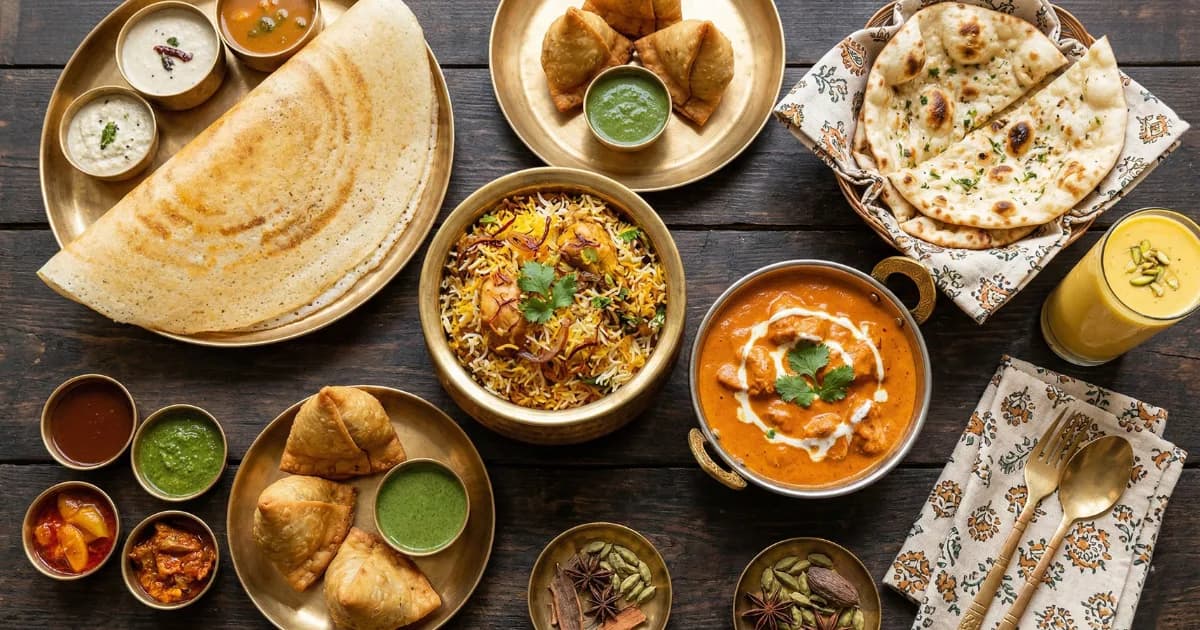
Metro Vancouver is home to one of the largest South Asian populations in North America, and that demographic reality has produced something remarkable: an Indian restaurant scene that rivals cities ten times its size. The 2021 Canadian census counted more than 370,000 residents of South Asian origin in Metro Vancouver, with Surrey alone holding one of the densest concentrations of Punjabi-origin Canadians anywhere outside Punjab itself[1]. That critical mass of population means these restaurants aren't performing Indian food for outsiders. They're cooking for a community that grew up eating it. The quality floor is high because the audience is unforgiving.
What this means for the rest of us is that Metro Vancouver offers an education in Indian cuisine that most Canadian cities cannot. You can eat your way from a $6 samosa chaat plate at a Surrey sweet shop to a $38 lamb shank at a white-tablecloth spot on Commercial Drive, and at every price point, you'll find food made by people who consider this their daily cooking, not their interpretation of someone else's tradition. The tandoor ovens are properly hot. The spice blends are ground in-house. The naan comes out blistered and pillowy rather than flat and sad.
This guide covers the full landscape of Indian curry houses across Metro Vancouver, from the Punjab-dominated corridors of Surrey to the quieter pockets of Vancouver proper. It spans North Indian comfort food, South Indian specialties that remain criminally underexplored by the general population, the sweet shops and street food stalls that anchor community life, and the practical details — price ranges, vegetarian options, late-night availability — that determine where you actually end up eating on a given Tuesday night.
Summary: Metro Vancouver's 370,000-strong South Asian population supports an Indian restaurant scene of unusual depth and authenticity. This guide covers the major curry house corridors in Surrey (Scott Road, 128th Street) and Vancouver (Main Street, Fraser Street), spanning North Indian staples like butter chicken and biryani, underexplored South Indian dosa and idli, Punjab sweet shops, thali meals, all-you-can-eat buffets, vegetarian dining, chai and lassi culture, and late-night options. Price ranges run from $5-8 street food to $25-40 fine dining, with the best value concentrated in Surrey's Indo-Canadian heartland.
Why Metro Vancouver's Indian Food Is Different
The quality of Indian food in any city is directly proportional to the size and tenure of its South Asian community, and by that measure, Metro Vancouver sits near the top of the global diaspora rankings. The first significant wave of Punjabi immigration to British Columbia began in the early 1900s, with sawmill workers settling in the Fraser Valley and along the Fraser River[2]. A century later, that community has deepened and diversified into one of the most established South Asian populations outside the Indian subcontinent.
Surrey is the epicentre. The city's Newton and Fleetwood neighbourhoods are majority South Asian, and the commercial corridors that serve them — particularly Scott Road (120th Street) and 128th Street — function as self-contained ecosystems of Indian grocery, dining, and social life. You'll find sweet shops that import their jalebi technique from Amritsar, tandoori restaurants whose owners trained in dhabas along the Grand Trunk Road, and vegetarian thali joints run by families from Gujarat who consider dairy the only necessary animal product.
But Surrey isn't the whole story. Vancouver proper has its own Indian food geography, concentrated along Main Street south of 49th Avenue and along Fraser Street. These corridors tend toward a slightly more cosmopolitan approach — you'll find South Indian restaurants alongside Punjabi ones, and a few modern Indian kitchens that draw on techniques from across the subcontinent. Commercial Drive and the Cambie corridor hold some of the more upscale operations. And increasingly, Burnaby's Metrotown area has become a secondary hub, driven by newer immigration from Gujarat, South India, and Sri Lanka.
The supply chain matters too. Metro Vancouver's Indian grocers — anchored by chains like Fruiticana, Sabzi Mandi, and numerous independents — stock fresh curry leaves, green cardamom, asafoetida, and dozens of dal varieties that would be specialty-order items in most Canadian cities. When your neighbourhood grocer stocks fifteen types of lentil and three grades of basmati, the restaurants buying from those same suppliers produce food at a different level than places relying on whatever Sysco carries in its "ethnic" catalogue.
North Indian: The Comfort Food Canon
For most Canadians, Indian food means North Indian food — specifically, the rich, creamy, tomato-and-cream-based curries of Punjab and Delhi. This isn't a criticism. Punjabi cuisine is one of the world's great comfort food traditions, and Vancouver's version of it is exceptional.
Butter Chicken and Its Universe
Butter chicken (murgh makhani) is the gateway dish, the one that converted a generation of non-Indian Canadians into regular curry house customers, and it remains the single most-ordered item at Indian restaurants across Metro Vancouver. The dish originated in Delhi in the 1950s at Moti Mahal, where leftover tandoori chicken was simmered in a sauce of tomatoes, butter, and cream[3]. The Vancouver version ranges from the intensely rich and slightly sweet (the crowd-pleasing style) to the more restrained and spice-forward (the version you get at restaurants cooking primarily for Punjabi families).
On Surrey's Scott Road, butter chicken is ubiquitous and inexpensive. A plate with rice or naan at most casual spots runs $12 to $15, and the portions are designed for working appetites — generous enough that most people leave with a takeout container. The best versions achieve a balance between the sweetness of the tomato-cream base and the smokiness of the tandoori chicken that went into it. When you taste that char underneath the sauce, you know the kitchen is doing it right.
In Vancouver proper, places along Main Street and Fraser Street serve butter chicken at a slightly higher price point ($14 to $18) with proportionally more refined presentations. The sauce tends to be smoother, the cream better integrated, and the spicing more layered. Whether this is "better" depends entirely on what you want: soul food generosity or technical polish.
Dal Makhani: The Vegetarian Masterpiece
Dal makhani — black lentils and kidney beans simmered for hours with butter, cream, and a restrained spice blend — is the dish that separates serious North Indian restaurants from the rest. The preparation is simple in concept but demanding in execution: the lentils need to cook low and slow, sometimes overnight, to achieve the velvety, almost meaty texture that defines a great version. Restaurants that shortcut this process with pressure cookers produce a thin, grainy result that bears little resemblance to the real thing.
In Surrey, several restaurants along 128th Street serve dal makhani that has genuinely simmered for eight to twelve hours, producing a dish so thick and rich it clings to the back of a spoon. Paired with a tandoori roti or a piece of garlic naan, it constitutes one of the most satisfying vegetarian meals available anywhere in Metro Vancouver — for typically $10 to $14.
Tandoori and the Clay Oven Tradition
The tandoor — a cylindrical clay oven that reaches temperatures above 900 degrees Fahrenheit — is the engine of North Indian cooking, and the quality of a restaurant's tandoor work tells you almost everything you need to know about its kitchen. Tandoori chicken (marinated in yogurt and spices, then roasted at extreme heat until charred and smoky) is the signature product, but the tandoor also produces naan, roti, kulcha, kebabs, and paneer tikka.
A full tandoori chicken in Surrey runs $14 to $18 and is one of the best per-dollar protein deals in the metro area. The bird should arrive deeply red-orange from the marinade, blackened in spots from the tandoor's radiant heat, and tender enough that the meat pulls cleanly from the bone. The leg and thigh pieces, which spend more time nearest the heat source, are almost always the best part.
Seekh kebab — spiced ground lamb or goat pressed onto skewers and cooked in the tandoor — is another reliable indicator of a restaurant's skill. The best versions are moist with visible bits of fat, flavoured aggressively with cumin, coriander, green chili, and fresh ginger. They should not be dry, dense, or uniform in texture. Expect to pay $8 to $14 for a serving of four to six pieces.
Biryani: The Rice Event
Biryani is not a side dish. It is a centrepiece — a layered construction of basmati rice and spiced meat (or vegetables) that, when made properly, is one of the most complex single-pot dishes in any cuisine. The Hyderabadi dum biryani method involves layering par-cooked rice over a spiced meat base, sealing the pot with dough, and cooking it slowly so the steam from the meat permeates upward through the rice. Every grain should be separate, fragrant, and stained with saffron or turmeric.
Metro Vancouver's biryani scene leans heavily Hyderabadi and Lucknowi in style, with goat (mutton) biryani being the most traditional and chicken being the most popular. A good chicken biryani runs $14 to $18 at most casual restaurants, while goat biryani commands $16 to $22 due to the higher cost of the meat. Several spots on Scott Road and 128th Street in Surrey have built devoted followings specifically for their biryani, with weekend takeout lines forming by 11:30am.
South Indian: The Underexplored Treasury
If North Indian food is Metro Vancouver's comfort zone, South Indian food is its graduate program — a distinct culinary tradition built on rice, coconut, tamarind, and curry leaves rather than wheat, cream, butter, and garam masala. The flavours are lighter, sharper, and often more complex than their northern counterparts, and the vegetarian options are not afterthoughts but the foundation of the cuisine.
Dosa: The Crispy Revelation
The dosa is South Indian cuisine's greatest ambassador — a large, thin, crispy crepe made from a fermented batter of rice and urad dal (black gram). The fermentation, which takes twelve to twenty-four hours, gives the dosa a subtle tanginess and produces the tiny bubbles that create its characteristic lace-like crispness when it hits the griddle. A well-made dosa should be golden-brown, audibly crunchy when you break it, and so thin in places that light passes through.
The masala dosa — filled with a spiced potato mixture and served with sambar (a lentil and vegetable stew) and coconut chutney — is the entry point, and it remains the most ordered dosa variant in Vancouver. But the dosa vocabulary is vast: ghee dosa (enriched with clarified butter), rava dosa (made with semolina for a different texture), paper dosa (stretched to absurd lengths, sometimes three feet), mysore masala dosa (spread with a spicy red chutney before the potato filling), and uttapam (a thicker, pancake-like cousin topped with onions, tomatoes, and chilies).
In Vancouver, South Indian restaurants are fewer than their North Indian counterparts but growing. Main Street south of 49th Avenue and the Sunset neighbourhood hold several options. Surrey's Indo-Canadian restaurants occasionally offer dosa on their menus, but for the full South Indian experience — where the dosa menu runs to twenty or more varieties — you need a dedicated South Indian kitchen. Prices are remarkably reasonable: a masala dosa with sambar and chutney typically runs $10 to $14.
Idli, Sambar, and Rasam
Idli — steamed rice-and-lentil cakes, soft and pillowy — is the South Indian breakfast staple and one of the lightest, most digestible foods in any cuisine. Served with sambar and a trio of chutneys (coconut, tomato, and mint-coriander), a plate of four idli makes a meal that costs $8 to $11 and leaves you satisfied without the heaviness of a butter-chicken-and-naan lunch.
Rasam — a thin, peppery, tamarind-based broth spiked with cumin, black pepper, and curry leaves — is South India's answer to chicken soup. It's served as a course in thali meals or as a standalone bowl. Few dishes in Indian cuisine pack as much flavour into something so light. If a restaurant serves rasam, order it. It tells you they're committed to the South Indian tradition rather than treating it as an afterthought.
The Sweet Shop and Street Food Tradition
No survey of Indian food in Metro Vancouver is complete without the sweet shops — the mithai stores and chaat counters that serve as community hubs in Surrey's South Asian neighbourhoods. These aren't restaurants in the conventional sense. They're combination bakeries, sweet counters, and street food stalls where you order at a counter, eat standing up or at a handful of tables, and spend very little money for food that is intensely satisfying.
Chaat: India's Street Food
Chaat — the umbrella term for Indian street snacks — is a category built on contrasts: crispy and soft, sweet and sour, hot and cool, all in the same bite. The base is usually some form of fried dough (puri, papdi, or sev), topped with yogurt, chutneys (tamarind and mint-coriander), spices, and various additions depending on the specific chaat variety.
Pani puri (also called gol gappa) — hollow crispy spheres filled with spiced potato, chickpeas, and a tangy tamarind water — is the most theatrical. You're meant to eat each one in a single bite before the shell softens. Bhel puri, dahi puri, aloo tikki chaat, and papdi chaat round out the standard menu. A plate of any of these at a Surrey sweet shop runs $5 to $8, making chaat the best-value eating in the metro area.
Sweets: Jalebi, Gulab Jamun, and Beyond
Indian sweets operate on a different axis than Western desserts. They are denser, sweeter, and often based on reduced milk (khoya) or cheese (paneer/chhena) rather than flour and butter. Jalebi — coils of fermented batter deep-fried until crispy and then soaked in sugar syrup — is best eaten warm, within minutes of leaving the fryer, when the exterior is still shattering-crisp and the interior is syrupy and tangy. The sweet shops along Scott Road in Surrey fry jalebi in batches throughout the day, and timing your visit to catch a fresh batch is one of the small pleasures of eating in the neighbourhood.
Gulab jamun — deep-fried balls of khoya dough soaked in rose-scented sugar syrup — is the other essential. Rasgulla (spongy cheese balls in light syrup), barfi (dense milk fudge in dozens of flavours), and ladoo (round sweets made from flour, sugar, and ghee) fill out the display cases. Most sweets are sold by weight, with prices running $14 to $22 per kilogram depending on the variety.
The Curry Corridors: Where to Eat
Surrey: Scott Road and 128th Street
Scott Road (120th Street) between 72nd Avenue and 96th Avenue is the spine of Indo-Canadian dining in Metro Vancouver. This stretch holds the highest concentration of Indian restaurants, sweet shops, grocers, and takeout counters in the region, and the competition keeps quality high and prices low. On a Friday evening, the parking lots of the major plazas along Scott Road are full, and the aroma of tandoori smoke and frying spices carries across the lot.
128th Street, particularly between 88th Avenue and 96th Avenue, functions as a secondary corridor with its own character. The restaurants here tend to be slightly newer, occasionally more polished, and sometimes draw from a broader range of Indian regional cuisines. You'll find South Indian options alongside Punjabi ones, and a few spots specializing in Mughlai or Hyderabadi cooking.
The price advantage of Surrey is real and significant. A full dinner for two — appetizer, two curries, rice, naan, and drinks — runs $35 to $50 at most Scott Road restaurants, compared to $55 to $75 for comparable quality in Vancouver proper. The portions are often larger, too, reflecting a dining culture oriented toward families and value.
Vancouver: Main Street and Fraser Street
Main Street south of 49th Avenue and Fraser Street between 41st and 49th form Vancouver's primary Indian food corridor. The vibe here is different from Surrey — less community-canteen, more neighbourhood-restaurant. The clientele is more mixed, the menus sometimes include concessions to non-Indian palates (milder spice levels, more explanatory descriptions), and the pricing reflects Vancouver's higher commercial rents.
What Vancouver offers that Surrey sometimes doesn't is range. You're more likely to find South Indian specialists, modern Indian restaurants that draw on multiple regional traditions, and upscale operations where the plating and service match a fine-dining expectation. Commercial Drive holds a few long-established Indian restaurants that predate the current food scene, and the Cambie corridor has attracted newer concepts.
Fraser Street's Quiet Depth
Fraser Street between Knight and 49th deserves special mention. This stretch doesn't have the foot traffic or name recognition of Scott Road, but it holds some of Vancouver's most consistent Indian cooking. The restaurants here cater to a local South Asian population that expects the food to taste like it does at home — properly spiced, generously portioned, and priced for regular eating rather than special occasions. A curry-and-naan lunch runs $12 to $16, and the quality of the tandoor work at several Fraser Street spots matches or exceeds what you'll find at higher-priced restaurants elsewhere.
All-You-Can-Eat Indian Buffets: The Value Proposition
The Indian buffet is a lunch institution across Metro Vancouver, and for sheer per-dollar satisfaction, nothing else comes close. The format is straightforward: a steam table lineup of six to twelve dishes — typically two or three curries, a dal, rice, naan or roti, tandoori chicken, a raita, a couple of vegetable sides, and a dessert like kheer or gulab jamun — for a fixed price that ranges from $14 to $19 depending on the restaurant and the day of the week.
The best buffets rotate their curries daily and cook in small enough batches that the food at 12:30pm is noticeably different from the food at 1:30pm — fresher and more vibrant. The worst buffets cook everything once in the morning and let it sit under heat lamps for four hours, producing curries that have oxidized into a uniform brownish-orange regardless of what they started as.
Weekday lunch buffets represent the best value. Many Surrey restaurants offer lunch buffets in the $14 to $16 range that include tandoori chicken, two or three curries, dal, rice, naan, salad, and dessert. For a single diner eating a proper lunch, this is difficult to beat at any cuisine or price point in Metro Vancouver. Weekend buffets tend to be slightly more expensive ($16 to $19) but often include additional items like biryani, chaat, and a wider dessert selection.
The tactical move is to visit a new buffet at 12:00pm on a weekday, when the first batch of fresh food has just come out and the restaurant is motivated to make a strong impression. If you go at 1:45pm and the food is still good, you've found a reliable spot.
Vegetarian Paradise: Why Indian Cuisine Leads
India has the world's largest vegetarian population — roughly 30 to 40 percent of the country follows a vegetarian diet, driven by Hindu, Jain, and Buddhist dietary traditions[4]. This cultural reality means that Indian vegetarian cooking is not an accommodation or an afterthought. It is a parallel cuisine, developed over centuries, with its own techniques, flavour profiles, and hierarchies of excellence.
For vegetarians and vegans eating out in Metro Vancouver, Indian restaurants offer something that almost no other cuisine provides: a menu where vegetarian options are the default rather than the exception. A typical North Indian restaurant devotes 40 to 50 percent of its menu to vegetarian dishes, and a South Indian restaurant may be 70 to 90 percent vegetarian without even trying.
The key vegetarian dishes span every texture and flavour profile. Paneer tikka and palak paneer cover the rich, creamy end. Chana masala (chickpeas in spiced tomato sauce) and rajma (kidney bean curry) provide protein-dense, hearty eating. Baingan bharta (smoky roasted eggplant) and aloo gobi (potato and cauliflower) offer lighter, more vegetable-forward options. And the entire South Indian tradition — dosa, idli, uttapam, sambar — is built on rice and lentil foundations that happen to be naturally vegan or easily made so.
Several restaurants in Surrey and Vancouver operate as explicitly vegetarian or vegan, serving Jain-style food (which additionally excludes onion and garlic) or Gujarati thali meals that centre the vegetarian tradition rather than carving out space for it within a meat-oriented menu.
Thali Meals: The Complete Experience
A thali is not a dish but a format — a large circular plate (the thali itself) holding small bowls (katori) of multiple preparations, served simultaneously as a complete meal. A typical thali includes three to five curries or dals, rice, two types of bread (roti and puri, or roti and naan), a pickle, a papad, a raita, and a sweet. The idea is that every flavour — sweet, sour, salty, bitter, astringent, and spicy — is represented on one plate, and you move between them throughout the meal.
North Indian thalis tend toward richer preparations: a butter dal, a paneer dish, a vegetable curry, and perhaps a meat option. South Indian thalis are lighter and more complex, with sambar, rasam, a kootu (lentil-and-vegetable stew), a dry vegetable preparation (poriyal), rice, yogurt, and a payasam (sweet). Gujarati thalis are legendary for their complexity, sometimes including ten or twelve small dishes that span the entire sweet-to-savoury spectrum.
Thali pricing in Metro Vancouver runs $14 to $22 depending on the restaurant and whether the thali is vegetarian or non-vegetarian (meat thalis cost more). For a first-time visitor to an Indian restaurant, the thali is the best possible order: it lets you sample the kitchen's range in a single sitting, and the format itself is a crash course in how Indian meals are structured.
Chai, Lassi, and the Indian Beverage Culture
No Indian meal is complete without something to drink, and the two essential Indian beverages — chai and lassi — are both widely available across Metro Vancouver's Indian restaurants and sweet shops.
Masala chai — black tea simmered with milk, sugar, and a blend of spices (typically cardamom, cinnamon, ginger, cloves, and black pepper) — is the daily drink of the subcontinent. The sweet shops along Scott Road sell it for $2 to $4, brewed strong and milky in the traditional style. This is not the diluted, overly sweet "chai latte" of North American coffee chains. Proper masala chai has a spice kick that hits the back of the throat, a richness from full-fat milk, and a sweetness calibrated to complement rather than dominate.
Mango lassi — yogurt blended with mango pulp and sugar — is the default pairing for spicy food, and for good reason: the dairy cuts capsaicin more effectively than water, and the sweetness provides counterpoint to chili heat. A salted lassi (yogurt, water, salt, and cumin) is the more traditional option and pairs better with rich, creamy curries like butter chicken or korma. Most restaurants charge $4 to $6 for a lassi.
Late-Night Indian Food
One of the underappreciated advantages of Metro Vancouver's Indian restaurant scene is its late-night availability. While many Vancouver restaurants close their kitchens by 9:30 or 10:00pm, several Indian restaurants — particularly along Scott Road in Surrey and on Fraser Street in Vancouver — keep serving until 11:00pm or midnight, and a few push to 1:00am on weekends.
This isn't accidental. The Indian dining tradition includes a culture of late eating, particularly on weekends and during community events (weddings, festivals, religious observances). The restaurants that stay open late are serving a community that considers 9:00pm a normal dinner start time, not a last call. For non-Indian Vancouverites looking for a substantial, properly cooked meal after 10:00pm, the Indian curry houses of Scott Road and Fraser Street represent some of the only options that aren't pizza, fast food, or whatever's left on a late-night diner grill.
Price Guide: What to Expect
Indian food in Metro Vancouver spans a wide price range, and understanding the tiers helps set expectations.
Street food and sweet shop level ($5-$8): Samosa, chaat plates, jalebi, chai, and takeout snacks. Available at sweet shops and counter-service spots, primarily in Surrey. This is the most underpriced food in the metro area.
Casual dining ($12-$18): The bulk of Indian restaurants operate here. A curry with rice or naan, including a drink, lands in this range. Surrey skews toward the lower end, Vancouver proper toward the higher end. This is everyday eating.
Mid-range ($18-$25): Biryani platters, thali meals, and restaurants with slightly more polished service and presentation. Still family-friendly, but the menu might include higher-end ingredients like goat, lamb shank, or prawns.
Fine dining ($25-$40): A small but growing tier. These restaurants offer modern Indian menus with plated courses, cocktail pairings, and presentations that wouldn't look out of place at any high-end Vancouver restaurant. The spicing tends to be more precise and layered, and the ingredients — lamb rack, saffron, imported spices — reflect the higher price point.
Frequently Asked Questions
Where is the best area for Indian food in Metro Vancouver?
Surrey's Scott Road (120th Street) corridor between 72nd and 96th Avenues holds the highest concentration of Indian restaurants in the region, with the most competitive pricing and the deepest Punjabi cooking traditions. For South Indian food or a broader range of regional Indian cuisines, Vancouver's Main Street south of 49th Avenue and Fraser Street offer more variety. The best strategy is to go to Surrey for North Indian comfort food and value, and Vancouver for South Indian specialists and modern Indian dining.
Is Indian food in Vancouver good for vegetarians?
Indian cuisine is the most vegetarian-friendly cuisine available in Metro Vancouver. A typical Indian restaurant devotes 40 to 50 percent of its menu to vegetarian dishes, and South Indian restaurants are often 70 to 90 percent vegetarian by default. Dishes like dal makhani, paneer tikka, chana masala, dosa, idli, and vegetable thalis are not afterthoughts but central to the tradition. Several restaurants in Surrey and Vancouver are exclusively vegetarian, including some serving Jain-style food that also excludes onion and garlic.
How much does an Indian meal cost in Vancouver and Surrey?
Prices range widely depending on the format and location. Street food and chaat at Surrey sweet shops runs $5 to $8. Casual dining — a curry with rice or naan — costs $12 to $18, with Surrey averaging $12 to $15 and Vancouver averaging $14 to $18. All-you-can-eat lunch buffets are $14 to $19. Thali meals run $14 to $22. Fine dining Indian restaurants charge $25 to $40 per entree. Surrey is consistently 20 to 30 percent less expensive than Vancouver for comparable quality.
What is the difference between North Indian and South Indian food?
North Indian cuisine, rooted in Punjab and Delhi traditions, emphasizes wheat-based breads (naan, roti), rich cream-and-butter sauces, tandoor-roasted meats, and spice blends built on cumin, coriander, and garam masala. South Indian cuisine, from Tamil Nadu, Kerala, and Karnataka, centres on rice, coconut, tamarind, and curry leaves, with fermented batters producing dishes like dosa and idli. South Indian food is generally lighter, tangier, and more heavily vegetarian. Both traditions are available in Metro Vancouver, though North Indian restaurants outnumber South Indian ones significantly.
Are there late-night Indian restaurants in Vancouver?
Yes. Several Indian restaurants along Scott Road in Surrey and Fraser Street in Vancouver serve until 11:00pm or midnight, with some pushing to 1:00am on Friday and Saturday nights. This reflects the South Asian dining culture of later meal times, particularly on weekends. For a substantial, properly cooked meal after 10:00pm that isn't fast food, the Indian curry houses in these corridors are among the best options in Metro Vancouver.
References
[1]: Statistics Canada, "Census Profile: Surrey, British Columbia," 2021 Census of Population. Available at: https://www12.statcan.gc.ca/census-recensement/2021/dp-pd/prof/index.cfm [2]: Buchignani, Norman, Doreen M. Indra, and Ram Srivastiva. Continuous Journey: A Social History of South Asians in Canada. McClelland & Stewart, 1985. [3]: Collingham, Lizzie. Curry: A Tale of Cooks and Conquerors. Oxford University Press, 2006. [4]: Registrar General of India, "Sample Registration System Baseline Survey 2014 — Dietary Habits." Government of India, Ministry of Home Affairs. [5]: City of Surrey, "Surrey Demographics and Statistics," 2023 Community Profile. Available at: https://www.surrey.ca/about-surrey/demographics-statistics [6]: Tourism Vancouver, "Dining in Vancouver — South Asian Cuisine Guide," 2025. Available at: https://www.destinationvancouver.com
Related Articles
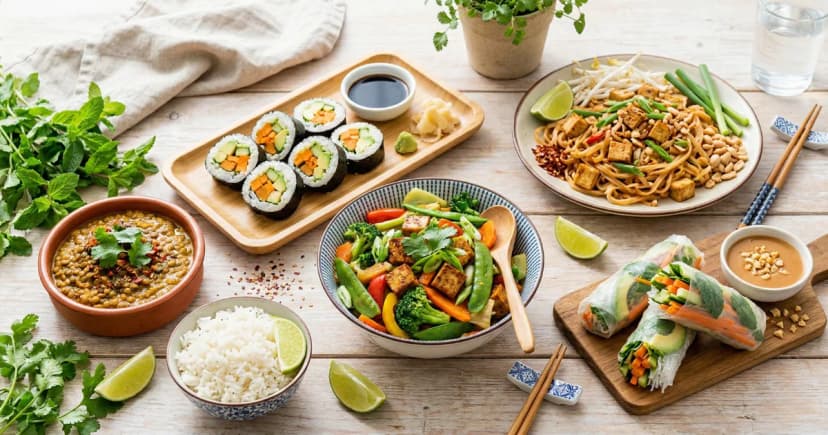
Vegetarian and Vegan Asian Food in Vancouver: 30+ Options
Vancouver offers one of North America's deepest selections of plant-based Asian restaurants, spannin
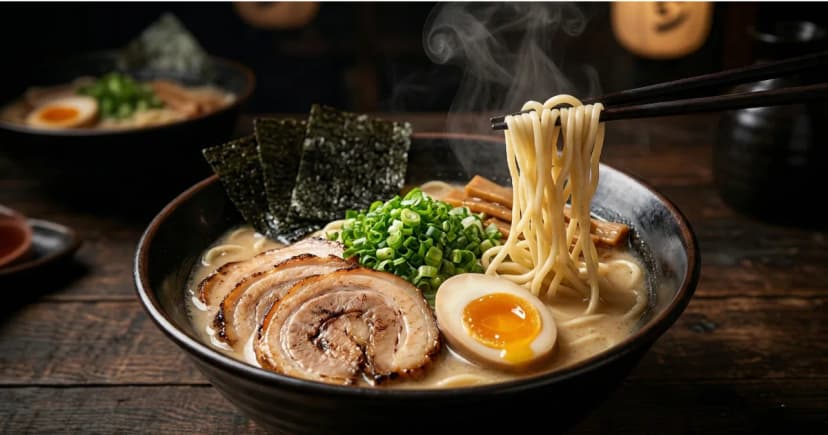
Vancouver Ramen Guide: From Tonkotsu to Tantanmen
Explore Vancouver's best ramen shops and styles, from creamy tonkotsu to fiery tantanmen. Covers 5 b
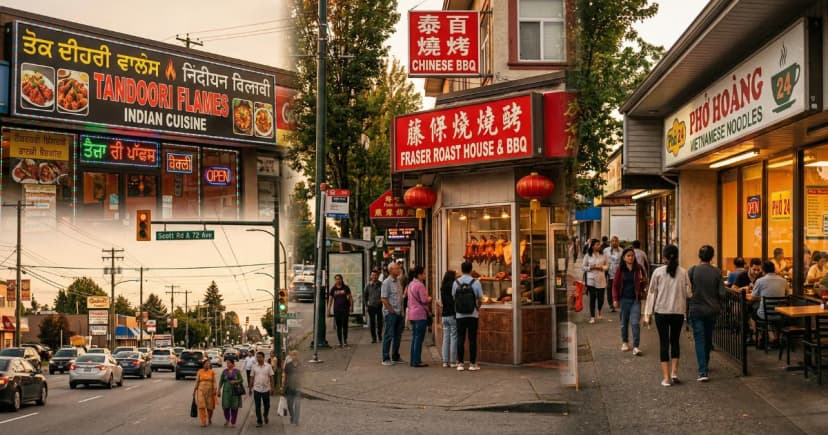
Surrey and South Vancouver Asian Food Guide: Beyond the City Centre
Surrey and South Vancouver hold some of Metro Vancouver's most authentic and affordable Asian dining
Got a food question?
Explore our guides and discover the best of Vancouver's food scene.
Browse Guides