Best Bubble Tea in Vancouver Ranked by a Local Tea Addict
The best bubble tea in Vancouver, from major chains to hidden independents. A local's ranking of boba shops, toppings, flavours, and what makes Vancouver's scene unmatched.
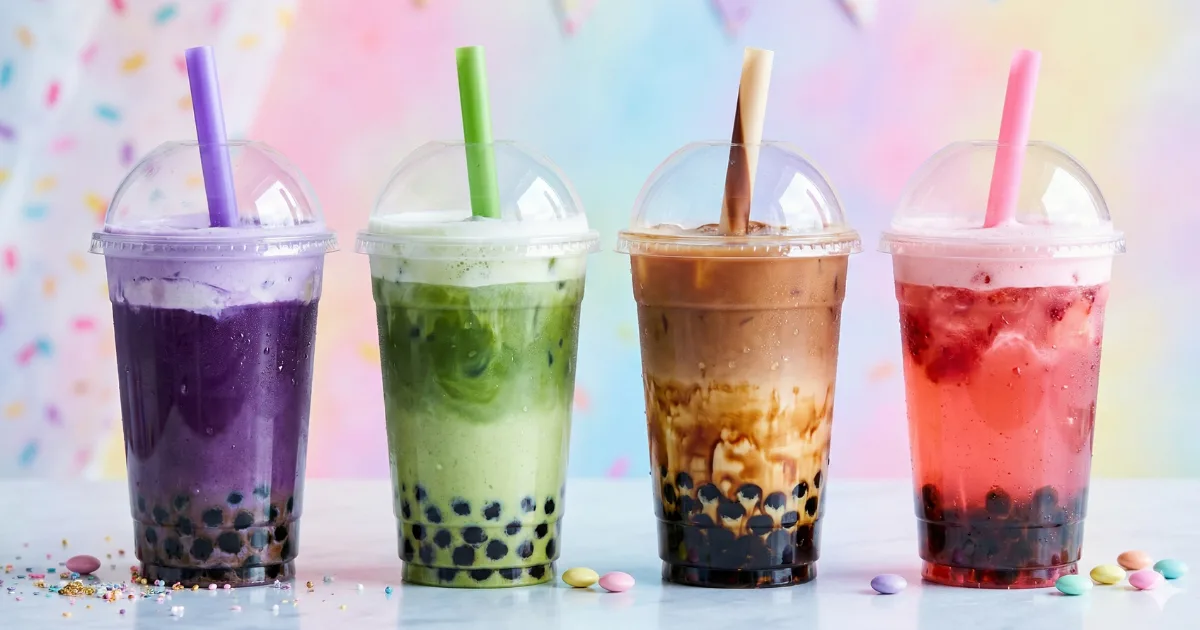
Vancouver has more bubble tea shops per capita than any other city in North America. That is not hyperbole or civic boasting -- it is a function of demographics, geography, and three decades of Taiwanese and East Asian immigration that planted the drink's roots deeper here than anywhere else on the continent. Walk any three blocks along Robson Street, through the malls of Richmond, or past the SkyTrain stations of Burnaby, and you will pass at least two or three boba shops, their LED menus cycling through seasonal specials and their counters staffed by people who can seal a cup in under two seconds.
The Greater Vancouver Area is home to an estimated 400-plus bubble tea shops as of early 2026, a figure that includes major Taiwanese chains, Hong Kong imports, mainland Chinese franchise operations, Japanese-influenced tea bars, and a growing number of independent shops run by people who left those chains to do things their own way[1]. The density is most extreme in Richmond, where a single mall food court can house four competing boba vendors within fifty metres of each other. But every municipality in Metro Vancouver -- from North Vancouver to Surrey to Coquitlam -- now has its own bubble tea corridor.
This guide is the product of years of systematic drinking. It covers the major chains and what each does best, the independent shops that deserve more attention, the fundamentals of tea bases and toppings, the customization system that defines the Vancouver boba experience, pricing across the metro area, the best neighbourhoods for a boba crawl, and the healthier alternatives that have reshaped the market in recent years. Whether you are a first-time boba drinker trying to decode a 90-item menu or a veteran looking for something beyond your usual order, the goal is to map the landscape honestly and thoroughly.
Summary: Vancouver's 400+ bubble tea shops make it the undisputed boba capital of North America, driven by decades of Taiwanese immigration and an intensely competitive market. This guide ranks the major chains (CoCo, Tiger Sugar, The Alley, Gong Cha, Kung Fu Tea, Presotea) and standout independents, explains tea base types and toppings, decodes the sugar-and-ice customization system, covers pricing across the metro area ($5-$9), identifies the best neighbourhoods for a boba crawl, and highlights healthier alternatives including fresh fruit teas and oat milk options.
Why Vancouver Is North America's Boba Capital
The story begins with immigration. Starting in the late 1980s, waves of immigration from Taiwan, Hong Kong, and mainland China transformed Metro Vancouver's food landscape. By 2021, the census recorded over 530,000 residents of Chinese ethnic origin in the Vancouver CMA, representing roughly 20 percent of the metropolitan population[2]. Taiwanese immigrants brought bubble tea culture with them -- not as a novelty but as an everyday habit -- and the local market grew to match that demand.
Taiwan invented bubble tea in the 1980s, and the drink spread across East and Southeast Asia before reaching North America. But in most North American cities, boba remained a niche product served primarily in Asian enclaves. Vancouver was different. The sheer scale of its East Asian population created a market large enough to support not just a few boba shops but an entire ecosystem: dozens of chains competing alongside hundreds of independents, all pushing each other toward better tea, fresher toppings, and more sophisticated flavour profiles.
Geography matters too. Vancouver sits on the Pacific Rim, which means trends from Taipei, Hong Kong, and Seoul arrive here faster than they reach Toronto or New York. When Tiger Sugar's brown sugar boba became a viral sensation in Taiwan in 2017, Vancouver had its first Tiger Sugar location within two years -- well ahead of most North American cities. The same pattern holds for cheese foam teas, fruit tea series, and specialty oolong blends. Vancouver's boba scene functions as a leading indicator for the rest of the continent.
The competitive pressure is the final ingredient. With so many shops chasing the same customers, mediocrity doesn't survive. Shops that use powdered milk instead of fresh dairy, pre-made tapioca instead of house-cooked pearls, or artificial flavouring instead of real tea lose customers to the shop next door that does it properly. The result is a market where the average quality is remarkably high, even at the chain level.
The Major Chains: What Each One Does Best
Six major chains dominate Vancouver's bubble tea landscape. Each has carved out a distinct identity, and knowing what each chain excels at saves you from ordering the wrong drink at the wrong shop.
CoCo Fresh Tea & Juice
CoCo is the workhorse of the Vancouver boba scene. With locations scattered across downtown, Burnaby, Richmond, and beyond, it is the chain you are most likely to encounter regardless of where you are in the metro area. CoCo's strength is consistency and breadth: the menu is enormous, covering milk teas, fruit teas, slushes, and specialty drinks, and the execution rarely dips below competent.
Best orders: The 3 Guys Milk Tea (a blend of black tea, green tea, and oolong with milk) is the signature for a reason -- it offers a complexity that single-tea drinks cannot match. The Passion Fruit Green Tea with coconut jelly is the best refreshing option on hot days. CoCo's tapioca pearls are mid-range: properly cooked but not house-made, which means they hold up for about 20 minutes before losing their chew.
Price range: $5.50-$7.50. CoCo sits at the accessible end of the pricing spectrum, making it the default choice for students and daily drinkers.
Tiger Sugar
Tiger Sugar arrived in Vancouver trailing massive hype from its Taiwanese origins, and it largely delivers on that hype for one specific drink category: brown sugar boba. The chain's signature is the brown sugar boba milk, a drink built around house-made tapioca pearls stir-fried in brown sugar syrup, creating the distinctive tiger-stripe pattern down the inside of the cup when fresh milk is poured over them.
Best orders: The Brown Sugar Boba Milk with Cream Mousse is the definitive order. The pearls are warm, deeply caramelized, and have a chew that lasts the full length of the drink. The cream mousse adds a salty-sweet layer that balances the brown sugar's intensity. If you want tea flavour rather than pure sugar indulgence, the Brown Sugar Boba Black Tea Latte tempers the sweetness with a malty tea base.
Price range: $7.00-$9.00. Tiger Sugar sits at the premium end of the market, but the pearl quality justifies it.
The Alley
The Alley (also branded as The Alley LuJiaoXiang) has positioned itself as the aesthetic chain. The branding is elegant, the stores are Instagram-ready, and the signature deerskin pattern on its brown sugar lattes has become one of the most recognizable visual identities in the boba world. But The Alley is more than presentation -- the tea program is genuinely strong.
Best orders: The Royal No. 9 Milk Tea uses a house-blended black tea that's full-bodied and malty, one of the better straight milk tea bases available at any chain. The Deerioca (The Alley's proprietary tapioca pearl, made with brown sugar and infused with tea) is a meaningful upgrade over standard tapioca. The Peach Oolong is the standout fruit tea -- delicate oolong with real peach flavour rather than syrup-driven sweetness.
Price range: $6.50-$8.50. Mid-to-premium pricing that reflects the higher-end positioning.
Gong Cha
Gong Cha is the tea purist's chain. While competitors lean into spectacle (Tiger Sugar's tiger stripes, The Alley's deer motif), Gong Cha focuses on tea quality and customization. The chain offers more granular control over sugar level, ice level, and topping combinations than most competitors, and its tea bases are generally brewed from loose leaf rather than tea bags.
Best orders: The Oolong Milk Tea at 30 percent sugar is one of the cleanest, most tea-forward chain boba drinks in Vancouver. The Earl Grey Milk Tea with pudding is the comfort-food option -- creamy, fragrant, and rich without being cloying. Gong Cha's Alisan Tea Latte showcases a Taiwanese high-mountain oolong that you rarely find at chain-level pricing.
Price range: $6.00-$8.00. Competitive with The Alley, with the tea quality to back it up.
Kung Fu Tea
Kung Fu Tea is the American import in a market dominated by Taiwanese and Hong Kong brands. Founded in New York, it has expanded aggressively into Metro Vancouver and competes on volume, variety, and value. The menu is one of the largest of any chain, with over 50 drinks spanning milk teas, punch teas, slushes, and seasonal specials.
Best orders: The Kung Fu Milk Tea is a solid all-rounder -- a strong black tea base with good body and a sweetness that works at 50 percent sugar. The Mango Green Tea Slush is the best frozen option in the chain's lineup, using real mango puree. Kung Fu Tea's seasonal limited-time offerings are often more adventurous than other chains' seasonal menus, so it pays to check the specials board.
Price range: $5.50-$7.50. Priced to compete with CoCo at the accessible end.
Presotea
Presotea distinguishes itself through its brewing method: an espresso-style pressure extraction system that produces tea with a concentration and clarity that standard steeping cannot match. The result is a tea that tastes brighter and more aromatic, particularly for green tea and oolong varieties. It is the most technically interesting chain in Vancouver, even if its brand recognition lags behind CoCo and Tiger Sugar.
Best orders: The Fresh Pressed Jasmine Green Tea is the best demonstration of the pressure brewing method -- floral, clean, and intensely aromatic in a way that makes conventionally brewed jasmine green tea taste flat by comparison. The Oolong Tea Latte with oat milk is a modern classic. Presotea's fruit teas are also strong, using fresh fruit rather than syrups for their seasonal offerings.
Price range: $6.00-$8.00. The extraction technology justifies the pricing for anyone who cares about tea quality over spectacle.
Independent Standouts: Local Shops That Rival the Chains
The chains get the foot traffic, but Vancouver's independent boba shops produce some of the most interesting drinks in the city. These are shops run by people with strong opinions about tea sourcing, pearl cooking, and flavour balance -- the kind of places where the owner might hand you a sample of a new tea blend and ask what you think.
Tika Tea (Richmond) -- Tucked into a strip mall on Alexandra Road, Tika Tea sources its oolong and black tea directly from farms in Nantou County, Taiwan. The milk tea is made with fresh milk rather than creamer, and the pearls are cooked in small batches throughout the day, which means the texture is consistently excellent rather than degrading over a long hold time. The Tieguanyin Milk Tea is arguably the best single-origin milk tea available in Metro Vancouver. $6.50-$8.00.
OneZo Tapioca (Burnaby) -- OneZo's entire identity is built around its tapioca. The shop makes its pearls from scratch daily, and offers flavoured tapioca varieties -- brown sugar, matcha, taro, strawberry -- that most chains don't attempt. The tapioca is the main event here; the tea is good but secondary. If you care about pearl texture above all else, OneZo is the answer. $6.00-$7.50.
R&B Tea (multiple locations) -- R&B Tea occupies the intersection of bubble tea and cheese tea, offering a cheese foam cap on most of its milk tea and fruit tea options. The foam is house-made, salty-sweet, and thick enough to drink through without a straw. The Brown Sugar Pearl Milk with Cheese Foam is a maximalist experience that works better than it should. R&B has expanded to several locations across Metro Vancouver while maintaining quality. $6.50-$8.50.
Boba Run (Kitsilano) -- One of the few boba shops west of Cambie that's worth a detour. Boba Run caters to the Kitsilano health-conscious crowd with a strong lineup of oat milk lattes, low-sugar fruit teas, and house-made toppings. The Oat Milk Hojicha Latte with crystal boba is a modern classic. The shop's emphasis on real ingredients over artificial flavouring gives every drink a cleaner taste. $6.00-$8.00.
ChaTime (multiple locations) -- A major international chain that operates more like a polished independent in Vancouver, with franchisees who maintain high standards. ChaTime's QQ Pearl Milk Tea (QQ refers to the Taiwanese term for chewy texture) is a benchmark drink. The pearls are consistently well-cooked, and the tea-to-milk ratio favours the tea. $5.50-$7.50.
Understanding Tea Bases: A Primer
The tea base is the foundation of any boba drink, and choosing the right one makes the difference between a drink you crave daily and one you abandon half-finished. Here are the major categories.
Black Milk Tea is the default, the drink that most people picture when they hear "bubble tea." Built on a strong black tea base (usually Assam or Ceylon), it's mixed with milk or creamer and sweetened to taste. The flavour profile is malty, robust, and rich. This is the safest first-time order.
Oolong Milk Tea is the upgrade for anyone who finds black milk tea too heavy. Oolong teas fall on a spectrum between green and black, offering floral or roasted notes depending on the oxidation level. A lightly oxidized oolong produces a delicate, fragrant milk tea; a heavily roasted one (like Tieguanyin) produces something deeper and more complex.
Jasmine Green Tea is the light, refreshing option. The jasmine flowers add a floral sweetness that reduces the need for added sugar, making it a natural choice for people who prefer less-sweet drinks. Often served without milk as a pure tea or with fruit additions.
Taro is the wildcard. Taro-flavoured boba starts with a taro root paste (or, at lower-quality shops, a taro-flavoured powder) blended into a creamy, slightly purple drink. The flavour is earthy, subtly sweet, and nutty. Good taro boba uses real taro; the difference between real and powdered is immediately obvious.
Matcha has carved out its own subcategory within the boba world. Japanese ceremonial-grade matcha produces a grassy, umami-rich drink; culinary-grade matcha (used at most chains) is more bitter and needs more milk and sugar to balance. The best matcha boba drinks in Vancouver use mid-grade Japanese matcha whisked to order.
Fruit Teas have surged in popularity over the past three years, driven by health-conscious drinkers who want flavour without dairy. These are built on a green or oolong tea base infused with fresh fruit -- passion fruit, mango, peach, grapefruit, and lychee are the most common. The best versions use real fruit; the worst use syrup concentrate. The quality gap here is enormous.
The Complete Toppings Guide
Toppings are where bubble tea becomes interactive. Every shop offers a range, and mixing toppings is expected. Here is what each one brings to the drink.
Tapioca Pearls (Boba) -- The original and still the most popular. Made from tapioca starch, cooked until chewy, and soaked in a sugar syrup. Good pearls are soft on the outside with a firm centre (the Taiwanese term is QQ). Bad pearls are either hard (undercooked) or mushy (overcooked or held too long). Always ask when the pearls were last cooked -- freshness is the single biggest quality variable.
Crystal Boba (Agar Pearls) -- Translucent, softer, and lower in calories than tapioca. Made from konjac or agar rather than starch. The texture is more jelly-like than chewy. Crystal boba works well in fruit teas where heavy tapioca would overwhelm the lighter tea base.
Pudding -- Egg pudding or custard pudding, cut into cubes and added to the drink. It dissolves slightly into the tea, creating a creamy, custard-like sweetness at the bottom of the cup. Best in milk tea rather than fruit tea.
Coconut Jelly -- Firm, translucent cubes with a mild coconut flavour. Lighter than tapioca and less sweet than pudding. Coconut jelly adds texture without heavily changing the drink's flavour profile, making it a good choice for fruit teas and jasmine green tea.
Cheese Foam -- A thick, salty-sweet cream cheese and whipped cream foam layered on top of the drink. You drink it by tilting the cup so the tea and foam hit your palate simultaneously. Cheese foam transformed the boba market starting around 2018 and remains one of the most polarizing toppings: people either love the savoury-sweet combination or find it baffling.
Red Bean -- Sweet azuki red beans, simmered until soft. A traditional Asian dessert ingredient that adds an earthy, starchy sweetness to milk tea. Best paired with black or taro milk tea.
Aloe Vera, Grass Jelly, and Aiyu Jelly -- Three traditional toppings that predate the modern boba boom. Aloe vera is translucent and mildly sweet; grass jelly (xiancao) is dark, herbal, and slightly bitter; aiyu jelly is a Taiwanese specialty made from fig seeds, delicate and lemon-scented. All three pair better with lighter teas and fruit teas than with heavy milk teas.
The Sugar and Ice Customization System
The ability to customize sugar and ice levels is one of the defining features of Vancouver's boba culture, and understanding the system is essential.
Sugar levels are expressed as percentages: 100% (full sugar), 70% (less sugar), 50% (half sugar), 30% (light sugar), and 0% (no added sugar). Most shops use this five-tier system, though some offer finer increments. A few guidelines from experience:
- First-time drinkers should start at 50% sugar. Full sugar (100%) is sweeter than most people expect, particularly in fruit teas where the fruit itself adds sweetness.
- Milk teas generally need more sugar than fruit teas to taste balanced, because the milk dulls the sweetness. A 50% milk tea and a 50% fruit tea do not taste equally sweet.
- If you are ordering a drink with sweet toppings (pudding, red bean, brown sugar pearls), reduce the sugar level by one step from your usual preference. The toppings add significant sweetness.
- At 0% sugar, most milk teas taste flat and tannic. Unless you genuinely enjoy unsweetened tea, 30% is the practical minimum for milk tea.
Ice levels follow a similar tier: regular ice, less ice, light ice, and no ice. Some shops offer warm or hot options as well. The important thing to understand is that less ice means more tea in the cup. A drink with no ice contains significantly more liquid than the same drink with regular ice, which effectively changes the concentration and dilution curve of the drink over time. If you want a strong tea flavour from start to finish, order less ice rather than no ice -- it keeps the drink cool enough to slow dilution while maximizing tea volume.
Price Ranges Across Vancouver
Bubble tea pricing in Metro Vancouver follows predictable patterns tied to rent, competition density, and chain positioning.
Downtown Vancouver (Robson, Davie, Granville): $6.50-$9.00. The highest prices in the metro area, driven by commercial rents. Downtown locations of Tiger Sugar, The Alley, and specialty independents regularly hit $8.00-$9.00 for signature drinks with premium toppings. CoCo and Kung Fu Tea offer some relief at $5.50-$7.00.
Richmond (Aberdeen Centre, No. 3 Road corridor): $5.50-$8.00. The most competitive pricing in the metro area for its quality level. The sheer number of boba shops in Richmond -- particularly inside Aberdeen Centre's food court -- keeps prices in check through constant competition. Richmond is where the value equation is best: high quality at moderate prices.
Burnaby (Metrotown, Crystal Mall, Hastings corridor): $5.50-$7.50. Similar to Richmond in pricing and only marginally less competitive. The Crystal Mall food court and the boba shops surrounding Metrotown are particularly strong on value.
Chinatown: $5.00-$7.00. A few long-established tea shops along Main and Keefer offer some of the lowest prices in the city. The trade-off is generally smaller menus and less customization.
Surrey, Coquitlam, North Vancouver: $5.50-$7.50. Suburban pricing tracks Burnaby closely. The shops in these areas tend to be chain outposts rather than independents, with CoCo, Gong Cha, and ChaTime dominating.
As a general rule, expect to spend $6.00-$7.50 for a standard milk tea with one topping at a competent shop anywhere in Metro Vancouver. Premium drinks (Tiger Sugar brown sugar boba, cheese foam teas, specialty oolong lattes) push that to $7.50-$9.00.
Best Neighbourhoods for a Boba Crawl
Richmond: Aberdeen Centre and No. 3 Road
This is the epicentre. Aberdeen Centre's food court alone houses four or five boba vendors, and stepping out onto No. 3 Road puts you within walking distance of a dozen more. The concentration allows for efficient comparison shopping -- you can try a CoCo drink, a Gong Cha drink, and an independent shop's drink within a single afternoon without traveling more than a few hundred metres. The Canada Line's Aberdeen Station provides direct indoor access.
Burnaby: Metrotown and Crystal Mall
The Metrotown area is the second-densest boba zone in Metro Vancouver. Metropolis at Metrotown has multiple chain locations, and the surrounding blocks on Kingsway and McKay Avenue add independent shops and smaller chains. Crystal Mall's food court offers boba at some of the lowest prices in the metro area. The Expo Line's Metrotown Station anchors the crawl.
Downtown: Robson Street
Robson between Jervis and Burrard is Vancouver's most visible boba strip, with Tiger Sugar, The Alley, CoCo, Gong Cha, and several independents competing for sidewalk-level visibility. Prices are the highest in the metro area, but the density makes comparison tasting convenient. This is where most tourists get their first Vancouver boba experience.
Chinatown and East Van
A quieter boba scene than Robson or Richmond, but with some genuinely interesting independent shops. The area around Main and Keefer has traditional tea houses alongside modern boba shops, creating a range that spans old-school Hong Kong milk tea to contemporary fruit tea. Prices here tend to be the most affordable in the city.
Seasonal and Limited-Time Offerings
Vancouver's boba market runs on seasonal rotation. Chains and independents alike introduce limited-time drinks tied to seasons, holidays, and ingredient availability.
Spring (March-May): Sakura and strawberry flavours dominate. Expect cherry blossom milk teas, strawberry oolong, and pastel-pink drinks designed for social media. Mango drinks start appearing as fresh mango supply improves from Southeast Asian imports.
Summer (June-August): Peak fruit tea season. Fresh watermelon, lychee, passion fruit, and peach teas are everywhere. Slush and smoothie-style drinks peak in popularity. Most shops introduce their lightest, most refreshing options during this window.
Fall (September-November): Taro season. Taro milk tea, taro boba, taro everything. Pumpkin and sweet potato flavours make appearances at shops chasing the seasonal trend. Roasted oolong and hojicha (roasted green tea) drinks become more prominent as the weather cools.
Winter (December-February): Hot boba drinks surge. Brown sugar ginger milk teas, hot taro lattes, and warm black sesame drinks cater to cold-weather cravings. Several shops offer heated tapioca pearls in warm milk tea -- a different experience from the standard iced format.
Lunar New Year (January-February): Special red-and-gold themed drinks appear at shops across Richmond and Burnaby, often featuring ingredients like red bean, osmanthus, and longan.
Healthier Alternatives: Lower Sugar, Fresh Fruit, and Plant Milk
The health-conscious segment of Vancouver's boba market has grown significantly since 2023, driven by demand from drinkers who love the format but want to manage their sugar and calorie intake[3].
Lower sugar is the simplest adjustment. Ordering at 30% sugar instead of the default 100% reduces added sugar by roughly 50-60 grams per drink, depending on the shop. At 0% sugar, a plain milk tea contains only the natural sugars in the milk and tea -- typically under 10 grams. The catch is that at 0%, many milk teas taste unpalatably bitter. The practical sweet spot for health-conscious drinkers is 30% sugar, which provides enough sweetness to balance the tea's tannins without the caloric load of full sugar.
Fresh fruit teas are the healthiest mainstream category. A passion fruit green tea at 30% sugar with no milk and crystal boba contains fewer calories than most commercially available juices. The fruit provides natural sweetness, the green tea base adds antioxidants, and the crystal boba (made from konjac) is nearly calorie-free. This is the order that nutritionists recommend when clients ask about bubble tea.
Oat milk has replaced dairy for a significant portion of Vancouver's boba drinkers, driven by both lactose intolerance concerns and environmental preferences. Most chain and independent shops now offer oat milk as a standard substitution, typically for an additional $0.50-$1.00. Oat milk froths well and adds a natural sweetness that complements oolong and hojicha tea bases particularly well.
Calorie awareness: A standard black milk tea with full sugar and tapioca pearls contains roughly 400-500 calories[4]. Switching to 30% sugar reduces that to approximately 250-300 calories. Replacing tapioca with crystal boba drops the topping contribution from roughly 150 calories to under 30. Choosing a fruit tea base without milk eliminates another 60-100 calories. A fully optimized low-calorie boba order -- fruit tea, 30% sugar, crystal boba -- comes in around 120-150 calories, which is comparable to a small latte.
Shops leading the health trend: Presotea's fresh-pressed fruit teas, Boba Run's oat milk lattes, and ChaTime's light tea series are among the strongest health-forward options in Metro Vancouver.
Frequently Asked Questions
What is the best bubble tea shop in Vancouver for a first-time drinker?
CoCo is the safest entry point for first-timers. The menu is broad, the staff at most locations are accustomed to guiding newcomers, and the 3 Guys Milk Tea at 50% sugar with regular tapioca pearls is a well-balanced introduction to the boba format. CoCo's pricing is accessible at $5.50-$7.50, and the chain's widespread locations mean you can find one regardless of where you are in Metro Vancouver. If you want something more premium for your first experience, Gong Cha's Oolong Milk Tea at 50% sugar with pudding is an excellent step up.
How much does bubble tea cost in Vancouver?
A standard bubble tea in Metro Vancouver costs between $5.50 and $9.00 depending on the shop, the drink type, and the toppings. A basic milk tea with tapioca at a chain like CoCo or Kung Fu Tea runs $5.50-$7.00. Premium options like Tiger Sugar's brown sugar boba milk or The Alley's specialty lattes range from $7.50-$9.00. Adding extra toppings typically costs $0.75-$1.50 each. Richmond and Burnaby offer the best value, while downtown Vancouver prices run highest due to commercial rent premiums.
What is the healthiest bubble tea order?
The healthiest standard order is a fresh fruit tea (passion fruit or mango green tea) at 30% sugar with crystal boba instead of tapioca pearls. This combination typically contains 120-150 calories, compared to 400-500 calories for a full-sugar milk tea with regular boba. If you prefer milk tea, order at 30% sugar with oat milk and skip the tapioca in favour of coconut jelly or aloe vera. Presotea's fresh-pressed fruit teas and Boba Run's oat milk hojicha latte are among the best health-conscious options in Vancouver.
Where is the best area in Vancouver to try multiple bubble tea shops?
Richmond's Aberdeen Centre and the surrounding No. 3 Road corridor offer the densest concentration of boba shops in Metro Vancouver. Aberdeen Centre's food court alone has four or five competing vendors, and a short walk along No. 3 Road adds a dozen more chain and independent options. The Canada Line's Aberdeen Station provides direct indoor access. For downtown visitors, Robson Street between Jervis and Burrard has the highest visible density of boba shops, including Tiger Sugar, The Alley, CoCo, and Gong Cha within a few blocks of each other.
What does the sugar percentage mean when ordering bubble tea?
The sugar percentage controls how much sweetener is added to your drink. 100% is full sugar (the default recipe sweetness), 70% is reduced, 50% is half, 30% is light, and 0% means no added sugar. Most shops use this five-tier system. For milk teas, 50% is a good starting point as the milk mutes the sweetness. For fruit teas, 30% is usually sufficient because the fruit itself adds natural sweetness. If you add sweet toppings like pudding or brown sugar pearls, reduce your sugar level by one step from your usual preference to compensate.
References
[1]: Restaurants Canada, "2025 Foodservice Facts: British Columbia Market Overview." The annual industry report tracks the growth of specialty beverage categories including bubble tea across Canadian provinces, with BC leading in per-capita bubble tea outlet density. https://www.restaurantscanada.org/resources/foodservice-facts/
[2]: Statistics Canada, "Census Profile, 2021 Census of Population -- Vancouver Census Metropolitan Area." The 2021 census recorded 532,560 residents of Chinese ethnic origin in Metro Vancouver, representing approximately 20 percent of the CMA's population. https://www12.statcan.gc.ca/census-recensement/2021/dp-pd/prof/index.cfm
[3]: British Columbia Centre for Disease Control, "Sugar-Sweetened Beverages: Health Evidence and Policy Considerations." BCCDC's ongoing research into sugar-sweetened beverage consumption in British Columbia includes data on bubble tea and specialty drink consumption patterns. http://www.bccdc.ca/health-info/prevention-public-health/sugary-drinks
[4]: Health Canada, "Canadian Nutrient File." Standard nutritional data for tapioca starch, dairy milk, and common sweeteners used in bubble tea preparation. https://food-nutrition.canada.ca/cnf-fce/index-eng.jsp
[5]: City of Vancouver, "Food City: Vancouver's Food Strategy." The city's food strategy documents the diversity of Vancouver's food retail landscape, including the growth of specialty beverage outlets across neighbourhoods. https://vancouver.ca/people-programs/vancouver-food-strategy.aspx
[6]: TransLink, "SkyTrain Station Profiles." Transit access data for stations serving Metro Vancouver's major commercial and dining corridors, including Aberdeen, Metrotown, and Waterfront stations. https://www.translink.ca/schedules-and-maps/skytrain
Discover more Vancouver food guides at Our Food Fix.
Related Articles
Vegetarian and Vegan Asian Food in Vancouver: 30+ Options
Vancouver offers one of North America's deepest selections of plant-based Asian restaurants, spannin
Vancouver Ramen Guide: From Tonkotsu to Tantanmen
Explore Vancouver's best ramen shops and styles, from creamy tonkotsu to fiery tantanmen. Covers 5 b
Surrey and South Vancouver Asian Food Guide: Beyond the City Centre
Surrey and South Vancouver hold some of Metro Vancouver's most authentic and affordable Asian dining
Got a food question?
Explore our guides and discover the best of Vancouver's food scene.
Browse Guides